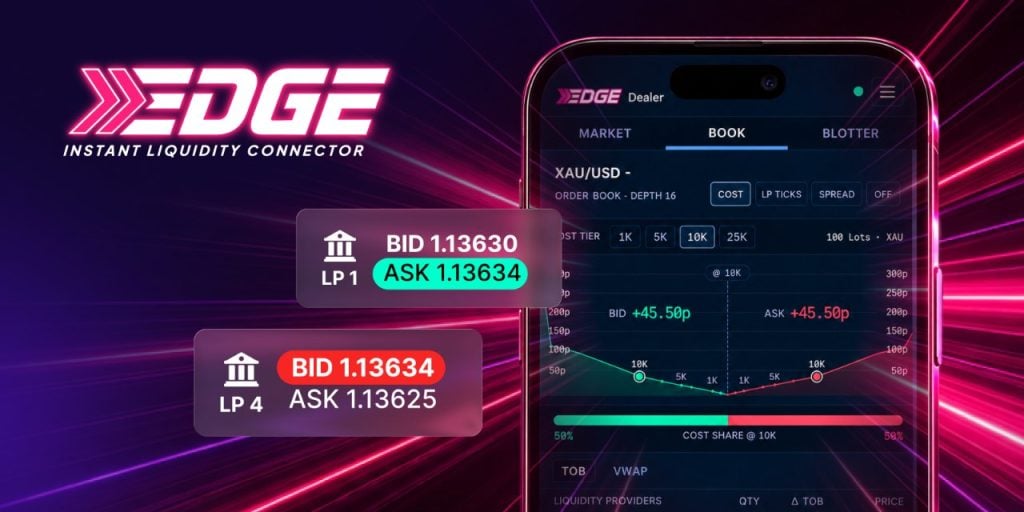
Founder and CEO Tim Furey debuts the EDGE Instant Liquidity Connector — an engine that scans top-tier liquidity in milliseconds, routes raw, unmarked pricing, and passes positive slippage to the client. His message to traders: hope is not a strategy.
They hold your hand. Tim Furey hands you the detonator.
GEORGE TOWN, Cayman Islands — October 27th, 2026 — Tradeview Markets has launched EDGE, the proprietary execution engine its Founder and CEO, Tim Furey, spent years and millions building. His pitch is blunt: most brokers pad spreads and hide costs, and Tradeview won’t. EDGE, he says, is his answer to an industry that has taxed traders for too long.
An engine, not just a platform
Any broker can hand a trader a platform; the engine is what moves the trade. EDGE runs on a proprietary matching engine and proprietary FIX connectivity. It scans multiple top-tier liquidity providers in milliseconds, routes raw, unmarked pricing, slices larger orders surgically, aggregates the fills to the best available price, and adapts in real time when volatility hits. Positive slippage goes to the client — and it all runs inside MT4 and MT5, with nothing to install or relearn.
“I felt it was time to stir things up and give our customers the same rates I am privy to when I trade.”
— Tim Furey, Founder & CEO, Tradeview Markets
Padded spreads aren’t liquidity
Furey has watched traders pay for markup they can’t see for two decades, and in his view every padded pip is a tax on loyalty. Tight headline spreads that vanish when real size lands don’t impress him either: a quote without executable quality, he argues, is a costume. The best price isn’t the number on the screen — it’s what actually fills when the size lands.
“If it doesn’t say .edge, congratulations: you are the liquidity.”
— Tim Furey
Leave the bonus. Take the fill.
Furey is just as direct about bonus-led marketing: traders who come for an offer leave for a better one, while real traders stay for the fill. Tradeview, he says, doesn’t buy balances — it builds clients.
“You don’t win a client with a bribe. You rent a shopper.”
— Tim Furey
Hungry dogs run faster
The attitude has deep roots. A college football mentor gave Furey the line “Hungry dogs run faster,” and he has run on it ever since — from the open-outcry commodity floors to proprietary trading at Schonfeld Securities and forex at ODL Securities, before opening Tradeview in 2004 in a small Wall Street office. Profitable in its first month, the firm today employs nearly 200 staff, holds licensed entities in several jurisdictions, and remains independent and founder-led.
Try it once. Client for life.
Furey is leading Tradeview’s push into the Middle East and its growth across Latin America and Asia, and the pitch is a dare: open a demo, compare the bleed, see live spreads, then decide. The same challenge goes to Tradeview’s introducing brokers — let clients try EDGE once, and retention takes care of itself.
Tim Furey is the Founder and Chief Executive Officer of Tradeview Markets, a regulated multi-asset broker. He started the firm in 2004 in a small Wall Street office and has grown it into an independent, founder-led global broker with nearly 200 staff. In 2026 he launched the EDGE Instant Liquidity Connector, Tradeview’s proprietary execution engine.
About Tradeview Markets
Founded in 2004, Tradeview Markets is a regulated multi-asset broker offering access to forex, metals, stocks, futures, options and cryptocurrencies for retail and institutional clients, with multi-platform execution. The firm has been founder-led since inception and has grown through organic client acquisition.
Hong kong, Hong Kong, October 27th, 2026, FinanceWire
MyPropCapital Technology Limited today announced the launch of MyPropCapital, a proprietary trading evaluation platform that records every fee, account rule, pass and reward on Arbitrum One, a public blockchain. From today, traders can buy a one-step evaluation, trade 298 markets from a web terminal or a phone app, and check every part of their deal on a public block explorer, with no login needed.
The launch answers the question prop traders ask most: will the firm keep its word? Instead of asking traders to trust it, MyPropCapital publishes the proof.
“Our goal isn’t to be the first prop firm. It’s to be the right one,” said Noman Iqbal, co-founder of MyPropCapital. “Traders have been told ‘trust us’ for years. We’re launching a firm that hands them the receipt instead.”
The Launches Today
MyPropCapital launches with three commitments that traders can verify for themselves:
Rules locked on-chain. When an account opens, its full rule set is fixed to it and a fingerprint of those rules is written to the blockchain. The firm can change what it sells later; it cannot change the deal an account already has.
Rewards paid by smart contract. Rewards come from a company-funded Reward Reserve whose balance is public. The trader signs a request, and the contract sends USDT to the trader’s own wallet. Every transfer is visible the moment it lands.
Reserve-backed account sizes. Accounts of $5,000, $10,000 and $25,000 are on sale at launch. The $50,000 size opens only once the Reward Reserve holds $100,000, and the $100,000 size only at $250,000.
“Selling a $100,000 account is easy,” said Zeyyan Khan , Marketing Director of MyPropCapital. “Paying one out is the job. We’d rather wait than sell something we can’t stand behind.”
The Evaluation
One step, no phase two. Reach a 10% profit target inside the limits and the funded account opens automatically, under the same rules. There is no time limit and no minimum number of trading days.
80% reward share on funded profit.
298 markets across crypto, gold and other commodities, forex, indices and stocks, priced from Hyperliquid’s live order books. Crypto trades 24/7; the rest follow exchange hours.
Three plans: Classic; Flex, with the lowest profit target; and Light, with no daily loss limit.
Web terminal and phone app, both with TradingView charts.
All accounts are simulated. Fills are calculated by the firm’s own engine from live prices, and no order is sent to an exchange.
Limits Per Person From Day One
MyPropCapital also launches with limits that protect the Reward Reserve. One verified person can run up to 10 paid evaluations at a time and hold up to 4 funded accounts, or $100,000 of funded capital in total, whichever comes first. A trader who passes while at the limit keeps the pass, and the funded account opens as soon as a slot frees up.
Availability And Pricing
Evaluations are available now at mypropcapital.com, with one-time fees from $43. The $5,000 and $10,000 accounts pay no trading commission. Payment is by card where available, or USDT on Arbitrum One, and the fee is refundable within 14 days if no trade has been placed. A free demo is open to everyone. The service is not available in Hong Kong or other restricted jurisdictions.
How To Check It
Open arbiscan.io and paste the accounts contract, 0x8EddEE86E29a58b59CeA2215E9FDCfC1B4FAfb23. Its verified source code is under the Contract tab.
Under Read Contract, call totalFeesCollected, totalPaidOut and accountCount.
Paste the Reward Reserve, 0x06c105206Fb9a57e7F278dE53673d1F9aABc116f, and open Token Holdings to see the USDT behind every reward.
“If we ever break a promise, the chain will show it before we get the chance to explain,” said Noman Iqbal, co-founder of MyPropCapital. “That’s the point of launching this way.”
About MyPropCapital:
MyPropCapital is an on-chain proprietary trading firm operated by MyPropCapital Technology Limited, Hong Kong. Traders take a one-step evaluation on simulated accounts priced from Hyperliquid’s live order books, across crypto, commodities, forex, indices and stocks. Fees, account rules, passes and rewards are recorded on Arbitrum One, so anyone can check them. Rewards are paid from a company-funded Reward Reserve whose balance is public. Learn more at mypropcapital.com.
Disclaimer: MyPropCapital accounts are simulated and no trader capital is deposited or traded on any exchange. Rewards are performance-based payments of company funds, not investment returns. Most traders do not pass an evaluation, and the one-time fee is the most a trader can lose. Nothing in this release is investment, financial or tax advice. The service is not available in Hong Kong or in other restricted jurisdictions; see the Terms at mypropcapital.com.
Video : Introduction to Mypropcapital.
Contact
Media Director Zeyyan Khan MyPropCapital Technology Limited team@mypropcapital.com
Hong kong, Hong Kong, October 27th, 2026, FinanceWire
MyPropCapital Technology Limited today announced the launch of MyPropCapital, a proprietary trading evaluation platform that records every fee, account rule, pass and reward on Arbitrum One, a public blockchain. From today, traders can buy a one-step evaluation, trade 298 markets from a web terminal or a phone app, and check every part of their deal on a public block explorer, with no login needed.
The launch answers the question prop traders ask most: will the firm keep its word? Instead of asking traders to trust it, MyPropCapital publishes the proof.
“Our goal isn’t to be the first prop firm. It’s to be the right one,” said Noman Iqbal, co-founder of MyPropCapital. “Traders have been told ‘trust us’ for years. We’re launching a firm that hands them the receipt instead.”
The Launches Today
MyPropCapital launches with three commitments that traders can verify for themselves:
Rules locked on-chain. When an account opens, its full rule set is fixed to it and a fingerprint of those rules is written to the blockchain. The firm can change what it sells later; it cannot change the deal an account already has.
Rewards paid by smart contract. Rewards come from a company-funded Reward Reserve whose balance is public. The trader signs a request, and the contract sends USDT to the trader’s own wallet. Every transfer is visible the moment it lands.
Reserve-backed account sizes. Accounts of $5,000, $10,000 and $25,000 are on sale at launch. The $50,000 size opens only once the Reward Reserve holds $100,000, and the $100,000 size only at $250,000.
“Selling a $100,000 account is easy,” said Zeyyan Khan , Marketing Director of MyPropCapital. “Paying one out is the job. We’d rather wait than sell something we can’t stand behind.”
The Evaluation
One step, no phase two. Reach a 10% profit target inside the limits and the funded account opens automatically, under the same rules. There is no time limit and no minimum number of trading days.
80% reward share on funded profit.
298 markets across crypto, gold and other commodities, forex, indices and stocks, priced from Hyperliquid’s live order books. Crypto trades 24/7; the rest follow exchange hours.
Three plans: Classic; Flex, with the lowest profit target; and Light, with no daily loss limit.
Web terminal and phone app, both with TradingView charts.
All accounts are simulated. Fills are calculated by the firm’s own engine from live prices, and no order is sent to an exchange.
Limits Per Person From Day One
MyPropCapital also launches with limits that protect the Reward Reserve. One verified person can run up to 10 paid evaluations at a time and hold up to 4 funded accounts, or $100,000 of funded capital in total, whichever comes first. A trader who passes while at the limit keeps the pass, and the funded account opens as soon as a slot frees up.
Availability And Pricing
Evaluations are available now at mypropcapital.com, with one-time fees from $43. The $5,000 and $10,000 accounts pay no trading commission. Payment is by card where available, or USDT on Arbitrum One, and the fee is refundable within 14 days if no trade has been placed. A free demo is open to everyone. The service is not available in Hong Kong or other restricted jurisdictions.
How To Check It
Open arbiscan.io and paste the accounts contract, 0x8EddEE86E29a58b59CeA2215E9FDCfC1B4FAfb23. Its verified source code is under the Contract tab.
Under Read Contract, call totalFeesCollected, totalPaidOut and accountCount.
Paste the Reward Reserve, 0x06c105206Fb9a57e7F278dE53673d1F9aABc116f, and open Token Holdings to see the USDT behind every reward.
“If we ever break a promise, the chain will show it before we get the chance to explain,” said Noman Iqbal, co-founder of MyPropCapital. “That’s the point of launching this way.”
About MyPropCapital:
MyPropCapital is an on-chain proprietary trading firm operated by MyPropCapital Technology Limited, Hong Kong. Traders take a one-step evaluation on simulated accounts priced from Hyperliquid’s live order books, across crypto, commodities, forex, indices and stocks. Fees, account rules, passes and rewards are recorded on Arbitrum One, so anyone can check them. Rewards are paid from a company-funded Reward Reserve whose balance is public. Learn more at mypropcapital.com.
Disclaimer: MyPropCapital accounts are simulated and no trader capital is deposited or traded on any exchange. Rewards are performance-based payments of company funds, not investment returns. Most traders do not pass an evaluation, and the one-time fee is the most a trader can lose. Nothing in this release is investment, financial or tax advice. The service is not available in Hong Kong or in other restricted jurisdictions; see the Terms at mypropcapital.com.
Video : Introduction to Mypropcapital.
Contact
Media Director Zeyyan Khan MyPropCapital Technology Limited team@mypropcapital.com
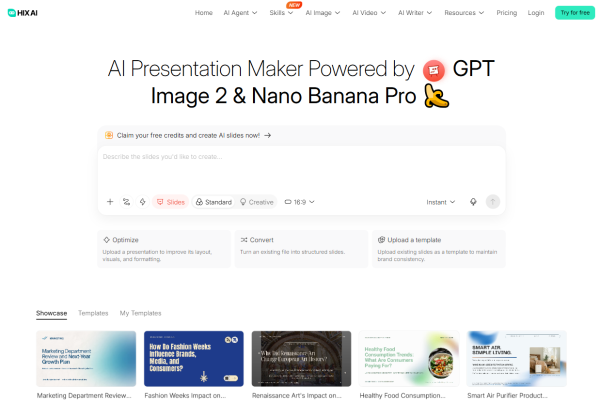
HIX AI today announced the launch of Workspace 2.0, an update that extends HIX AI from a general-purpose AI agent to an AI business automation workspace for individual professionals and small teams.
SINGAPORE, October 27, 2026 – HIX AI today announced the launch of Workspace 2.0, an update that extends HIX AI from a general-purpose AI agent to an AI business automation workspace for individual professionals and small teams.
“AI agents can produce content, but content is not the same as finished work,” said Camille Sawyer, CEO of HIX AI. “Professionals don’t need another agent that hands them a draft. They need a workspace that uses their project files and instructions, plugs into the systems they already use, and delivers outputs that follow their brand guidelines. That is what HIX AI Workspace 2.0 is designed to offer.”
Workspace 2.0: Where Teams and AI Work in Shared Context
Workspace 2.0 makes brand consistency part of how work is created, not a final cleanup step. Users can define brand standards by uploading brand kits containing visual identity and tone-of-voice information, and HIX AI applies them across presentations, images, videos and documents. Every output remains editable, so users can change elements without generating the asset again.
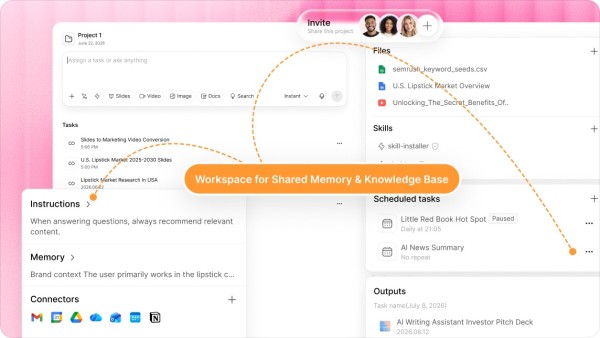
Workspace 2.0 also upgrades the upgraded project space, a dedicated environment where instructions, memory, files, skills and outputs are shared across tasks and collaborators. It allows teams of up to five to work within a single project that keeps its context over time.
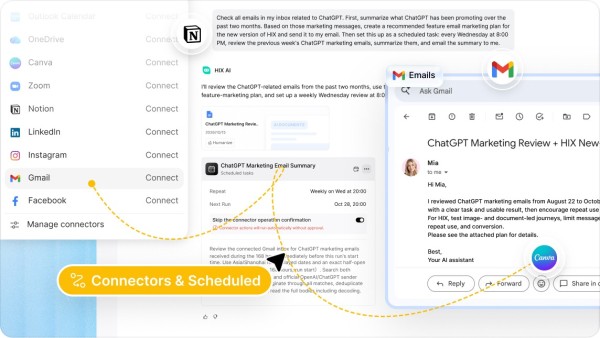
HIX AI also includes connectors to the tools that run daily business, including Google and Microsoft calendars, email and cloud storage, Zoom, Notion, and social platforms such as Facebook, YouTube and Instagram. These connectors allow users to sync content between HIX AI and these apps and run automated tasks such as drafting reports and publishing social posts.
Combined with scheduled tasks, HIX AI can draft weekly reports from data in connected apps, follow up on meeting action items, and publish to social channels, and use engagement data from connected social accounts as input for later content.
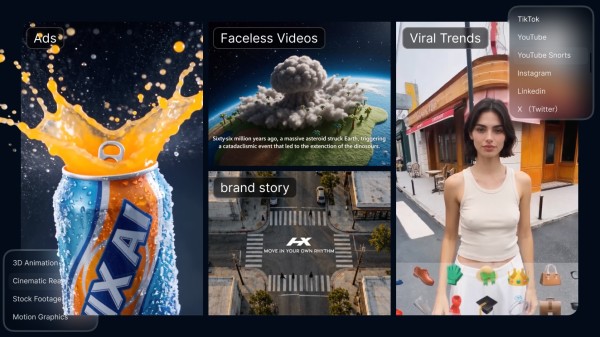
The Workspace 2.0 launch also adds task-specific skills to AI image and AI video agent for common marketing formats. Their purpose-built skills cover scenarios like video ads, short-form social video clips, faceless videos and brand stories, as well as posters, social posts, product ads, e-commerce visuals and infographics. Each generated asset applies the user’s brand kit and can incorporate research on current platform trends.
“We built Workspace 2.0 so small teams can create content and run recurring tasks with fewer separate tools and manual steps,” Sawyer added. “HIX AI Workspace 2.0 lets teams of up to five share project context, connect the apps they already use and schedule recurring work in one place.”
AI Slides 2.0: Generation, Redesign, File Conversion and Custom Templates
Generate: Build research-backed decks from a single prompt, with updated chart types, layouts and illustrations generated to match slide content.
Optimize: Redesign the layout and visual styling of existing decks while preserving the original content, images and data.
Convert: Transform PDFs, Word documents, images and other supported file formats into editable slide presentations.
Custom templates: HIX AI allows for custom template uploads and applies the uploaded template’s layouts, fonts and color schemes to generated decks.
“Presentations are where business decisions get made,” said Sawyer. “With HIX AI Slides 2.0, teams spend more of their time on the story, not the formatting.”
Workspace 2.0 and AI Slides 2.0 are both available now. For more information, visit https://hix.ai/.
About HIX AI
HIX AI is an AI agent workspace to help professionals and small teams for business automation. It combines multiple AI agents, collaborative project spaces, an extensible skill hub, and real-world app connectors in one workspace.
CHAPAINAWABGANJ, Bangladesh, October 27, 2026, ZEX PR WIRE — LM Electronics, an online home appliance retailer based in Chapainawabganj, Bangladesh, provides customers with online access to product information about Vision blenders, helping buyers explore available options and consider important factors before purchasing.
Blenders can support a range of everyday kitchen tasks, from preparing smoothies and sauces to grinding ingredients for cooking. Choosing a suitable model involves more than comparing prices. Intended use, motor power, jar capacity, blade design, available functions, product specifications and warranty conditions can all influence a purchasing decision.
Understanding Vision Blender Features
Customers researching a blender should begin by considering how they plan to use the appliance. Those who mainly prepare drinks or blend soft ingredients may have different requirements from households that want to process spices, grains or other harder ingredients. Buyers should check each model’s published specifications and confirm that its stated capabilities match their intended use.
Motor power and jar capacity are useful comparison points, but they should be reviewed alongside the manufacturer’s instructions and the functions listed for the individual model. Customers should also review the included accessories, operating guidance and warranty terms before making a decision.
LM Electronics provides an online destination for customers researching Vision blenders in Bangladesh. Its dedicated brand page allows shoppers to explore listed products and review available product information before choosing an option that suits their kitchen needs.
Comparing Vision Blender Prices and Product Information
Prices, specifications and availability may vary between models and can change over time. Customers should therefore consult the current listings before placing an order. Comparing product details alongside price can help buyers make a more informed choice based on their intended use and budget.
Nationwide Delivery and Manufacturer Warranty
Founded in October 2025, LM Electronics operates from Chapainawabganj and delivers household appliances nationwide. Its online business model serves customers beyond major metropolitan centres, including buyers in district and upazila towns who may have limited access to a broad selection of appliances through local retailers.
The company supplies official products carrying manufacturer warranties rather than unofficial or grey-market goods. After-sales service is handled through the respective manufacturer’s service network. Cash on delivery is available, allowing customers to pay when their orders arrive.
Customer support is provided in Bangla and English, both before and after purchase. The company also publishes product specifications and relevant warranty conditions to support more informed purchasing decisions.
About LM Electronics
LM Electronics is an online home appliance retailer founded in October 2025 and based in Chapainawabganj, Bangladesh. It supplies official household appliances with manufacturer warranties and offers nationwide delivery, with cash on delivery available.
Singapore, Singapore, October 27th, 2026, Chainwire
The collaboration begins with Grvt’s subscription to Mirae Asset Securities’ tokenised funding notes, with potential future tokenised products (e.g., tokenised Treasuries, corporate bonds and ETFs) to be explored, subject to applicable regulatory requirements.
Mirae Asset Securities (HK) Limited, the Hong Kong subsidiary of Korea’s leading securities firm, has arranged an issuance of tokenised funding notes under its affiliate’s structured notes programme, to which Grvt has subscribed. Grvt intends to use the resulting exposure in connection with Grvt Earn, subject to applicable requirements.
Grvt Earn is offered and operated independently by Grvt and is available only to eligible users in permitted jurisdictions. Grvt has subscribed for the notes. Any use of the resulting exposure in connection with Grvt Earn is independently determined and managed by Grvt.
From Tokenised Funding Notes to Tokenised ETFs
Tokenised funding notes are the starting point. The two firms will next explore additional tokenised products (including Treasuries and ETFs) on a non-committed and exploratory basis, subject to applicable regulatory approvals and product/compliance clearance.
Mirae Asset Financial Group oversees more than US$1 trillion in client assets worldwide as of Sep 2026. The parties intend to explore opportunities involving selected tokenised products, subject to applicable regulatory requirements.
The transaction represents an initial collaboration between the two firms. The parties may explore further opportunities involving tokenised products, subject to applicable legal and regulatory requirements and their respective internal approvals.
Mirae Asset Securities’ Digital Asset Expansion
Mirae Asset Securities has moved quickly to connect traditional finance and digital assets in 2026. In January, it became the first Korean securities firm to issue digital bonds in Hong Kong. In April, Mirae Asset Securities (HK) Limited became the first Korean-owned brokerage to receive the Securities and Futures Commission (“SFC”) approval to offer digital asset trading to retail investors. In July, it launched MAPS in Hong Kong, a single app for traditional and digital assets with products allowed by the SFC.
“When Korea’s leading securities firm explores opportunities in tokenised assets, collaboration with market participants plays an important role. Grvt’s subscription to Mirae Asset Securities’ tokenised funding notes marks an initial step in this collaboration. Together, we intend to explore opportunities involving tokenised Treasuries, corporate bonds and, over time, ETFs for eligible investors in permitted jurisdictions, subject to applicable regulatory requirements.” Hong Yea, Co-founder and CEO, Grvt
“We see tokenisation as an important area of development for capital markets. Grvt’s subscription to this tokenised funding note issuance represents an opportunity to explore the use of tokenised securities in new market structures. We look forward to exploring further opportunities.”
“This issuance marks a step forward in our digital asset strategy, bringing our structured product capabilities into tokenised markets. We look forward to exploring further opportunities with Grvt, subject to applicable regulatory requirements and internal approvals.” Kelly Sohn, Head of Digital Assets, Mirae Asset Securities (HK) Limited
About Grvt
Grvt is an onchain platform, live since 2024. Users trade, invest, and earn from a single account that only their own key can move. Grvt has served more than 198,000 wallets and reached a peak of US$109 million in total value locked on 22nd March 2026. It is backed by ZKsync, Further Ventures, 500 Global and Hack VC, and works with ecosystem partners including Ondo Finance, Aave, Morpho, Plume and OpenEden. Learn more at grvt.io.
About Mirae Asset Securities (HK) Limited
Mirae Asset Securities (HK) Limited (SFC CE No.: BJB333) is a member of the Mirae Asset Financial Group. Its parent company, Mirae Asset Securities Co., is one of the largest securities firms in South Korea. Established in Hong Kong, Mirae Asset Securities (HK) Limited serves as an important platform for connecting clients to global markets, supported by Mirae Asset’s international network, investment expertise, and long-standing commitment to innovation.
Disclaimer: This announcement is for information only and does not constitute an offer or solicitation to buy or sell any securities, virtual assets or other products. Grvt is not licensed or registered with the Securities and Futures Commission, and Grvt Earn has not been authorised by the SFC and is not offered to the public in Hong Kong. Grvt Earn is independently offered and operated by Grvt; its availability depends on jurisdiction and eligibility, and yields are variable and not guaranteed. Mirae Asset Securities (HK) Limited and its affiliates do not operate, distribute or recommend Grvt Earn and are not responsible for its operation, availability, performance or returns. Information about Grvt and Grvt Earn has been provided by Grvt and has not been independently verified by Mirae Asset Securities (HK) Limited or its affiliates.
Contact
Lesner Chua GRVT ASIA PTE. LTD lesner.chua@grvt.io
Singapore, Singapore, October 27th, 2026, Chainwire
The collaboration begins with Grvt’s subscription to Mirae Asset Securities’ tokenised funding notes, with potential future tokenised products (e.g., tokenised Treasuries, corporate bonds and ETFs) to be explored, subject to applicable regulatory requirements.
Mirae Asset Securities (HK) Limited, the Hong Kong subsidiary of Korea’s leading securities firm, has arranged an issuance of tokenised funding notes under its affiliate’s structured notes programme, to which Grvt has subscribed. Grvt intends to use the resulting exposure in connection with Grvt Earn, subject to applicable requirements.
Grvt Earn is offered and operated independently by Grvt and is available only to eligible users in permitted jurisdictions. Grvt has subscribed for the notes. Any use of the resulting exposure in connection with Grvt Earn is independently determined and managed by Grvt.
From Tokenised Funding Notes to Tokenised ETFs
Tokenised funding notes are the starting point. The two firms will next explore additional tokenised products (including Treasuries and ETFs) on a non-committed and exploratory basis, subject to applicable regulatory approvals and product/compliance clearance.
Mirae Asset Financial Group oversees more than US$1 trillion in client assets worldwide as of Sep 2026. The parties intend to explore opportunities involving selected tokenised products, subject to applicable regulatory requirements.
The transaction represents an initial collaboration between the two firms. The parties may explore further opportunities involving tokenised products, subject to applicable legal and regulatory requirements and their respective internal approvals.
Mirae Asset Securities’ Digital Asset Expansion
Mirae Asset Securities has moved quickly to connect traditional finance and digital assets in 2026. In January, it became the first Korean securities firm to issue digital bonds in Hong Kong. In April, Mirae Asset Securities (HK) Limited became the first Korean-owned brokerage to receive the Securities and Futures Commission (“SFC”) approval to offer digital asset trading to retail investors. In July, it launched MAPS in Hong Kong, a single app for traditional and digital assets with products allowed by the SFC.
“When Korea’s leading securities firm explores opportunities in tokenised assets, collaboration with market participants plays an important role. Grvt’s subscription to Mirae Asset Securities’ tokenised funding notes marks an initial step in this collaboration. Together, we intend to explore opportunities involving tokenised Treasuries, corporate bonds and, over time, ETFs for eligible investors in permitted jurisdictions, subject to applicable regulatory requirements.” Hong Yea, Co-founder and CEO, Grvt
“We see tokenisation as an important area of development for capital markets. Grvt’s subscription to this tokenised funding note issuance represents an opportunity to explore the use of tokenised securities in new market structures. We look forward to exploring further opportunities.”
“This issuance marks a step forward in our digital asset strategy, bringing our structured product capabilities into tokenised markets. We look forward to exploring further opportunities with Grvt, subject to applicable regulatory requirements and internal approvals.” Kelly Sohn, Head of Digital Assets, Mirae Asset Securities (HK) Limited
About Grvt
Grvt is an onchain platform, live since 2024. Users trade, invest, and earn from a single account that only their own key can move. Grvt has served more than 198,000 wallets and reached a peak of US$109 million in total value locked on 22nd March 2026. It is backed by ZKsync, Further Ventures, 500 Global and Hack VC, and works with ecosystem partners including Ondo Finance, Aave, Morpho, Plume and OpenEden. Learn more at grvt.io.
About Mirae Asset Securities (HK) Limited
Mirae Asset Securities (HK) Limited (SFC CE No.: BJB333) is a member of the Mirae Asset Financial Group. Its parent company, Mirae Asset Securities Co., is one of the largest securities firms in South Korea. Established in Hong Kong, Mirae Asset Securities (HK) Limited serves as an important platform for connecting clients to global markets, supported by Mirae Asset’s international network, investment expertise, and long-standing commitment to innovation.
Disclaimer: This announcement is for information only and does not constitute an offer or solicitation to buy or sell any securities, virtual assets or other products. Grvt is not licensed or registered with the Securities and Futures Commission, and Grvt Earn has not been authorised by the SFC and is not offered to the public in Hong Kong. Grvt Earn is independently offered and operated by Grvt; its availability depends on jurisdiction and eligibility, and yields are variable and not guaranteed. Mirae Asset Securities (HK) Limited and its affiliates do not operate, distribute or recommend Grvt Earn and are not responsible for its operation, availability, performance or returns. Information about Grvt and Grvt Earn has been provided by Grvt and has not been independently verified by Mirae Asset Securities (HK) Limited or its affiliates.
Contact
Lesner Chua GRVT ASIA PTE. LTD lesner.chua@grvt.io
HSH Design Inc., a family-owned home remodelling and design company based in Wilmington, Massachusetts, shared a practical guide on October 13, 2026, to help homeowners choose the right modern bathroom vanity for their renovation projects. The guide highlights popular vanity styles, including floating vanities, double-sink designs, minimalist cabinets, natural wood finishes, and space-saving options for smaller bathrooms.
Wilmington, Massachusetts (MA), United States, 27th Oct 2026 – HSH Design Inc., a home remodelling and design company, today shared a practical guide to modern bathroom vanity ideas for homeowners planning a renovation. The guide covers current bathroom vanity designs, how to size and choose vanity cabinets, and how to avoid common planning mistakes.
Why the Right Bathroom Vanity Changes the Whole Room
A bathroom vanity combines a sink, a countertop, and storage in one piece, and it is usually the first thing people notice when they walk in. The right choice can make a bathroom look more current, hold more of what a household needs, and make daily routines smoother.
Homeowners comparing options, whether they are looking at a bathroom vanity showroom in Arlington or a bathroom vanity showroom in Billerica, tend to ask the same questions. What size fits the space? Which materials handle moisture well? How much storage is enough? HSH Design Inc. created this guide to answer them in plain language.
The best results come from weighing modern design trends, practical storage, durable materials, and careful planning together rather than choosing on appearance alone.
Modern Bathroom Vanity Trends Shaping Today’s Homes
Modern bathroom renovations are moving toward clean lines, usable storage, and warm, durable finishes. These are the vanity ideas homeowners most often consider.
Floating and Wall-Mounted Vanities
A floating vanity mounts to the wall and leaves the floor visible beneath it. This creates an open look and makes cleaning easier. Shoppers browsing a bathroom vanity showroom in Carlisle will often see floating designs used in both updated and compact bathrooms. The wall must be able to support the weight, and plumbing needs to be planned around the mounting height.
Double-Sink Vanities for Shared Bathrooms
Two sinks let two people get ready at the same time, which eases busy mornings. Double-sink vanities need more width, so accurate measurements matter. Families researching a bathroom vanity showroom in Lynnfield often start with this option, then decide whether the extra counter space justifies the footprint.
Minimalist and Contemporary Designs
Minimalist vanities favor flat-front doors, simple hardware or push-to-open drawers, and a restrained color palette. The result is a calm, uncluttered look. Contemporary designs may add bold contrast, such as a dark cabinet against light walls.
Natural Wood Finishes and Timeless Cabinetry
Wood tones add warmth to a bathroom, and classic cabinet profiles suit many interior styles. Because bathrooms see steam and splashes, it helps to ask how a finish is sealed and how it is expected to hold up over time.
Modern Countertop Materials and Coordinated Fixtures
Bathroom countertops come in several materials, including quartz, solid surface, natural stone, and laminate. Each differs in appearance, upkeep, and sensitivity to moisture. Faucets, drawer pulls, and sink shapes should coordinate with the countertop so the vanity looks cohesive rather than assembled from unrelated parts.
Space-Saving Vanities for Compact Bathrooms
Narrow vanities, corner units, and shallow-depth cabinets keep walkways clear in small bathrooms. A wall-mounted design can also make a tight room feel less crowded.
How to Choose the Right Bathroom Vanity
Choosing a vanity gets easier when the decisions are made in order. These steps answer the questions homeowners ask most often.
1. Measure the space accurately. Record the wall width, the available depth, and the clearance needed for doors and drawers to open. Note where the water supply and drain lines enter the wall, since moving plumbing can add complexity to a project.
2. Select an appropriate size. Leave a comfortable walking room in front of the vanity. A vanity that fits the wall on paper may still feel cramped if it crowds the toilet, tub, or door swing.
3. Decide between single and double sinks. Choose a double sink only if the width allows enough counter space between and beside the basins. In many bathrooms, a single sink with a more usable counter is the better choice.
4. Compare materials. Look at cabinet construction and countertop surfaces with moisture in mind. Weight looks against durability and the cleaning routine you are willing to follow.
5. Plan for storage. List what the vanity must hold, then choose drawers, shelves, or doors to match.
6. Coordinate colors, lighting, mirrors, and fixtures. Pick finishes together so they work as a set.
Bring the same measurements and inspiration photos to every conversation, whether it is with a designer or at a bathroom vanity showroom in Arlington. Consistent information makes comparisons easier and reduces costly surprises. Likewise, homeowners preparing to visit a bathroom vanity showroom in Tewksbury will get more from the trip with a written list of must-haves.
How HSH Design Inc. Supports Home Renovation Planning
HSH Design Inc. is a home remodeling and design company, and it approaches bathroom projects as a planning exercise rather than a single purchase. A vanity affects the plumbing, the lighting, the flooring, and the way the whole room is used. Decisions made together tend to produce a more cohesive result than decisions made one at a time.
Homeowners who have browsed a bathroom vanity showroom in Billerica or a bathroom vanity showroom in Carlisle often arrive with inspiration photos but no plan for how the pieces fit together. Thoughtful design helps connect those ideas to the actual room, budget, and household routines. A well-planned renovation can improve functionality, make better use of space, and create a more attractive bathroom.
Local Bathroom Vanity Shopping Considerations
Homeowners in different communities often research vanity options before they commit to a renovation. The points below help when comparing sizes, styles, storage options, materials, finishes, and renovation requirements.
Please note: HSH Design Inc. is located at 442 Main Street, Wilmington, MA 01887. The town names below reflect where homeowners may be researching vanity options and do not indicate showrooms in those towns.
Bathroom Vanity Showroom in Arlington
Homeowners researching a bathroom vanity showroom in Arlington should compare how each vanity fits the actual bathroom, not just how it looks on display. Take measurements, ask about cabinet materials, and consider whether the layout allows for the size you want.
Bathroom Vanity Showroom in Billerica
When evaluating a bathroom vanity showroom in Billerica, compare storage configurations side by side. Count the drawers, check their depth, and consider whether the layout suits your daily routine.
Bathroom Vanity Showroom in Carlisle
Shoppers visiting a bathroom vanity showroom in Carlisle can use the visit to compare finishes in person. Look at how wood tones, paint colors, and countertop surfaces appear under different light, and ask how each material handles bathroom humidity.
Bathroom Vanity Showroom in Lynnfield
For those exploring a bathroom vanity showroom in Lynnfield, it helps to bring photos of the existing bathroom. Fixtures, tile, and wall color all affect which vanity styles will look right, and photos make it easier to judge coordination.
Bathroom Vanity Showroom in Tewksbury
Homeowners comparing a bathroom vanity showroom in Tewksbury should ask about installation requirements early. Plumbing locations, wall condition, and the removal of the old vanity can all affect the scope of a project.
Across every location, the strongest comparisons look at size, style, storage, material, finish, and the work needed to install the vanity properly.
Bathroom Vanity Ideas for Different Home Styles
A vanity should suit the home it lives in. These pairings show how different choices change the feel of a bathroom.
Modern and minimalist interiors: A floating vanity with flat-front drawers, a slim countertop, and simple fixtures keeps the look clean and uncluttered.
Traditional and classic bathrooms: A freestanding vanity with paneled doors and detailed hardware reinforces a timeless feel.
Transitional designs: A simple cabinet profile with a classic finish bridges traditional and contemporary tastes.
Natural and rustic-inspired spaces: Wood finishes, textured surfaces, and warm metal accents create a relaxed, grounded look.
Small bathrooms: A narrow or wall-mounted vanity, a large mirror, and bright lighting make the room feel more open.
Family bathrooms: Deeper drawers, a double sink, and durable surfaces handle heavier daily use.
Shoppers touring a bathroom vanity showroom in Lynnfieldmay find it useful to picture each style in their own space before deciding. The same applies to anyone browsing a bathroom vanity showroom in Tewksbury: imagine how the vanity will look next to your existing tile, lighting, and fixtures.
About HSH Design Inc.
HSH Design Inc. is a family-owned and operated design center based in Wilmington, Massachusetts, specializing in kitchen, bathroom, and home renovation solutions. The company offers personalized design guidance, quality materials, and design-to-build support for homeowners, contractors, and commercial clients. Its product selection includes cabinetry, countertops, flooring, tiles, bathroom vanities, faucets, and fixtures to help create beautiful and functional spaces.
Frequently Asked Questions
What should homeowners consider when choosing a bathroom vanity?
Consider the available space, the plumbing locations, how many people use the bathroom, storage needs, materials, maintenance, and how the vanity coordinates with lighting, mirrors, and fixtures.
Which bathroom vanity styles are popular in modern homes?
Floating vanities, double-sink designs, minimalist cabinets, natural wood finishes, and vanities with organized drawer storage are popular choices.
How do homeowners choose the right vanity size?
Measure the wall width and depth, leave comfortable clearance for doors and walkways, and confirm that drawers and doors can open fully. Choose a size that fits the room rather than the largest option available.
Are floating bathroom vanities suitable for small bathrooms?
Yes, in many cases. Because the floor remains visible, a floating vanity can make a compact bathroom feel more open. The wall must be able to support it, and storage should be planned carefully.
What materials are suitable for bathroom vanity cabinets?
Common options include solid wood, plywood, and engineered wood products with moisture-resistant finishes. Ask how any material is sealed and how it performs in humid conditions.
How can homeowners maximize bathroom vanity storage?
Use deep drawers, drawer organizers, pull-out trays, and tall side cabinets. Keep frequently used items on the top tier and store overflow items lower down.
What should homeowners compare when researching a bathroom vanity showroom in their area?
Compare sizes, styles, storage layouts, materials, finishes, and installation requirements. This applies whether you are researching a bathroom vanity showroom in Arlington, a bathroom vanity showroom in Billerica, a bathroom vanity showroom in Carlisle, a bathroom vanity showroom in Lynnfield, or a bathroom vanity showroom in Tewksbury. Bring measurements and photos to make each comparison more useful.
How can HSH Design Inc. help homeowners plan a bathroom renovation?
HSH Design Inc. is a home remodelling and design company that helps homeowners think through layout, product selection, and design coordination so the finished bathroom works well and looks cohesive.
Castries, Saint Lucia, October 27th, 2026, Chainwire
PrimeXBT, a global multi-asset broker and crypto asset service provider, has announced a major expansion of its offering, introducing Tokenised Stocks, a new category of Crypto Futures available on its native PXTrader 2.0 platform. The launch gives crypto traders access to price movements linked to some of the world’s most prominent companies, bringing opportunities from traditional equity markets into the crypto trading environment.
The new category includes seven USDT-denominated Crypto Futures linked to SpaceX (SPCX/USDT), NVIDIA (NVDA/USDT), Tesla (TSLA/USDT), Circle (CRCL/USDT), Apple (AAPL/USDT), Alphabet (GOOGL/USDT) and Robinhood (HOOD/USDT). Traders can take long or short positions and respond to market developments around the clock, including outside traditional stock exchange hours. The contracts provide exposure to company-linked price movements without ownership of the underlying shares.
“Big Tech remains at the centre of market attention, with AI investment, corporate earnings and growth expectations driving sentiment across global equities. Earnings season in particular can bring significant price movements, as investors reassess company performance and future prospects,” commented Jonatan Randin, Senior Market Analyst at PrimeXBT. “With tokenised stocks, we’re opening up new opportunities to crypto traders, allowing them to participate in major equity market trends through a familiar crypto trading environment.”
Alongside Tokenised Stocks, PrimeXBT has added Lighter (LIT/USDT), Monad (MON/USDT), Venice Token (VVV/USDT), Canton (CC/USDT), Stable (STABLE/USDT), JUST (JST/USDT) and Midnight (NIGHT/USDT) to its PXTrader 2.0 lineup of over 170 Crypto Futures, further strengthening the depth and diversity of its offering across DeFi, AI, Gaming, Payments, Layer 1 and 2 networks, blockchain infrastructure, NFTs, Meme coins and the Metaverse. The broker has also introduced new Crypto CFDs on Monero (XMR/USD), Hyperliquid (HYPE/USD) and Zcash (ZEC/USD) on PXTrader 2.0, with corresponding USDT-quoted instruments available on MetaTrader 5.
PrimeXBT has also expanded its blockchain network support with the addition of Arbitrum, Optimism and Base, joining existing networks including Bitcoin, Ethereum, Tron, BNB Smart Chain and Solana. Additionally, the broker has added Tether Gold (XAUT), a tokenized gold asset, to its internal Exchange, expanding its offering of over 50 cryptocurrencies and digital assets.
The expanded offering is supported by flexible crypto funding and crypto-denominated accounts in USDT, USDC, BTC and ETH, allowing clients to trade without converting their holdings into fiat. PrimeXBT offers competitive Crypto Futures fees of 0.01% for makers and 0.045% for takers, with further discounts through its volume-based VIP program. New clients automatically receive VIP 4 status for their first 14 days, reducing Crypto Futures taker fees by 33%, while high-volume traders can unlock fees as low as 0.015% and Bitcoin CFD spreads from $19 at the highest VIP tier.
The launch reflects the growing convergence of crypto and traditional financial markets, bringing a wider range of global market trends into the crypto trading environment. From artificial intelligence and electric vehicles to space technology and digital finance, PrimeXBT continues to broaden trading opportunities beyond digital assets, reinforcing its position as an innovative multi-asset broker connecting markets through one trading ecosystem.
To learn more about the Crypto Futures offering, users can visit PrimeXBT’s website.
About PrimeXBT
PrimeXBT is a global multi-asset broker and crypto asset service provider trusted by traders in more than 150 countries. The platform bridges traditional and digital markets within one integrated environment, redefining versatility and innovation in online trading. Clients can access Forex, CFDs on indices, commodities, shares, crypto, and Crypto Futures, as well as buy, store and exchange cryptocurrencies. This unified experience extends across both the native PXTrader 2.0 platform and MetaTrader 5, supported by advanced risk-management tools and a wide range of funding options in crypto, fiat and local payment methods. Since 2018, PrimeXBT has focused on empowering traders through broad multi-asset access, fair and transparent conditions, professional-grade technology and dedicated human support. By combining expertise, trust and a client-first approach, PrimeXBT sets a benchmark of excellence in the financial industry and provides traders with the tools they need to trade, grow and succeed with confidence.
Disclaimer: The content provided here is for informational purposes only and is not intended as personal investment advice and does not constitute a solicitation or invitation to engage in any financial transactions, investments, or related activities. Past performance is not a reliable indicator of future results. The financial products offered by the Company are complex and come with a high risk of losing money rapidly due to leverage. These products may not be suitable for all investors. Before engaging, you should consider whether you understand how these leveraged products work and whether you can afford the high risk of losing your money. The Company does not accept clients from the Restricted Jurisdictions as indicated on its website / T&Cs. Some products and services, including MT5, may not be available in your jurisdiction. The applicable legal entity and its respective products and services depend on the client’s country of residence and the entity with which the client has established a contractual relationship during registration.
Castries, Saint Lucia, October 27th, 2026, Chainwire
PrimeXBT, a global multi-asset broker and crypto asset service provider, has announced a major expansion of its offering, introducing Tokenised Stocks, a new category of Crypto Futures available on its native PXTrader 2.0 platform. The launch gives crypto traders access to price movements linked to some of the world’s most prominent companies, bringing opportunities from traditional equity markets into the crypto trading environment.
The new category includes seven USDT-denominated Crypto Futures linked to SpaceX (SPCX/USDT), NVIDIA (NVDA/USDT), Tesla (TSLA/USDT), Circle (CRCL/USDT), Apple (AAPL/USDT), Alphabet (GOOGL/USDT) and Robinhood (HOOD/USDT). Traders can take long or short positions and respond to market developments around the clock, including outside traditional stock exchange hours. The contracts provide exposure to company-linked price movements without ownership of the underlying shares.
“Big Tech remains at the centre of market attention, with AI investment, corporate earnings and growth expectations driving sentiment across global equities. Earnings season in particular can bring significant price movements, as investors reassess company performance and future prospects,” commented Jonatan Randin, Senior Market Analyst at PrimeXBT. “With tokenised stocks, we’re opening up new opportunities to crypto traders, allowing them to participate in major equity market trends through a familiar crypto trading environment.”
Alongside Tokenised Stocks, PrimeXBT has added Lighter (LIT/USDT), Monad (MON/USDT), Venice Token (VVV/USDT), Canton (CC/USDT), Stable (STABLE/USDT), JUST (JST/USDT) and Midnight (NIGHT/USDT) to its PXTrader 2.0 lineup of over 170 Crypto Futures, further strengthening the depth and diversity of its offering across DeFi, AI, Gaming, Payments, Layer 1 and 2 networks, blockchain infrastructure, NFTs, Meme coins and the Metaverse. The broker has also introduced new Crypto CFDs on Monero (XMR/USD), Hyperliquid (HYPE/USD) and Zcash (ZEC/USD) on PXTrader 2.0, with corresponding USDT-quoted instruments available on MetaTrader 5.
PrimeXBT has also expanded its blockchain network support with the addition of Arbitrum, Optimism and Base, joining existing networks including Bitcoin, Ethereum, Tron, BNB Smart Chain and Solana. Additionally, the broker has added Tether Gold (XAUT), a tokenized gold asset, to its internal Exchange, expanding its offering of over 50 cryptocurrencies and digital assets.
The expanded offering is supported by flexible crypto funding and crypto-denominated accounts in USDT, USDC, BTC and ETH, allowing clients to trade without converting their holdings into fiat. PrimeXBT offers competitive Crypto Futures fees of 0.01% for makers and 0.045% for takers, with further discounts through its volume-based VIP program. New clients automatically receive VIP 4 status for their first 14 days, reducing Crypto Futures taker fees by 33%, while high-volume traders can unlock fees as low as 0.015% and Bitcoin CFD spreads from $19 at the highest VIP tier.
The launch reflects the growing convergence of crypto and traditional financial markets, bringing a wider range of global market trends into the crypto trading environment. From artificial intelligence and electric vehicles to space technology and digital finance, PrimeXBT continues to broaden trading opportunities beyond digital assets, reinforcing its position as an innovative multi-asset broker connecting markets through one trading ecosystem.
To learn more about the Crypto Futures offering, users can visit PrimeXBT’s website.
About PrimeXBT
PrimeXBT is a global multi-asset broker and crypto asset service provider trusted by traders in more than 150 countries. The platform bridges traditional and digital markets within one integrated environment, redefining versatility and innovation in online trading. Clients can access Forex, CFDs on indices, commodities, shares, crypto, and Crypto Futures, as well as buy, store and exchange cryptocurrencies. This unified experience extends across both the native PXTrader 2.0 platform and MetaTrader 5, supported by advanced risk-management tools and a wide range of funding options in crypto, fiat and local payment methods. Since 2018, PrimeXBT has focused on empowering traders through broad multi-asset access, fair and transparent conditions, professional-grade technology and dedicated human support. By combining expertise, trust and a client-first approach, PrimeXBT sets a benchmark of excellence in the financial industry and provides traders with the tools they need to trade, grow and succeed with confidence.
Disclaimer: The content provided here is for informational purposes only and is not intended as personal investment advice and does not constitute a solicitation or invitation to engage in any financial transactions, investments, or related activities. Past performance is not a reliable indicator of future results. The financial products offered by the Company are complex and come with a high risk of losing money rapidly due to leverage. These products may not be suitable for all investors. Before engaging, you should consider whether you understand how these leveraged products work and whether you can afford the high risk of losing your money. The Company does not accept clients from the Restricted Jurisdictions as indicated on its website / T&Cs. Some products and services, including MT5, may not be available in your jurisdiction. The applicable legal entity and its respective products and services depend on the client’s country of residence and the entity with which the client has established a contractual relationship during registration.