Nigeria, 26th Jan 2026 –Grounded in executive experience as Group General Manager to the helm of international organizations as Strategic Country Director/Head, Dr. Ijeoma Esther Nnamdi—Global Keynote Speaker and Human Capacity Development Expert—is redefining leadership by advancing excellence, gender equity and transformative social impact across Africa and beyond. A seasoned author and co-author of bestselling books published in the United States, India, Indonesia, the Philippines and Zimbabwe; her career trajectory demonstrates strategic depth, adaptability and operational excellence. She is particularly respected for her commitment to empowering women and positioning the girl child for leadership within systems where access and opportunity remain limited.
Anchored in the conviction that leadership must be intentional, strategic and results-driven; Her professional work centres on the design and execution of high-impact initiatives that strengthen institutions, build human capital and address structural barriers that restrict women and girls. Her leadership approach integrates policy intelligence, stakeholder management and executional precision, earning her recognition as a trusted voice across government, civil society, faith-based platforms, corporate institutions and international development ecosystems.
On 25 November 2025, Dr. Ijeoma Esther Nnamdi led the globally resonant “Say No to Child Marriage” campaign under the theme “Her Dreams Matter More Than Your Traditions.” The campaign strategically challenged deeply entrenched harmful practices while repositioning the girl child as a vital global asset whose education, agency and aspirations must be protected and prioritized.
As a Global Keynote Speaker, her engagements have reached audiences in fifteen countries across Asia, North America, Europe, Australia, and Africa. Her influence has been recognized through more than 100 awards for leadership and impact. She has delivered transformational insights on over a thousand platforms, including leadership summits, policy forums, academic institutions and women faith-focused development conferences. Her speaking style is noted for its clarity, authority and electrifying effect, equipping leaders to build inclusive, high-performing and future-ready systems.
Dr. Ijeoma Esther Nnamdi is the author of LEAD BEYOND, distributed to teenage girls across seven secondary schools and YOUTHFUL WITHOUT BLEMISH, which has been a tool for training in faith-based youth leadership programs. She has more than 30 publications. Her body of work reflects a consistent philosophy that empowerment must begin early, be intentional and be sustained—creating pathways that enable women and girls not merely to survive, but to lead beyond societal limitations.
Her leadership is described as principled, courageous and generational, positioning her as a significant force in global discourse on leadership, equity and human development.
Gaudi Coving has launched a new website, expanding online access to its full range of premium coving and architectural mouldings as Ireland’s largest moulding supplier.
Ireland, 26th Jan 2026 – Gaudi Coving has announced the launch of its new website, a move that reflects the company’s continued expansion as Ireland’s largest supplier of coving and architectural mouldings.
The new website represents a shift in how architectural finishing products are presented to the Irish market. Designed to support both inspiration and specification, the platform places greater emphasis on how coving and decorative mouldings contribute to the overall character of an interior. By focusing on architectural cohesion rather than individual components, the site aims to help users make more confident design decisions at an early stage of a project.
Gaudi Coving’s approach is rooted in European design principles, where mouldings are used to define space, improve proportion, and introduce visual structure. This influence is reflected across collections intended for both contemporary and traditional interiors, allowing decorative details to feel integrated rather than ornamental. The company positions its mouldings as a finishing element that completes a space, rather than a purely decorative afterthought.
Behind the design is a strong emphasis on material performance and installation consistency. The mouldings are manufactured using high-density materials selected for their stability and precision, helping to ensure clean joins, long-lasting definition, and reliable results across a wide range of environments. This focus supports professionals working on large-scale projects while remaining accessible to homeowners undertaking renovations.
The website launch underscores Gaudi Coving’s commitment to nationwide supply and improved access to architectural mouldings across Ireland. By consolidating its range, expertise, and design perspective into a single online destination, the company aims to set a higher benchmark for how interior architectural details are sourced and understood within the Irish market.
About Gaudi Coving
Gaudi Coving is Ireland’s largest supplier of coving and architectural mouldings. The company provides premium European-inspired interior mouldings to homeowners and professionals nationwide, with a focus on quality materials, precise detailing, and consistent supply.
The post Gaudi Coving Launches New Website as Ireland’s Largest Moulding Supplier appeared first on King Newswire. This content is provided by a third-party source.. King Newswire makes no warranties or representations in connection with it. King Newswire is a press release distribution agency and does not endorse or verify the claims made in this release. If you have any complaints or copyright concerns related to this article, please contact the company listed in the ‘Media Contact’ section
United States, 26th Jan 2026 — Patient experiences shared through public feedback channels indicate a consistent level of service execution at CoreAge Rx, a U.S.-based telehealth provider offering prescription treatments for weight management, anti-aging, and men’s health. An analysis of patient commentary points to operational reliability, particularly in medication fulfillment timelines and access to live customer support.
Patients frequently reference the company’s ability to deliver prescription medications within an expected three to five business day window, a factor that appears to play a significant role in treatment continuity and patient confidence. In telehealth, where physical interaction is limited, fulfillment speed and predictability remain critical components of patient satisfaction.
In addition to delivery timelines, patient experiences consistently note the availability of real support staff to address questions related to treatment plans, prescriptions, and the overall care process. Rather than relying exclusively on automated systems, CoreAge Rx maintains direct communication channels via phone and email, allowing patients to speak with knowledgeable representatives when clarification or assistance is needed.
This accessibility is frequently cited by patients navigating prescription weight loss therapies, where ongoing guidance can be an important part of adherence and safety. Patients report valuing the ability to ask questions about dosage, administration, and next steps without delays or barriers.
CoreAge Rx operates entirely online, offering a telehealth model designed to reduce traditional healthcare obstacles such as long wait times, insurance limitations, and in-person clinic visits. Patients begin by completing a confidential digital health assessment, which is reviewed by licensed, U.S. board-certified physicians. If clinically appropriate, a personalized treatment plan is developed and a prescription is issued.
The company focuses on compounded prescription medications, including GLP-1 therapies used in medically supervised weight management. These formulations are prepared to provide accessible alternatives while maintaining clinical oversight. Patients receive their medications in discreet packaging, with shipping included as part of the service.
Patient feedback suggests that clarity and transparency throughout this process contribute to trust and ease of use. Commentary often references straightforward pricing, a defined step-by-step experience, and clear communication regarding what to expect after submitting a health assessment.
The consistency reflected in patient experiences is particularly notable as telehealth adoption continues to expand across the United States. With more patients turning to digital healthcare solutions, operational execution—ranging from clinical review to logistics and customer communication—has become a defining differentiator among providers.
Industry observers note that sustained patient confidence often depends less on novelty and more on reliability. In this context, repeated mentions of timely delivery, responsive support, and predictable processes suggest that CoreAge Rx has established internal systems capable of meeting patient expectations at scale.
Patients discovering the provider through online searches frequently reference prior user experiences as an influencing factor in their decision-making. As public feedback continues to shape healthcare choices, documented patient experiences provide insight into how telehealth services perform beyond initial enrollment.
While patient feedback does not replace clinical evaluation or regulatory oversight, it offers a real-world perspective on service delivery and operational follow-through. In the case of CoreAge Rx, recurring themes across patient experiences point to structured workflows, accessible communication, and consistent execution across its telehealth offerings.
As demand for remote healthcare solutions grows, patient experiences will remain a key indicator of how effectively providers translate digital models into dependable care. CoreAge Rx’s patient commentary suggests an emphasis on execution and accessibility within its telehealth framework.
About CoreAge Rx CoreAge Rx is a U.S.-based telehealth provider delivering confidential prescription treatments for weight loss, anti-aging, and men’s health. Through online health assessments reviewed by licensed, board-certified physicians, the company offers personalized treatment plans supported by ongoing care and direct-to-door medication delivery.
Disclaimer: This content does not constitute medical advice. Individuals should consult an appropriate healthcare professional before pursuing treatment.
The post Patient Experiences Indicate Strong Service Execution at CoreAge Rx appeared first on King Newswire. This content is provided by a third-party source.. King Newswire makes no warranties or representations in connection with it. King Newswire is a press release distribution agency and does not endorse or verify the claims made in this release. If you have any complaints or copyright concerns related to this article, please contact the company listed in the ‘Media Contact’ section
CANTE Navigating Global Economic Transformation and Long Term Capital Strategy Cantilever Fund I L P
The global economy has entered a period defined not by a single dominant trend, but by the convergence of multiple structural shifts occurring simultaneously. Inflationary cycles that were once considered transitory have revealed deeper systemic roots. Monetary policy has moved from accommodation to restraint with unprecedented speed. Geopolitical realignments, technological acceleration, demographic transitions, and climate-related constraints are reshaping the foundations upon which capital markets have historically operated.
In this environment, the traditional assumptions of globalization, perpetual liquidity, and synchronized growth no longer hold. Investors are increasingly confronted with a fragmented economic landscape—one where regional dynamics diverge sharply, asset correlations fluctuate unpredictably, and short-term volatility masks long-term structural change.
It is within this context that Cantilever Fund I, L.P. (CANTE) frames its expanded strategic roadmap: not as a reaction to cyclical turbulence, but as a deliberate response to a world undergoing fundamental economic reordering.
The End of a Singular Economic Narrative
For much of the past three decades, global markets were guided by a relatively consistent narrative. Capital flowed freely across borders, supply chains optimized for cost efficiency, and monetary policy acted as a stabilizing backstop during periods of stress. Growth disparities existed, but the overall direction was broadly aligned.
That era is now decisively over.
Today’s global economy is characterized by asymmetry. While some regions grapple with persistent inflation and slowing growth, others face deflationary pressures or structural stagnation. Fiscal burdens have reached historic levels in developed economies, while emerging markets navigate the dual challenge of currency volatility and capital outflows. Central banks, once predictable in their signaling, now operate under constrained mandates shaped by political, social, and demographic realities.
This divergence has profound implications for capital allocation. Macro-driven strategies based on uniform assumptions are increasingly insufficient. Instead, successful investment approaches must account for regional nuance, sector-specific dynamics, and the interplay between real assets, digital infrastructure, and financial innovation.
Monetary Tightening and the Repricing of Risk
One of the defining features of the current cycle is the global repricing of risk. Years of ultra-low interest rates compressed risk premiums across asset classes, encouraging leverage and speculative behavior. As inflation forced central banks to reverse course, this equilibrium was disrupted.
Higher interest rates have not merely increased borrowing costs; they have fundamentally altered valuation frameworks. Long-duration assets, growth equities, and speculative digital instruments have experienced sharp recalibrations. Liquidity, once abundant, has become selective. Capital now demands clearer paths to cash flow, resilience, and real economic utility.
For investors, this shift underscores a critical lesson: risk is no longer abstract or easily diversified away. It must be actively measured, managed, and priced into every strategic decision. CANTE’s approach reflects this reality by emphasizing disciplined exposure, dynamic risk assessment, and a clear separation between short-term market noise and long-term value creation.
Digital Assets and the Maturation of Innovation
The evolution of digital assets represents one of the most misunderstood aspects of the modern economy. Early narratives framed the sector as either a revolutionary alternative to traditional finance or a speculative excess destined to collapse. The reality is far more nuanced.
Digital assets, blockchain infrastructure, and tokenized systems are undergoing a process of maturation. Regulatory frameworks are emerging, institutional participation is increasing, and use cases are shifting from speculation toward efficiency, transparency, and programmable finance. At the same time, market cycles remain volatile, reflecting the sector’s ongoing integration into the broader financial system.
The key question is no longer whether digital assets will play a role in the future economy, but how and to what extent. Strategic engagement requires discernment—distinguishing between transient hype and durable infrastructure. For funds such as CANTE, this means approaching digital innovation not as an isolated asset class, but as a component of a broader investment ecosystem that intersects with traditional equity, fixed income, and alternative assets.
Geopolitics, Deglobalization, and Capital Realignment
Geopolitical considerations have reemerged as a central force in economic decision-making. Trade fragmentation, sanctions regimes, energy security concerns, and technological sovereignty are influencing capital flows in ways unseen in recent decades.
Supply chains are being reconfigured for resilience rather than efficiency. Strategic industries are increasingly localized or diversified across trusted regions. These shifts carry both risks and opportunities. Companies positioned to enable supply chain redundancy, energy transition, and digital sovereignty may benefit from sustained structural demand.
For investors, geopolitical awareness is no longer optional. It must be embedded into portfolio construction, scenario analysis, and risk management processes. CANTE’s global outlook reflects an understanding that economic performance cannot be divorced from political and institutional context, and that adaptability is essential in a multipolar world.
The Role of Alternative Strategies in an Uncertain Cycle
As traditional asset classes face heightened volatility and compressed returns, alternative strategies have gained renewed relevance. Quantitative approaches, structured products, real assets, and selective private market exposure offer potential pathways to diversification and risk-adjusted performance.
However, alternatives are not inherently defensive. Their effectiveness depends on rigorous methodology, transparency, and alignment with underlying economic drivers. Blind diversification can introduce hidden risks if correlations rise during periods of stress.
CANTE’s philosophy emphasizes selectivity over scale. By focusing on strategies that demonstrate structural resilience and adaptability, the fund seeks to navigate uncertainty without sacrificing discipline. This includes an emphasis on data-driven decision-making, continuous model refinement, and the integration of macro signals into tactical execution.
Long-Term Capital in a Short-Term World
One of the paradoxes of modern markets is the dominance of short-term behavior in an environment shaped by long-term forces. Algorithmic trading, real-time information flows, and performance benchmarking encourage rapid reaction, often at the expense of strategic clarity.
Yet the most significant economic transformations—technological adoption, demographic change, climate adaptation—unfold over years, not quarters. Capturing value from these trends requires patience, conviction, and a framework capable of absorbing interim volatility.
CANTE positions itself as a steward of long-term capital, balancing responsiveness with restraint. This perspective does not ignore short-term risk, but contextualizes it within a broader strategic horizon. By maintaining flexibility without succumbing to reactive decision-making, the fund aims to align investor outcomes with enduring economic realities.
Adapting to the Future: Principles for Investors
In a world defined by complexity rather than clarity, certain principles remain essential. First, adaptability must replace static assumptions. Economic regimes shift, and investment frameworks must evolve accordingly. Second, risk management must be proactive, not reactive, integrating both quantitative metrics and qualitative judgment. Third, innovation should be approached with curiosity and caution, recognizing its transformative potential while respecting its uncertainties.
Finally, transparency and trust are increasingly valuable assets. Investors seek not only performance, but understanding—clarity of strategy, alignment of incentives, and confidence in governance. These elements form the foundation upon which sustainable investment relationships are built.
Conclusion: Strategy Beyond the Cycle
The global economy is not simply experiencing another downturn or recovery; it is undergoing a structural transition. The path forward will be uneven, marked by volatility and divergence. Yet within this complexity lies opportunity for those equipped with insight, discipline, and a long-term perspective.
Cantilever Fund I, L.P. (CANTE) approaches this environment with a strategic mindset rooted in realism rather than prediction. By acknowledging uncertainty, embracing innovation selectively, and maintaining a global, adaptive outlook, the fund seeks to navigate the evolving economic landscape with purpose and precision.
In an era where change is the only constant, the ability to think beyond the cycle—to invest with foresight rather than fear—will define the next generation of successful capital stewardship.
London, United Kingdom, 26th January 2026, ZEX PR WIRE, Midas Labs, a UK-based Web3 technology company, has announced the upcoming launch of Playmaker, an AI-powered game creation and launchpad platform scheduled for Q2 2026. The platform is designed to lower barriers to game development and funding, operating as a core product within the UNIFI-powered Midas ecosystem.
Playmaker will provide creators, indie studios, and early-stage visionaries with an integrated environment to ideate, build, fund, and publish games without the traditional constraints of large teams or complex technical infrastructure. By combining AI-assisted creation tools with a structured launchpad and marketplace, the platform aims to streamline the path from concept to live product.
According to Jonathan Wheatley, Chief Marketing Officer of Midas Labs, Playmaker represents a natural progression of the company’s ecosystem strategy.
“Playmaker is about enabling participation at every level — from creators and developers to early supporters and players,” said Wheatley. “By integrating AI-driven creation with funding and publishing infrastructure, we’re building a system that allows ideas to move efficiently from concept to execution.”
The platform is powered by the $PLAY token, a fixed-supply utility asset used for project participation, creator payments, marketplace transactions, and ecosystem services. $PLAY operates within the broader UNIFI ecosystem, where UNIFI serves as the access and conversion layer, reinforcing liquidity and alignment across Midas Labs’ products.
Midas Labs has structured Playmaker’s token economy around a non-mintable, scarcity-driven model, designed to support long-term sustainability as platform adoption increases.
The Playmaker launch builds on recent Midas Labs milestones, including the expansion of the Midas Play Marketplace, multiple game releases, ecosystem partnerships, and the rollout of UNIFI staking infrastructure. Together, these components form a vertically integrated environment linking creation, funding, distribution, and participation.
Playmaker is scheduled to go live in Q2 2026, with phased ecosystem access beginning with early contributors before expanding globally.
About Midas Labs
Midas Labs is a United Kingdom–based Web3 technology company focused on building scalable digital ecosystems across gaming, AI, and creator-driven platforms. Powered by the UNIFI token, Midas Labs develops infrastructure designed for long-term participation, real utility, and sustainable growth.
Miami, United States, 26th January 2026, ZEX PR WIRE, HyroTrader, a crypto proprietary trading firm founded in early 2023 by Samuel Drnda, has been named Best Crypto Prop Firm of the Year at the ProFX Awards Dubai 2025. The award ceremony took place on 19 December 2025 at Le Méridien Dubai, recognizing excellence across the global financial and online trading industry.
The recognition follows consistent acknowledgment from independent trading platforms, including AltFins, Living From Trading, and CryptoNinjas, which have ranked HyroTrader among the best crypto prop firms currently operating.
The First Crypto Prop Firm on a Real Exchange
On 23 December 2023, HyroTrader became the first crypto prop firm to launch direct trading on the Bybit exchange. At the time, the industry relied almost entirely on brokerage-style platforms that simulated crypto market conditions rather than connecting traders to actual exchange infrastructure.
HyroTrader introduced a different model. The company built its platform around a core principle: real crypto trading should take place on real crypto exchanges, not on simulated broker environments. This approach allowed traders to operate within authentic market conditions, accessing real liquidity and order book depth.
The model has since influenced the broader industry, with exchange-based execution becoming an increasingly common expectation among professional crypto traders.
Company Growth and Performance
HyroTrader has grown into a global operation with more than 40 full-time professionals, including engineers, risk managers, and operations staff. The company maintains physical offices and a publicly identifiable leadership team, an operational standard that remains uncommon in the crypto prop trading sector.
Current performance metrics reflect the company’s market position:
24,580 traders onboarded globally
More than 130 million dollars in monthly trading volume on Bybit
Over 2 million dollars distributed in trader payouts
Customer feedback has been consistently positive, with traders citing reliable payout processing, transparent rules, and responsive support as key factors in their experience.
Platform and Infrastructure
HyroTrader operates on a fully in-house, custom-built infrastructure. The platform does not rely on white-label solutions, giving the company complete control over execution, risk management, and system scalability.
Key platform features include:
Direct exchange integration with Bybit and CLEO
Access to more than 700 trading pairs across major crypto markets
On-demand payouts with fast processing times
Refundable challenge fees for qualifying traders
The company is actively developing additional exchange integrations to expand trading access for its global user base.
Independent Ownership and Long-Term Vision
During its growth, HyroTrader received strategic acquisition offers that would have led to a full ownership transfer. The company declined these opportunities, choosing instead to remain founder-owned and operationally independent.
“We are building HyroTrader for the long term,” said Samuel Drnda, founder and CEO of HyroTrader. “This award reflects the work of our entire team and the trust our trading community has placed in us. Our focus remains on infrastructure, transparency, and raising the standard for what crypto prop trading should look like.”
The decision to remain independent allows HyroTrader to prioritize product development and trader experience over short-term financial exits.
Community Engagement and Trading Events
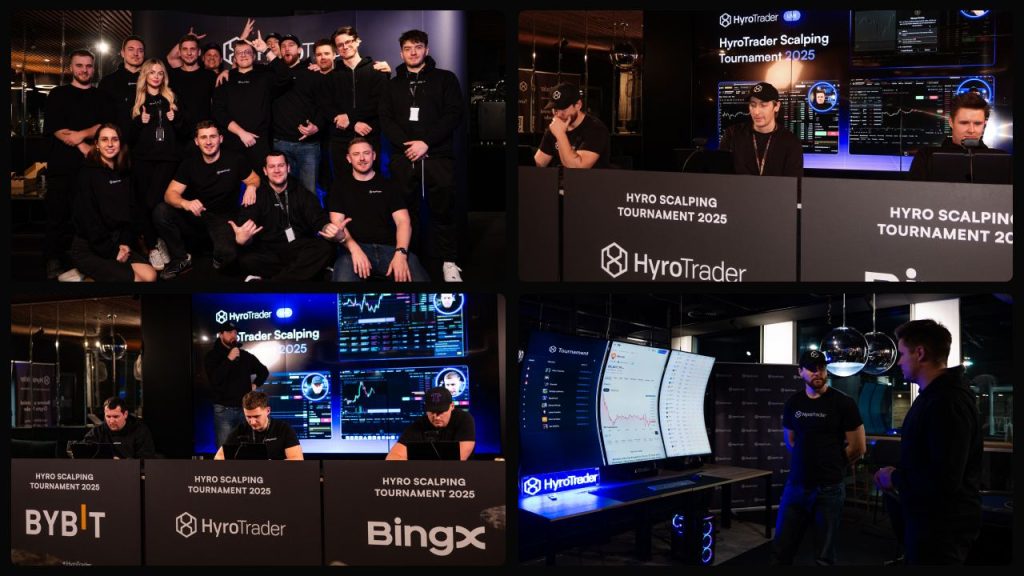
Beyond its trading platform, HyroTrader actively supports the global trading community through live events and competitions. The company has organized crypto trading tournaments in Dubai and Prague, with an upcoming event planned for Miami.
These initiatives connect traders, partners, and industry participants in real-world settings while promoting transparency and professional standards across the sector.
Building Toward Decentralized Verification
HyroTrader is developing a decentralized protocol designed to improve transparency in crypto prop trading. The initiative aims to make selected trading and performance data verifiable and auditable on-chain, reducing reliance on internal reporting systems.
This reflects the company’s broader position that long-term trust in the industry will depend on verifiable infrastructure rather than marketing claims alone.
Expanding Global Operations
HyroTrader continues to expand its global footprint, with ongoing work to extend operations to the United States. The company is also preparing new infrastructure designed to scale with increasing demand as its trader base grows internationally.
The focus remains on sustainable growth and product quality rather than rapid expansion, with the goal of contributing to higher standards across the crypto prop trading industry.
HyroTrader is a crypto-proprietary trading firm offering funded accounts up to $200,000, with the potential to scale to $1 million. Founded in 2023 and headquartered in Prague with operations in Dubai, HyroTrader provides traders with direct exchange access, transparent evaluation processes, and professional trading infrastructure. The company was recognized as Best Crypto Prop Firm of the Year at the ProFX Awards Dubai 2025.
Jupiter Mobile V3 deploys Bloomberg-caliber retail tools to over 1 Million Users who pushed $8 Billion in Volume during 2025
Road Town, British Virgin Islands, 26th January 2026, ZEX PR WIRE,Jupiter, the global leader in onchain finance with over $3 trillion in lifetime volume, today announced the completion of Jupiter Mobile V3’s full public release. Now, users have access to mobile trading tools comparable to Bloomberg Terminal while benefitting from the advantages of onchain finance, such as full self-custody and instant yield.
Mobile V3 is a cornerstone of Jupiter’s 2026 mission to own the onchain finance transition. By unifying trading, analytics, discovery, and execution into one native app, Jupiter is breaking down the barriers to institutional onchain finance and accelerating towards a future where traditional finance is obsolete.
“Jupiter is leading the transition to onchain finance and the Mobile V3 app is at the center of the movement for millions of users worldwide,” said Xiao-Xiao Zhu, President of Jupiter. “Mobile V3 isn’t just a wallet, it’s the entire Jupiter product suite, built for a mobile-first experience. The same execution and infrastructure that’s processed over 3 trillion dollars in volume, now in your pocket.”
Success of Mobile V3 Launch
To complete Mobile V3, Jupiter rolled out 21 features across 21 days, delivering what is now the premier terminal of onchain trading experiences.
By vertically integrating the financial stack, Jupiter has eliminated the inefficiencies of legacy banking and fragmented onchain routing, achieving a 10x reduction in transaction losses and saving nearly $60M in 2025 via the new Ultra V3 Engine.
The addition of these new proprietary features ensures Jupiter remains the leading onchain volume facilitator by delivering institutional-grade execution to the individual. This comprehensive suite replaces centralized intermediaries with a model built on transparency, self-custody, and shared communal value.
Mobile V3 Campaign Features
Premier Institutional Retail Experience: Mobile V3 is now the #1 mobile onchain high-frequency trading terminal.
V3 Attracts Volume Traders: Over 1 million users drove nearly $8B in volume in 2025, fueled by a 2x growth in wallet imports.
Global Mobile Reach: The most active users are from across three continents: the United States, Nigeria, and Indonesia.
Communal Capital via jupUSD: jupUSD’s stablecoin yield capture is central to Mobile V3 and is designed to return native treasury earnings back to the community.
“V3 was about depth. We created the most complete pro-trading terminal in crypto. Every feature enhances the experience, and the data overwhelmingly shows that high-impact traders disproportionately use Jupiter mobile,” said Meow, Founder of Jupiter. “V4 will be about reach. Crypto adoption explodes when it’s portable, when the UX feels native, and when onchain becomes invisible to the average user.”
Jupuary and CatLumpurr
The celebration of Jupiter in January reaches an apex at CatLumpurr, the annual summit bringing together the Jupiter community. CatLumpurr will take place in Kuala Lumpur between January 31 – February 2, where attendees will connect to witness the dawn of the “Web4” era, amidst several key product releases to set the tone for the year
Users can enjoy Jupiter Mobile V3 via:
Download: Available now on the iOS App Store and Google Play Store.
Developers: Explore mobile-first APIs at ag/mobile.
About Jupiter
Jupiter is the global leader in onchain finance, building the infrastructure for an open financial future. With over $1 trillion in annual volume, and the largest TVL on Solana, Jupiter delivers a unified onchain experience spanning spot, perpetuals, lending, staking, token creation, prediction markets, and mobile, with many more products to come.
United States, 26th Jan 2026 – Emsu Equipment has implemented a standardized process for the sale of used heavy equipment, emphasizing inspection, reconditioning, delivery verification, and warranty coverage. The company’s approach is designed to address common uncertainties associated with purchasing pre-owned machinery by establishing consistent technical and operational review procedures before equipment is made available to buyers.
Inspection and Reconditioning Standards
Each machine offered by Emsu Equipment undergoes a comprehensive inspection prior to listing. This process includes system-level evaluation rather than visual-only assessment. Hydraulic systems are tested under operational load, electrical systems are traced, and fluid samples are analyzed for contamination or metal content. Equipment functions are cycled and performance is monitored to identify mechanical or operational issues.
Following inspection, machines are reconditioned where necessary. Worn seals, belts, hoses, filters, and fluids are replaced. Interior and exterior cleaning is performed to support maintenance access and post-delivery evaluation. According to the company, equipment is prepared to operational readiness before being added to inventory.
Delivery Verification and Warranty Coverage
Upon delivery, Emsu Equipment provides a verification period during which buyers may inspect and test the machine on-site. This process is intended to allow confirmation that the equipment condition aligns with inspection disclosures. The delivery process includes a defined approval window before final acceptance.
The company also provides a return period during the initial post-delivery phase. In cases of mechanical failure during this period, Emsu Equipment offers repair, replacement, or refund options. Beyond the return window, extended warranty coverage is included for parts and labor, administered through authorized service providers.
Equipment Inventory Scope
Emsu Equipment maintains an inventory of more than 100 machines across several categories, including skid steers, track loaders, excavators, wheel loaders, backhoe loaders, bulldozers, forklifts, telehandlers, and tractors. Inventory availability varies based on market demand and sourcing conditions.
In instances where specific models or configurations are not in stock, the company offers a sourcing service. Machines acquired through this process are subjected to the same inspection, reconditioning, and warranty standards as on-lot inventory.
Logistics and Shipping Process
The company operates a delivery framework using both in-house drivers and contracted carriers. Equipment shipments are scheduled following purchase completion, with delivery timelines based on location and transport availability. Tracking information is provided, and delivery scheduling is coordinated to align with logistical capacity.
Transaction Structure
Emsu Equipment follows a standardized transaction sequence that includes inventory selection or sourcing, machine condition disclosure, documentation processing, delivery coordination, and post-delivery verification. Pricing is structured based on machine condition, usage hours, configuration, and market benchmarks. Quoted pricing includes delivery, with no additional documentation or preparation fees.
Customer Base and Operational Reach
Emsu Equipment reports having shipped machinery to customers across 35 U.S. states. A portion of its customer base consists of repeat buyers, which the company attributes to post-sale service continuity, warranty fulfillment, and consistent equipment performance.
Operational Focus
Emsu Equipment positions its operational model around reducing uncertainty in used equipment transactions through inspection transparency, warranty inclusion, and delivery verification. The company’s stated objective is to provide used machinery that meets defined technical standards while maintaining structured post-sale support.
About Emsu Equipment
Emsu Equipment is a U.S.-based supplier of used heavy equipment. The company specializes in inspected and reconditioned machinery, offering warranty-backed sales and nationwide delivery services.
The post Emsu Equipment Introduces a Structured Approach to Used Equipment Sales appeared first on King Newswire. This content is provided by a third-party source.. King Newswire makes no warranties or representations in connection with it. King Newswire is a press release distribution agency and does not endorse or verify the claims made in this release. If you have any complaints or copyright concerns related to this article, please contact the company listed in the ‘Media Contact’ section
Australia, 26th Jan 2026 – Totalcare Dental and Dermal, a leading provider of dental and cosmetic services, has announced its focus on smile transformation services aimed at enhancing the natural beauty of patients’ smiles and boosting their confidence. Located at Shop 3, Ground Level, 1 Spring St, Bondi Junction, Totalcare Dental and Dermal has become a trusted destination for individuals seeking both comprehensive dental care and aesthetic enhancements.
Totalcare Dental and Dermal offers a comprehensive range of services that cater to both general dental needs and cosmetic treatments. The clinic specialises in smile transformation procedures, such as teeth whitening, veneers, and orthodontics. These services are designed to help patients achieve the smile they have always desired, in a comfortable and welcoming environment. The clinic’s team is committed to delivering personalised treatments that ensure each patient’s aesthetic goals are met.
“Every smile is unique, and the team at Totalcare Dental and Dermal takes pride in offering customised solutions that align with each patient’s individual needs,” said Ishara Goonewardene, Owner of Totalcare Dental and Dermal. “Smile transformation is not just about improving the appearance of teeth. It is about empowering patients with the confidence that comes from achieving a smile they can be proud of.”
Totalcare Dental and Dermal’s approach to dental care places a strong emphasis on patient comfort. The clinic’s expert team of professionals provides comprehensive care, including general dentistry services such as routine check-ups and cleanings, alongside more specialised treatments. Services like sedation dentistry ensure that patients who may experience anxiety during procedures are given the attention and comfort they need.
The clinic also places great importance on preventive care, offering regular check-ups and early detection of oral health issues. By combining state-of-the-art technology with a patient-centred approach, Totalcare Dental and Dermal aims to ensure that patients maintain healthy teeth and gums for years to come.
“Looking ahead, Totalcare Dental and Dermal is committed to staying at the forefront of dental innovation. The clinic’s future focus will be on expanding services and continuing to offer cutting-edge treatments that support patients in achieving their dream smiles,” Goonewardene continued. “The ongoing commitment to providing the highest level of care, as well as a focus on new treatments, ensures that Totalcare remains a leader in both dental and cosmetic services.”
Totalcare Dental and Dermal has established a solid reputation within the local community. Patients frequently express satisfaction with the clinic’s personalised care and the comfortable, professional environment. With a strong commitment to patient well-being, Totalcare Dental and Dermal continues to grow and expand its services.
Individuals interested in learning more about smile transformation Bondi or scheduling an appointment are encouraged to contact Totalcare Dental and Dermal. The clinic’s expert team is ready to help patients achieve their desired smiles through personalised care and professional treatment options.
For additional information or to book an appointment for smile transformation Bondi, contact Totalcare Dental and Dermal at (02) 9387 3637 or via email at dentist@totalcaredentistry.com.au.
Noble Black Car Service announced the expansion of its professional black car transportation services in New York City. The company offers 24/7 airport transfers, corporate travel, event transportation, and private bookings across Manhattan and the surrounding tri-state area.
United States, 26th Jan 2026– NobleBlackCarService.com announced the expansion of its premium chauffeur-driven transportation service, serving business and leisure travelers throughout New York City and the tri-state region.
The service supports clients who need reliable and pre-scheduled transportation for airport travel, corporate meetings, special events, and private occasions. Operations are based in Manhattan, with service coverage extending across New York, New Jersey, and Connecticut.
Noble Black Car Service provides private airport transfers to all major New York area airports, including John F. Kennedy International Airport, LaGuardia Airport, Newark Liberty International Airport, Teterboro Airport, and Westchester County Airport. In addition to airport travel, the company offers executive car service, corporate shuttle transportation, sightseeing tours, cruise terminal transfers, and transportation for concerts and sporting events.
Transportation is delivered through a fleet of luxury sedans, executive SUVs, and passenger vans. Vehicles are fully insured, regularly maintained, and professionally cleaned. Chauffeurs are licensed and vetted, with a focus on safety, professionalism, and punctual service.
Airport transfers are coordinated using live flight tracking to adjust pickup times for early arrivals or delays. Courtesy wait time and meet-and-greet coordination are included to help ensure smooth and timely transfers.
Noble Black Car Service operates using flat-rate pricing disclosed at booking, with no surge-based adjustments. The company positions itself as a structured alternative to rideshare services for clients who value consistent service standards, predictable pricing, and professional drivers.
About Noble Black Car Service
Noble Black Car Service provides premium black car transportation throughout New York City and the tri-state area. The company specializes in airport transfers, corporate travel, special event transportation, and private chauffeur service with 24/7 availability.
Noble Black Car Service 767 5th Ave, New York, NY 10153 +1 (888) 503-4449
The post NobleBlackCarService.com Offers Premium Chauffeur Service Across NYC appeared first on King Newswire. This content is provided by a third-party source.. King Newswire makes no warranties or representations in connection with it. King Newswire is a press release distribution agency and does not endorse or verify the claims made in this release. If you have any complaints or copyright concerns related to this article, please contact the company listed in the ‘Media Contact’ section