BesterMarkt24 UG announced the launch of its online marketplace for household, electronics, garden and leisure products. The shop uses artificial intelligence for routine e-commerce tasks, while its team selects suppliers, inspects and tests products, and handles customer questions personally.
Germany, 17th Nov 2026 – BesterMarkt24 UG announced the launch of BesterMarkt24, an online marketplace for household, electronics, garden and leisure products that combines artificial intelligence with hands-on product checks by its team.
The marketplace is built around a division of labor between software and people. In a typical online shop, staff spend much of the day entering product data, writing descriptions, editing photos, translating text and answering repeat questions. BesterMarkt24 hands that routine work to AI so its team can spend time where human judgment matters most: checking, testing and assessing products before they reach customers.
AI handles six tasks at BesterMarkt24. It turns supplier data into structured product pages, writes consistent German-language descriptions, cross-checks technical specifications from different sources and flags anything that does not match, converts and labels photos so pages load quickly on mobile, keeps prices, availability and product feeds up to date, and routes customer messages to the right person on the team.
The team’s role covers the decisions that affect quality. Staff choose which suppliers and products the shop carries, review photos and product details for damage, missing parts and signs of wear, test products for function where it matters before they go online or ship, and check AI-generated listings for errors. When something is unclear, the team asks the supplier rather than guessing, and questions about products, condition or delivery are answered by a person. The company states that AI never has the final say on quality.
The current range includes pillows, electronics, GPS trackers, refurbished smartphones, fishing supplies and original used car parts. Refurbished Apple iPhones are sold with 100% battery capacity and a 12-month warranty, and the shop’s own AirTrack GPS tracker works with Apple Find My and Android Find Hub without a subscription. Listings carry labels showing whether a seller has been verified, whether a product has been tested by BesterMarkt24, whether buyer protection applies and whether the item ships from BesterMarkt24’s own stock.
BesterMarkt24 delivers to all European Union member states as well as Norway, Iceland, Liechtenstein, Switzerland and the United Kingdom, with free standard shipping and free returns within 30 days.
About BesterMarkt24 UG
BesterMarkt24 UG runs an AI-assisted online marketplace where AI handles routine shop work and people select, inspect and test products, keeping quality high and prices fair.
Site-Measure announced the launch of its free material estimating tool for landscaping, driveway and hardscape projects. Sixteen calculators convert measurements into cubic yards, tons, bags and cost, with every material weight and price linked to its published source.
United States, 17th Nov 2026 – Site-Measure announced the launch of its free material estimating tool, a set of 16 calculators that help people work out how much gravel, stone, sand, soil, mulch or asphalt to order for driveways, patios, paths and gardens.
The tool is built around a common gap between how people measure and how materials are sold. Projects are measured in feet and inches, while suppliers sell aggregate by the ton or the cubic yard, and the weight of a yard varies from one product to the next. Each Site-Measure calculator answers one question that comes up before ordering: how many yards or tons an area needs, how deep to spread the material, what a yard weighs and what it will cost.
The calculators cover nine materials, including pea gravel, river rock, landscape rock, #57 stone, crushed stone, crusher run, road base, paver base and decomposed granite, along with sand, dirt and topsoil, mulch and asphalt, plus a cubic yards to tons converter. Users can enter rectangles, circles, known areas or known volumes in US or metric units, combine several areas in one estimate, and copy, print or share the result. Calculations run in the browser, and no account is needed.
Sourcing is central to the project. The site currently draws on 53 published weights per yard from 33 sources and 64 published prices from 17 suppliers, each stored with the page it came from and the date it was recorded. Depths and stone sizes follow the documents that set them, including state transportation department specifications, federal highway guidance, paver industry standards and playground safety guidelines. Where two sources disagree, both are shown, and a public methodology page explains every formula.
Site-Measure operates independently. It carries no advertising, affiliate links or paid listings and has no business relationship with the suppliers, stores or manufacturers named on the site. The project does not sell materials and advises users to confirm material, depth and compaction requirements with their supplier or installer before ordering.
Landscape supply yards and do-it-yourself websites can also embed the gravel calculator on their own pages at no cost.
About Site-Measure
Site-Measure is an independent, free material estimating tool for landscaping and driveway projects, offering calculators for gravel, stone, sand, soil, mulch and asphalt backed by published supplier data. The project is run by Vincent Ruan.
The company uses an illustrative trading calculation to distinguish order instructions, completed transactions, product terms and account balance changes.
United States, 17th Nov 2026 – Quanticagpt has outlined how its AI-assisted grid trading framework distinguishes preset trading instructions, executed transactions and related USDC-denominated account records. To illustrate the calculation, a hypothetical purchase of one unit at 100 USDC followed by a sale at 101 USDC would produce a gross price difference of 1 USDC, assuming both trades were completed at the stated prices. The example excludes applicable trading costs and does not represent an actual customer result or a prediction of strategy performance.
A grid divides a chosen trading range into several levels. Rules specify where buy or sell instructions may be generated and the amount associated with each instruction. Quanticagpt describes its AI grid engine as adjusting strategy parameters as market conditions change. Those adjustments concern how instructions are formed; the actual fill still depends on available market prices and liquidity.
An instruction records an intended action. A completed trade records what the market allowed at that time. This difference matters because a price shown when an order is prepared may differ from the price at which it is filled. The quantity traded also matters: the price difference for one unit cannot be applied to a different quantity without adjusting the calculation.
Reading the 100 to 101 example
In the example, one unit is bought for 100 USDC and the same unit is sold for 101 USDC. Subtracting the purchase amount from the sale amount gives a gross difference of 1 USDC. That figure comes before applicable trading costs. It does not describe the amount that a product order would return at maturity.
The calculation assumes that both transactions have occurred at the stated prices. An order waiting to sell at 101 USDC has not yet produced that difference. A record of the purchase alone leaves the later sale unresolved. Treating the two stages separately avoids assigning a completed result to an instruction that has only been placed.
The example also covers just one round of buying and selling. It provides no measure of results over a longer period or across other holdings. Strategy profit or loss depends on actual fills and applicable costs. A positive difference in one completed round does not establish the outcome of the wider strategy or protect it against losses.
Why the unit of account matters
USDC expresses the purchase and sale amounts in the same unit, so the subtraction is straightforward. Using a common unit explains the arithmetic without showing that all trading conditions are the same. It also leaves costs to be accounted for. An account balance expressed in USDC remains a record of an amount, rather than proof that a strategy was profitable.
Quanticagpt records USDT and USDC balances separately. A conversion between those balances is a different transaction from the purchase and sale in the example. Its quote, fees and expected credited amount describe the conversion. Those details should not be confused with a trading gain merely because the resulting balance is later shown in USDC.
Trading activity and a product order
According to the company, Quanticagpt maintains separate records for trading activity and USDC-denominated product orders. Product documentation specifies the minimum participation amount, lock period, cap on outstanding principal and applicable eligibility conditions, while the order confirmation records funding details and settlement rules. These terms describe the conditions associated with a particular product and should be assessed separately from the illustrative grid trading calculation, which does not establish any product’s actual return.
When an order takes effect, committed funds are recorded as a product holding. Order details show the start time, maturity time and settlement status. These entries describe the order’s progress. They serve a different purpose from a trade record showing a purchase price and sale price, even when both use USDC to state amounts.
Following the account entry
Based on Quanticagpt’s described product framework, amounts credited at maturity depend on the applicable product rules and actual strategy results. The platform’s stated process involves calculating the returnable portion of committed funds according to the terms confirmed when the order was placed, with any resulting credit reflected in the available USDC balance. A stated maturity date does not, by itself, guarantee repayment of the full committed amount or a positive trading outcome.
The corresponding account activity is where the credit can be checked. An order detail explains which product has reached settlement, while a fund record shows the balance entry. Reading these records together separates the status of a product from the movement of available funds. Neither entry, viewed alone, explains every part of the trading result.
The timing of the records supplies further context. A strategy instruction belongs to the moment it was generated; a fill belongs to the completed market transaction. Product settlement follows the rules attached to the order, and the account credit records the resulting balance movement. Comparing the relevant amounts and stages is necessary before attributing a balance change to trading profit.
About QUANTICAGPT
Quanticagpt is operated by Quanticagpt Ltd. and provides AI quantitative strategy tools, USDC products with multiple terms and account fund services.
BIHE has outlined its digital asset service development priorities following its corporate restructuring, focusing on product classification, trading information and account management. The company is examining differences between trading instruments as Bitcoin exchange-traded products provide additional market context.
United States, 17th Nov 2026 – BIHE, a digital asset trading platform, has outlined its service development priorities, focusing on the organization of trading products, account functionality and operational information across different digital asset instruments. The company’s approach emphasizes clearer product classification, applicable trading conditions and the relationship between transaction processes and account management.
According to company information, BIHE has made adjustments to its branding, technical architecture, product framework and operating processes following a corporate restructuring. These changes form part of its broader effort to review how different trading instruments are organized and how relevant information is presented within its service framework.
The company’s stated product development areas include spot digital asset trading, USDT-margined perpetual contracts and standardized options. These instruments operate through different market mechanisms, requiring separate considerations for transaction execution, settlement arrangements, risk exposure and participation conditions.
BIHE’s service framework places attention on the distinctions between different categories of digital asset trading.
Spot transactions generally involve the direct purchase and sale of digital assets, while perpetual contracts operate as derivative instruments that may involve leverage, funding arrangements and liquidation risks. Standardized options are subject to specific contractual conditions, including expiration dates, exercise prices and settlement procedures.
These differences influence the information required to assess each instrument. Trading hours, transaction fees, liquidity conditions, margin requirements and eligibility restrictions may vary depending on the product category.
BIHE is examining how such information can be organized alongside trading functions and account records. The company’s stated priorities include market information displays, order placement processes, transaction histories, asset management functions and access to applicable fee information.
BIHE’s review takes place within a broader financial market environment in which digital asset exposure is available through different structures.
On January 10, 2024, the U.S. Securities and Exchange Commission (SEC) approved the listing and trading of several spot Bitcoin exchange-traded products (ETPs). The decision enabled investors to obtain exposure to Bitcoin price movements through listed securities without directly holding the underlying cryptocurrency.
The approval applied to specific exchange-traded products and did not constitute regulatory endorsement of Bitcoin or cryptocurrency trading platforms. This development provides an industry example of how Bitcoin-related market exposure can be structured differently from direct cryptocurrency transactions.
Spot Bitcoin ETPs are accessed through securities accounts and operate according to applicable trading, disclosure and fee arrangements. Direct digital asset trading involves separate considerations relating to custody, transaction execution and account management.
The distinction is relevant to BIHE’s product classification approach because different financial instruments may carry different rights, costs, settlement requirements and risk characteristics.
The Bitcoin ETP market development is referenced solely as industry context and does not imply that BIHE offers these securities products or participates in the related arrangements.
Alongside product classification, BIHE is reviewing how trading information and account management processes can be coordinated across different product categories. The company’s service development priorities include the presentation of transaction records, account balances, market data and applicable trading conditions.
Different trading instruments may generate distinct types of account activity. For example, spot transactions involve asset purchases and sales, while perpetual contracts may require additional records relating to margin, funding payments and position adjustments.
These differences are relevant when organizing account information and explaining how transaction costs or balance changes arise. BIHE is examining how its account functions and product information can reflect these distinctions while maintaining the operating rules applicable to each trading category.
BIHE plans to continue reviewing its digital asset service framework, with attention to product organization, trading information and operational requirements.
The company’s stated development direction includes assessing how different trading instruments can be supported by appropriate account functions and product-specific information. As digital asset markets evolve, the availability of different investment and trading channels does not eliminate the need to distinguish their underlying structures and risks.
Specific BIHE products and services remain subject to applicable regulations, geographic restrictions, participation requirements and official platform conditions.
About BIHE
BIHE is a digital asset trading platform focused on trading products and related account services. According to company information, its product development areas include spot transactions, perpetual contracts, standardized options and selected exploratory services. The company also focuses on account information, transaction records and operating procedures. Product availability and participation requirements remain subject to applicable regulations, regional restrictions and official platform rules.
Leaders from Vietnam, Indonesia, India and Pakistan Strengthen International Collaboration Through Regional Meetings, Market Discussions and Community Development Activities
Dubai, United Arab Emirates, 17th Nov 2026 – Anthony Community has described a series of regional leadership meetings and community activities involving representatives from Vietnam, Indonesia, India and Pakistan. According to the project materials, these activities include group discussions, technology presentations, training sessions and regional networking, providing opportunities for participants to exchange experiences and discuss community development across different markets.
The regional engagements involve several key leaders who are actively contributing to community development, organizational support, and market expansion in their respective countries. These individuals serve as vital bridges between local participants and the wider international ecosystem, facilitating communication and ensuring that regional activities address local needs.
According to information provided by Anthony Community, the following individuals have been involved in regional community coordination and related activities:
Rossy (Vietnam Leader): Supporting Vietnam’s community development, local participation, and regional engagement initiatives.
Imran (Indonesia Leader): Leading the Indonesian team and strengthening local community participation through structured gatherings and collaborative workshops.
Mukesh (India Leader): Supporting India’s expanding leadership network and market development activities.
Raja (Pakistan Leader): Representing Pakistan’s community leadership, fostering cross-border cooperation, and advancing international collaboration.
Priyesh (India Leader): Participating actively in market discussions, operational planning, and leadership development initiatives.
Aamir (India Leader): Supporting India’s community engagement, regional expansion, and participant coordination.
These regional participants contribute to local community activities, communication between members and coordination with the wider international network.
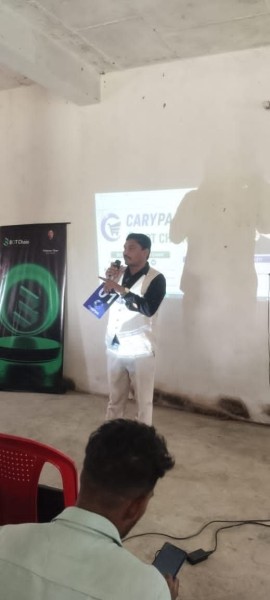
Rather than being concentrated within a single administrative center, Anthony Community’s activities take place across multiple cities, towns, and local communities, reflecting the decentralized nature of its global network. The gatherings encompass a wide variety of formats, including formal leadership meetings, technology presentations, market-sharing sessions, community training modules, and collaborative networking activities. For instance, in Jepara, Indonesia, local community members participated directly in group discussions and presentations, while other regional activities brought together members across various distinct venues and locations.
These diverse initiatives provide consistent opportunities for local teams to exchange practical experiences, develop essential leadership capabilities, and strengthen direct connections with the wider international network. By engaging participants in localized settings, the community ensures that members at all levels can contribute meaningfully to discussions on technology, market development, and organizational growth.
Anthony Community recognises that sustainable international growth requires strong local leadership, transparent communication, and active community participation. By connecting leaders and members from Vietnam, Indonesia, India, and Pakistan, the network aims to facilitate structured knowledge exchange, encourage cross-border collaboration, and create new opportunities across distinct regional markets. The active involvement of regional leaders also helps strengthen communication channels between local communities and the broader international ecosystem. This two-way communication flow ensures that regional insights are accurately reflected in overarching network strategies, while global resources and educational programs are effectively delivered to local participants.
According to project information, Anthony Community reports activity in more than 50 countries across 10 strategic regions, with approximately 100 community meetings and related activities taking place each week. These activities include leadership discussions, educational sessions, business networking and technology knowledge sharing. The project materials also reference ODYSSEY in connection with artificial intelligence-related developments discussed within the wider community network.
Anthony Community plans to continue its regional community activities, with attention to leadership training, communication between local groups and international knowledge exchange.
About Anthony Community
Anthony Community is an international community network operating across more than 50 countries and 10 strategic regions. Dedicated to fostering cross-border collaboration, leadership development, educational outreach, and technology sharing, the network connects people, markets, and emerging opportunities. Supporting the international expansion vision of ODYSSEY, Anthony Community facilitates approximately 100 weekly activities worldwide, empowering local teams and regional leaders to build a sustainable, connected global community.
The November 8 gathering brought community members together for leadership development, regional exchange and discussions on international community engagement.
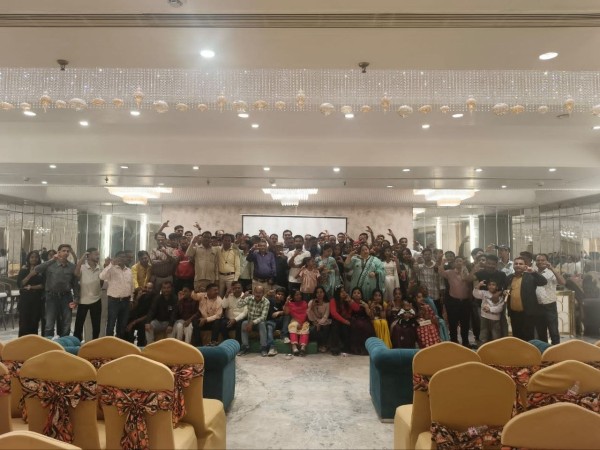
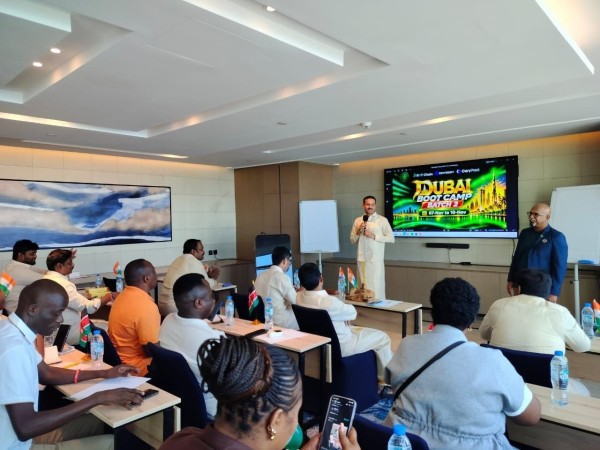
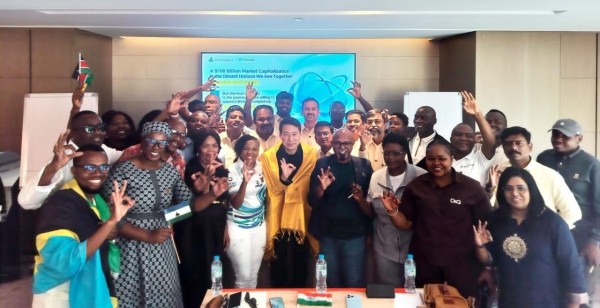
Dubai, United Arab Emirates, 17th Nov 2026 – Anthony Community, an international blockchain-focused community network, held a leadership training programme in Dubai on November 8, bringing together community leaders and members from India and Africa. The gathering focused on leadership development, regional communication and the exchange of experiences related to community engagement across different markets.
The programme formed part of Anthony Community’s ongoing efforts to connect members from different regions through educational activities, networking and international dialogue. Dubai provided a setting for participants to exchange perspectives on local community development and explore approaches to strengthening communication between regional groups.
The training brought together participants from different cultural and business environments, creating opportunities to discuss the responsibilities of community leadership and the practical considerations involved in coordinating activities across markets.
The programme emphasized knowledge sharing, communication and regional engagement. These areas are relevant to international community networks, where local groups may operate under different market conditions while sharing common interests in education, technology and professional development.
Participants from India and Africa were able to exchange regional perspectives and discuss approaches to community participation. The gathering also provided an opportunity to establish connections between members working across different geographical areas. According to the event materials, BOT Chain founder Johnson Zhao also visited the gathering.
Anthony Community has developed an international network connecting individuals, entrepreneurs and local community groups across multiple markets.
According to information provided by the community, its network extends across more than 50 countries and facilitates approximately 100 community events and activities each week.
These activities include leadership training, business networking, educational programmes, community gatherings and technology-sharing sessions. The events provide opportunities for participants to exchange information, discuss emerging developments and maintain communication across regional communities. Through these programmes, Anthony Community seeks to support local engagement while maintaining connections between its wider international membership.
Beyond leadership development, Anthony Community also maintains an interest in emerging technologies, including blockchain and artificial intelligence. Its wider technology-related discussions include the ODYSSEY ecosystem and its OneAI application platform, which project materials describe as an initiative involving AI models, intelligent agents and digital services.
For community networks operating across different regions, technology education can provide a common subject for discussion while allowing participants to explore how digital developments may relate to their respective markets. The Dubai gathering, however, remained primarily focused on community leadership, regional communication and international exchange.
The November 8 training provided another opportunity for Anthony Community members from different regions to meet and exchange perspectives.
As the community continues its international activities, leadership development, knowledge exchange and communication between regional groups remain among its areas of focus. The Dubai programme reflects Anthony Community’s ongoing approach to community engagement through educational gatherings and cross-border interaction.
About Anthony Community
Anthony Community is an international blockchain-focused community network that connects individuals and regional groups through educational activities, leadership development and knowledge sharing. Its community programmes include business networking, regional gatherings and discussions involving emerging technologies. The community focuses on facilitating communication and engagement among participants across different international markets.
New York, New York, November 16th, 2026, FinanceWire
The collaboration connects Injective’s financial blockchain infrastructure with the University of Tokyo’s expertise in blockchain research and education, to accelerate education, research and technical talent development with the university’s Endowed Chair.
Injective Foundation today announced an agreement with the University of Tokyo, Japan’s top-ranked university, to support blockchain education and explore collaboration in onchain finance, research, and talent development. Signed through the university’s Graduate School of Engineering, the Memorandum of Understanding establishes a framework for collaboration with its Endowed Chair for Blockchain Innovation.
Founded in 1877 as Japan’s first national university, the University of Tokyo ranks first in Japan and 27th globally in the Times Higher Education World University Rankings 2027. The collaboration connects Injective’s experience building financial blockchain infrastructure with an academic program dedicated to blockchain research, practical implementation and the development of future engineers and entrepreneurs.
Injective and the Endowed Chair are planning a collaborative lecture examining blockchain infrastructure, financial market design and onchain applications. The session will introduce Injective’s Layer 1 architecture and its applications across trading, real-world asset tokenization and settlement, with a hands-on component for participants interested in blockchain development.
The planned session will connect the technical design of blockchain systems with the financial activity they support. Participants will examine how infrastructure can enable assets to be represented, traded and settled onchain, alongside the engineering and market-design considerations involved in developing these applications.
“Financial infrastructure advances when talented people have the tools and knowledge to build something better,” said Eric Chen, CEO of Injective Labs. “Working with Japan’s top university brings Injective’s expertise in onchain markets into one of the world’s leading academic environments. We want future builders to understand how this infrastructure works and gain practical experience developing the financial applications it makes possible.”
Established in November 2018, the Endowed Chair for Blockchain Innovation combines research and development, practical implementation and talent development. Its work draws on computer science, cryptography and economics to examine the capabilities and limitations of blockchain systems, including privacy, scalability and the reliability of data brought onchain.
The collaboration brings an industry perspective to that academic work. Injective’s architecture will provide a concrete system for participants to study and discuss, connecting blockchain theory with the design of infrastructure for financial applications.
Beyond the planned lecture, the two sides may explore research opportunities related to real-world asset tokenization and onchain financial structures relevant to Japan. Other activities under consideration include workshops, public events, a future hackathon and programs bringing together researchers, developers and financial practitioners.
“Understanding onchain finance requires us to examine both the technology and the financial systems it interacts with,” said Kyohei Shibano, Project Researcher at the University of Tokyo. “Our collaboration with Injective offers an opportunity to bring those perspectives together. Through education and practical discussion, we hope to deepen participants’ understanding of blockchain applications and identify important questions for future research.”
For Injective, supporting the Endowed Chair is an investment in the knowledge and skills needed to develop onchain financial markets. The planned lecture provides an initial focus for the collaboration, with further educational activities and potential research to be explored under the agreement.
About Injective
Injective is the first blockchain purpose-built for finance, enabling users, institutions, and AI agents to trade, tokenize, and transact at scale. Proudly made in America, Injective provides foundational blockchain infrastructure for global markets, with embedded financial primitives spanning stablecoins, real-world assets, payments, and programmable perpetuals through a unified onchain engine. Injective is used by Fortune 500 companies, banks, fintechs, and governments to power an open economy where any asset can be accessed anytime, from anywhere. Builders can deploy across multiple virtual machines like WASM and EVM, connect to native financial modules, and launch markets with deep liquidity from day one.
The University of Tokyo was established in 1877 as Japan’s first national university. UTokyo offers undergraduate and graduate education across nearly all academic disciplines and conducts research across the arts and sciences. Its academic community works across three core campuses in Hongo, Komaba, and Kashiwa.
New York, United States, November 16th, 2026, FinanceWire
Banking and insurance revenue more than doubled; net income rose 29% and total assets reached $16.6 billion as the company continued expanding its customer base and international presence
Freedom Holding Corp. (NASDAQ: FRHC), an international financial services and technology group, today announced its unaudited consolidated financial results for the second quarter of fiscal year 2027, covering the three months ended September 30, 2026.
Revenue reached $910.1 million for the quarter, compared with $503.6 million a year earlier, an increase of 81%. Growth was driven largely by strong performances in banking and insurance. Net income increased 29% to $46.1 million from $35.7 million, while diluted earnings per share rose to $0.76 from $0.58.
For the first half of fiscal year 2027, Freedom reported revenue of $1.64 billion, up 60% from a year earlier, while net income reached $77.7 million. Freedom’s total assets reached $16.61 billion as of September 30, 2026, a 26% increase from $13.16 billion at the end of March.
“Our second-quarter results reflect the strength of our diversified business model and the momentum we are building across financial services and technology,” said Timur Turlov, Chief Executive Officer of Freedom Holding Corp. “With quarterly revenue increasing 81%, driven by particularly strong growth in banking and insurance, we continue to see the benefits of expanding our customer reach and connecting more services within the Freedom ecosystem. Our entry into Türkiye’s banking market and strategic acquisitions in education and technology mark important steps in our long-term strategy to build an integrated platform that serves customers across multiple markets.”
Business Segment Results
Banking and insurance accounted for much of Freedom’s revenue growth, with both segments more than doubling revenue compared with a year earlier. Banking revenue nearly tripled to $298.1 million, up 182% from $105.7 million a year earlier. The increase was driven in part by higher interest income, supported by an expanding loan portfolio, growth in securities investments, and gains from securities trading and foreign exchange transactions.
Revenue in the insurance segment rose 133% to $299.2 million, putting insurance slightly ahead of banking for the quarter. Much of the growth came from the pension annuityinsurance business, which recorded an increase in new policies and related premium inflows. Revenue in the Other segment rose 161% to $90.5 million, supported by telecommunications, online retail and other digital services. The brokerage segment recorded a 5% decline in revenue to $222.2 million from $234.9 million a year earlier, mainly due to weaker results from securities trading and foreign exchange operations.
Across the group, interest income increased 53% to $323.9 million, while net insurance revenue rose 148% to $254.8 million. Fee and commission income increased 12% to $148.5 million.
Expansion of the Customer Base and Digital Ecosystem
Freedom continued to expand its customer base, particularly across its banking and digital services. The banking segment reported 5.934 million customers at the end of September, an increase of 908,000 since the start of the fiscal year in April. The number of brokerage customers rose from 858,000 to 907,000 over the same six-month period. The Other segment, including technology and lifestyle services, had 1.553 million customers at the end of September, compared with 1.105 million at the end of March.
Freedom is also developing an integrated ecosystem that allows customers to access multiple financial and digital services through the group’s platforms. Banking customers can use investment, insurance, payment and other products within the same ecosystem. In Kazakhstan, Freedom has been developing this model through its SuperApp, which combines financial services and everyday transactions.
Acquisitions in Banking, Education and Technology
Freedom continued to expand its operations through acquisitions during the first half of the fiscal year. On July 31, the group completed the acquisition of a combined 99.3% ownership interest in Freedom Bank TR (Turkish Bank), a licensed Turkish commercial bank that has operated in Türkiye since 1982. The acquisition provides Freedom with an established platform for expanding its digital banking and financial services offerings in the Turkish market. The group’s acquisition activity extended beyond financial services. In September, Freedom acquired a 60% stake in Bilim Group, a major educational technology provider in Kazakhstan and Central Asia.
During the first half of the fiscal year, Freedom also acquired German chess software developer ChessBase GmbH and Estonia-based Wallet Solutions OÜ, a virtual asset service provider. These acquisitions support Freedom’s strategy to expand its international presence, strengthen its digital ecosystem and integrate complementary businesses into its existing operations.
About Freedom Holding Corp.
Freedom Holding Corp. provides financial services in 27 countries, including Kazakhstan, the United States, multiple EU countries, Uzbekistan, and Armenia. The Company’s principal executive office is located in New York City.In Kazakhstan, Freedom is actively developing its financial and digital ecosystem, which includes Freedom Bank, Freedom Broker, the insurance companies Freedom Life and Freedom insurance, as well as a lifestyle segment that features Arbuz.kz, Freedom Ticketon, and Aviata.
Freedom Holding Corp. shares are traded on the U.S. technology exchange NASDAQ, the Kazakhstan Stock Exchange (KASE), and the Astana International Exchange (AIX) under the ticker symbol FRHC. Freedom Holding Corp. is regulated by the U.S. Securities and Exchange Commission (SEC), and its common stock is included in the Russell 1000, Russell Midcap, Russell 3000, and Nasdaq Composite indices.
Contact
Head of Public Relations Natalia Kharlashina Freedom Holding Corp. prglobal@ffin.kz +77013641454