The Dallas fund manager says the questions an investor asks before writing a check matter more than the pitch they just heard.
A Different Starting Point
Dallas, Texas, November 11, 2026, ZEX PR WIRE, Gary Bassett, Founder, Chairman, and Managing Partner of HP Capital Partners in Dallas, Texas, has spent more than four decades moving through investment banking, enterprise software, and institutional asset management. He built that path at J.P. Morgan, founded and scaled Microbank before its sale to Citicorp, and led an investment banking division at Bank of America before launching HP Capital Partners in 2012.
Across those decades, he says the investors who do well are not the ones with the best spreadsheets. They are the ones who ask a short list of plain questions before they commit money, and who actually wait for honest answers.
“Most pitches are built to survive a good question,” Bassett says. “They are not built to survive four in a row.”
What Happens When the Story Stops Being True
Bassett says the first question he asks about any strategy is what happens to it when the thesis behind it breaks.
“Every investment has a story attached to it,” he says. “Rates will fall, a sector will consolidate, a currency will move. The question is not whether the story is good. It is what the manager does on the day it stops being true.”
He says investors rarely ask this directly, and managers rarely volunteer the answer, because it forces a conversation about losses before any money has changed hands.
Who Actually Owns the Risk Decision
The second question Bassett raises is about governance rather than strategy: who has the authority to cut a position, and under what conditions.
“A strategy is only as good as the person with their hand on the risk lever,” he says. “I want to know if that person has the authority to act without a committee meeting first.”
He points to his own work at HP Capital Partners, where asset allocation and risk parameters sit under direct oversight rather than a layered approval process, as the standard he measures other structures against.
What a Track Record Leaves Out
Bassett says a strong track record is the easiest thing for an investor to be shown and the hardest thing to read correctly.
“A five-year return number tells you almost nothing about how that return was earned,” he says. “It does not tell you how much leverage was used, how concentrated the positions were, or how the manager behaved in the one bad quarter that got smoothed over in the average.”
He says he asks managers to walk through their single worst period in detail rather than their best one, because the worst period shows how a strategy actually fails.
How It Fits With Everything Else Already Owned
The last question Bassett raises is one he says most individual investors skip entirely: how a new position interacts with everything already in the portfolio.
“People evaluate investments one at a time, as if each one exists in isolation,” he says. “It never does. A great strategy can still be the wrong addition if it moves the same way as everything else you already hold.”
He says this question matters more in periods when markets move together across asset classes, since diversification on paper can disappear exactly when it is needed most.
Questions Before Comfort
Bassett says none of these four questions are complicated, and that is the point.
“The goal is not to sound sophisticated,” he says. “The goal is to know what you actually own, and what it will do when conditions change. Most of the damage I have seen over the years came from a question that never got asked, not an answer nobody could have known.”
He says the habit of asking before committing carries over from his own background: the diligence standards built at J.P. Morgan, the operational discipline required to scale Microbank across banking and construction clients worldwide, and the risk oversight he now runs directly at HP Capital Partners.
“Capital markets reward patience with questions more than they reward confidence in answers,” he says. “That has not changed in forty-five years, and I do not expect it to change now.”
About Gary Bassett
Gary Bassett is the Founder, Chairman, and Managing Partner of HP Capital Partners, an investment firm based in Dallas, Texas. His career spans investment banking at J.P. Morgan, the founding and sale of Microbank Software Inc. to Citicorp, and a tenure as Managing Director of Investment Banking at Bank of America. He is a longtime resident of Highland Park, Texas, and a member of the Dallas Hall Society at Southern Methodist University.
Alaa Jaber, a self employed business man based in St. Louis, Missouri, writes to others who work for themselves about the parts of the job nobody else sees.
To Anyone Who Clocks in Alone
St. Louis, Missouri, November 11, 2026, ZEX PR WIRE, If you are self employed, you already know the strange math of it. No one tells you when you have done enough for the day. No one sets your hours but you, and no one else feels it when a week goes sideways. I have been doing this long enough to know that part never fully goes away. It just gets more familiar.
I am not writing this to hand out a system. I do not think there is one. I am writing it because I think a lot of people who work for themselves carry things quietly that are worth saying out loud.
The Quiet Weight Nobody Warns You About
When you work for a company, the company absorbs some of the risk. When you work for yourself, you absorb all of it. A slow month is not an abstract line on someone else’s report. It is your month.
I grew up with five siblings in New Jersey, so I learned early that things do not always go the way you planned, and you adjust anyway. That is most of what being self employed actually is. Not grand strategy. Adjusting, over and over, without making a show of it.
I think people outside this kind of work assume the hard part is the first leap, deciding to go out on your own. The leap is one day. The weight I am talking about is every ordinary Tuesday after that, when nothing is wrong exactly, but nothing is handed to you either.
What I Wish Someone Had Told Me
I wish someone had told me that slow periods are not verdicts. They are just slow periods. I used to treat a quiet stretch like evidence that something was broken. Now I treat it like weather. You plan around it, you do not panic over it.
I also wish someone had told me that comparing your timeline to someone else’s is a losing game. I came up through community college in Hudson County, not a traditional business path, and for a while I measured myself against people who had a different start entirely. That comparison never once helped me get anything done.
To the People in St. Louis Doing This Alongside Me
St. Louis has its own rhythm, and I have built what I do inside that rhythm, not around it. If you are self employed here, you know the city rewards people who actually show up, not people who talk the loudest about showing up. That has mattered more to me than anything I learned in a classroom.
I did not grow up here. I came from somewhere else entirely. But the work does not care where you started. It cares whether you are still doing it a year from now, and the year after that.
One Thing I Will Say Plainly
If you are newer to working for yourself and it feels harder than you expected, that is not a sign you picked wrong. It is a sign you are doing it honestly. The people who make it look effortless are usually just better at hiding the parts that are not.
I still play basketball, football, and baseball when I can, and I notice the same thing on a court or a field that I notice in the work. Nobody hands you a good day. You put one together, piece by piece, and some days the pieces do not fit as well as others.
That is not a complaint. It is just the job, and I think it is worth saying so, for anyone else doing it alone right now.
About Alaa Jaber
Alaa Jaber is a self employed business man based in St. Louis, Missouri. Originally from New Jersey, where he grew up with five siblings, he studied at Hudson County Community College before building his career independently. He has an interest in football, baseball, and basketball, and continues to work and live in the St. Louis area.
Andrew Dutil lays out what he expects to change in project controls and contract administration over the next year, and where that leaves people managing public works contracts.
A Harder Year for Cost Estimates
West Palm Beach, Florida, November 11, 2026, ZEX PR WIRE, Andrew Dutil has spent his career on the owner and contractor sides of civil works contracts, most of it tied to the US Army Corps of Engineers. He expects the coming year to put more strain on cost estimates than usual.
Material pricing has not settled into a predictable pattern. Dutil says that unpredictability shows up first in change orders, where both sides have to agree on a number before work can keep moving. When the baseline price keeps shifting, that agreement takes longer to reach.
“A change order used to be a formality on a lot of jobs,” Dutil says. “Now it is a negotiation almost every time, because nobody trusts last quarter’s pricing to hold.”
Claims Consulting Will See More Demand
Dutil works in claims consulting and contract administration as an independent contractor, and he expects that side of the field to get busier.
Projects delayed by pricing disputes or supply gaps tend to generate claims later, once someone has to account for the lost time. Dutil says he expects more of those claims to surface over the next year, particularly on larger public works jobs where schedules were set before current pricing conditions took hold.
“The claims coming now are not about bad planning,” he says. “They are about plans that were reasonable when they were written and then got overtaken by events nobody controlled.”
He expects contract administrators to spend more time documenting the reasons behind delays, not just the delays themselves, because that documentation is what eventually supports a claim or defends against one.
Scheduling Discipline Becomes Non-Negotiable
Dutil holds a Project Management Professional credential and works regularly with scheduling tools like Primavera. He says the next year will reward people who keep their schedules current rather than treating them as a document filed away after kickoff.
“A schedule that nobody updates is worse than no schedule,” Dutil says. “It gives people false confidence right up until the point it fails them.”
He expects more project teams to tighten how often they revisit the critical path, especially on jobs where a single delayed shipment can move a completion date by weeks. That kind of tracking, he says, is what separates a change order that gets resolved in a week from one that drags on for months.
What Dutil Tells People to Watch
Dutil’s outlook comes down to a few things he tells people to pay attention to over the next year:
Material and labor pricing that moves faster than contract terms account for.
Change orders that pile up without clear resolution timelines.
Schedules that have not been revised in weeks despite known delays.
Claims language that gets written after the fact instead of during the project.
None of these are new problems, Dutil says. What is different is how fast they compound when pricing is unstable.
“The fundamentals do not change,” he says. “What changes is how much room you have for error, and right now there is less of it than there used to be.”
Dutil’s background includes OSHA 30 certification and coursework through the Defense Acquisition University in contracting and facilities engineering. He says that mix of technical and contract knowledge is what the next year will demand most from people in his field: someone who can read a schedule, understand a contract clause, and see where the two are about to collide.
About Andrew Dutil
Andrew Dutil is an independent contractor working in project management, project controls, contract administration, and claims consulting. He is a combat veteran of Operation Iraqi Freedom II who served with the US Army and later worked as a civil engineer with the US Army Corps of Engineers. He holds a Bachelor’s degree in Architectural Studies and a Master of Architecture, both earned with honors from Norwich University. Dutil is a Project Management Professional and holds OSHA 30 certification, along with coursework through the Defense Acquisition University in contracting and facilities engineering. He lives in West Palm Beach, Florida.
Ryan Basnaw, CEO of Axsus Civil Development Company in Idaho, shares the truths behind common construction management misconceptions.
Why Construction Myths Persist
Idaho, USA, November 11, 2026, ZEX PR WIRE, Construction companies lose thousands of hours each year to outdated beliefs that sound logical but fail in practice. These myths spread because they are easy to repeat and hard to challenge without real-world evidence. Ryan Basnaw, CEO of Axsus Civil Development Company, has built his career on testing assumptions and replacing guesswork with systems that work. He developed PM Axsus, a construction management platform designed to address the gaps left by traditional methods. Below, he corrects five myths that continue to mislead contractors.
Myth One: Documentation Slows Down Projects
Many teams believe that stopping to document work creates delays. They assume the fastest path forward is to keep moving without pausing to record details. This myth persists because documentation feels like extra work that does not contribute to visible progress.
The reality is different. Basnaw experienced this firsthand when a project required significant rework because an inspector did not document the work correctly. “A project required significant rework due to inspector not documenting our work correctly. Now we document everything so inspectors can never claim they didn’t know something when it happened,” he explains. Documentation protects projects from costly rework and keeps everyone accountable.
Practical tip: Before leaving any job site, take two minutes to photograph completed work and log the date, time, and crew members present. Store these records in a shared folder accessible to your entire team.
Myth Two: Big Ideas Drive Success
There is a widespread belief that breakthrough ideas separate successful companies from struggling ones. People think innovation alone creates momentum and that the best businesses are built on unique concepts. This myth thrives because big ideas are exciting and easy to celebrate.
Basnaw takes a different view. “I don’t believe ideas have much value unless they solve a real problem,” he says. The construction management platform PM Axsus was built not around a clever concept but around real pain points in time tracking, fleet management, and cost tracking. Solutions matter more than novelty.
Practical tip: Before investing time in a new process or tool, write down the specific problem it solves. If you cannot name a real issue your team faces daily, the idea is not ready.
Myth Three: Success Means Working Harder
The construction industry often equates long hours with achievement. People assume that the hardest workers earn the most success and that there is no substitute for putting in extra time. This myth endures because effort is visible and easy to measure.
Basnaw challenges this definition. “Success is having the freedom to do what I want with my time. That’s always been my definition. Building a business is important, but I don’t think success is only measured by revenue or job titles. It’s about creating something that gives you choices and allows you to spend your time where it matters most,” he explains. Systems and consistency matter more than hours logged.
Practical tip: Identify one task you do manually each week that could be automated or delegated. Commit to eliminating it within the next 30 days so you can redirect that time toward planning or growth.
Myth Four: Consistency Is Less Important Than Intensity
Many leaders believe that occasional bursts of focused effort produce better results than steady daily habits. They think major pushes during crunch time compensate for gaps in routine. This myth holds on because dramatic effort feels more impressive than quiet repetition.
The evidence points elsewhere. “I’ve learned that consistency and attention to detail make the biggest difference over time. Small habits repeated every day create better outcomes than occasional bursts of effort,” Basnaw notes. Systems built on daily routines outlast short-term sprints.
Practical tip: Choose one small habit tied to project quality or team communication. Commit to doing it at the same time every day for two weeks. Track your completion rate in a simple checklist.
Myth Five: Admitting You Don’t Know Something Weakens Your Authority
Construction leaders often worry that acknowledging gaps in their knowledge will undermine their credibility. They assume their team expects them to have every answer and that uncertainty signals weakness. This myth persists because leadership is often confused with infallibility.
Basnaw sees it differently. “Never be too proud to admit you don’t know something,” he advises. Asking questions and seeking input builds stronger teams and prevents avoidable mistakes. Authority comes from making good decisions, not from pretending to know everything.
Practical tip: The next time a team member asks you a question you cannot answer, respond with, “I don’t know, but let’s figure it out together.” Model the behavior you want to see in your team.
If You Only Remember One Thing
Documentation protects your projects, consistency beats intensity, and admitting what you don’t know strengthens your leadership. Success is not about working longer hours or chasing big ideas. It is about building systems that solve real problems and give you the freedom to spend your time where it matters most.
Share This List and Try One Tip Today
Pick one myth from this list and apply the practical tip this week. Share this article with another contractor or project manager who could benefit from rethinking these common assumptions. Small changes repeated over time create better outcomes than waiting for the perfect moment to overhaul everything at once.
About Ryan Basnaw
Ryan Basnaw is CEO of Axsus Civil Development Company, a civil construction firm specializing in site work, grading, sewer and water systems, irrigation, storm systems, and turnkey subdivision and commercial civil construction. Based in Idaho, he developed PM Axsus, a construction management platform designed to help contractor-based businesses manage time tracking, fleet management, inspections, scheduling, materials, and project costs. He holds degrees in engineering and petroleum engineering and is a member of the Association of General Contractors.
Dr. Kurt Hatch, retired Professor of Practice and Faculty Director of the Educational Administration program in the School of Education at the University of Washington Tacoma, pushes back on the common rule that fairness means treating every student the same way.
Washington, USA, November 11, 2026, ZEX PR WIRE, Dr. Kurt Hatch says that rule is where a lot of good intentions quietly go wrong. Sameness is easy to measure and easy to defend in a meeting. It is also, in his view, a poor stand-in for fairness.
“If two students arrive with different needs and you give them the identical response, you have not treated them equally,” he says. “You have just made sure the gap between them stays exactly where it started.”
Hatch points to multi-tiered systems of support as a case where this gets settled in practice rather than debate. A tiered model does not give every student the same intervention. It matches the support to what a student actually needs, which means two students in the same classroom can be getting very different things at the same time.
“Nobody looking at a well-run tiered system calls it unfair,” he says. “They call it responsive. The confusion only shows up when we talk about equity in the abstract instead of watching how good systems already work.”
That gap between what schools already practice in their support systems and what they still say out loud about fairness is, in his view, worth noticing.
The sameness rule tends to hold up fine when the stakes are low: a shared classroom routine, a common grading rubric, a single school calendar. Hatch says it starts to fail once race, language, disability, or economic circumstance shape what a student walks in needing.
“A policy that looks neutral on paper can still produce very different outcomes for different students,” he says. “Neutral is not the same as equitable. Bias does not require anyone to intend harm. It can live quietly inside a rule that treats everyone identically.”
He is careful to separate this from the idea of lowering expectations for some students and not others. The standard he holds is the same for everyone. What changes is the support needed to get there.
Hatch’s background in systems leadership gives him a different question to put in place of “are we treating everyone the same.” He asks leaders to look at outcomes first, then work backward to the structures producing them.
“If a practice is producing uneven results across groups of students, the practice is the thing to examine, not the students,” he says. “That is a harder conversation than asking whether a rule applies to everyone. It is also the only conversation that actually moves outcomes.”
He also pushes leaders to separate two things that get collapsed together: consistency and uniformity. A school can be consistent in how it decides what support a student gets without being uniform in what that support looks like. In his experience, leadership teams that keep those two words apart make better decisions than teams that use them interchangeably.
Hatch’s view is shaped by work that spans classrooms, district leadership, and state policy. He has spent time watching where policy meant to help students gets simplified on its way into a building, often losing the nuance that made it work in the first place. The sameness rule, he argues, is one of those simplifications: a complicated idea about fairness flattened into something easy to repeat, at the cost of the students it was supposed to protect.
Dr. Kurt Hatch is a retired Professor of Practice and Faculty Director of the Educational Administration program in the School of Education at the University of Washington Tacoma. His work covers systems leadership, equity and bias, multi-tiered systems of support, and school behavioral and mental health. He has worked as a teacher, assistant principal, and principal in Washington state school districts, and has delivered keynote addresses as well as led professional learning at the local, state, and national level.
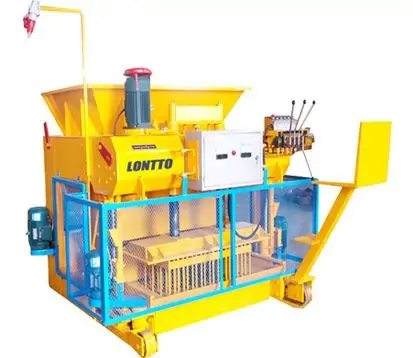
Chicago, IL 60638, United States, 11th Nov 2026 – Lontto, an established manufacturer of block, brick and related construction machinery, has announced a broader range of hollow block production equipment for buyers in export markets. According to the company, the range lists 17 models, from mobile units that need no pallet to fully automatic hydraulic machines built for higher daily output. Lontto states that the machines are made at its factory in Yinan County, Linyi City, in China’s Shandong province, and shipped by sea from Qingdao.
The company says it has more than 30 years of experience and more than 1,000 employees. Lontto supplies block and brick making equipment (link pending) alongside mobile and compressed earth block machines, AAC block plants and concrete batching plants. Hollow block equipment is one part of that wider production line, and the broader range gives export buyers more models to choose from within it.
What the Broader Range Covers
Hollow concrete blocks are widely used in wall construction. Lontto groups its hollow block models by how they are operated. Mobile models include a hydraulic series described as self-moving, automatic machines are built for higher daily output, and manual and semi-automatic models are listed for smaller operations.
“Buyers comparing hollow block equipment usually begin with the output they need per shift, and then choose between a mobile unit and a stationary line,” said Chao Zhang, CEO at Lontto. “The range is arranged so that each of those requirements has a model listed against it, whether the buyer needs a mobile unit for a smaller operation or an automatic machine for higher daily output. Having that match set out in advance helps overseas buyers compare options before they send an inquiry.”
Output ratings are given for 8 inch concrete hollow blocks over an eight hour shift. According to the company, they run from 1,440 blocks for a smaller mobile unit to as many as 27,648 for a hydraulic mobile machine.
One automatic model that forms four blocks per cycle, in 10 to 15 seconds, is rated for 7,680 to 8,640 blocks per shift. Lontto notes that most stationary models use pallets, while several mobile models need none, although some of these units require a cement ground surface.
What It Means for Buyers
Hollow blocks are one of several block types Lontto covers. The company also lists solid, interlocking, paver and porous blocks, and names concrete and fly ash as the materials for production. Its inquiry form also names cinder blocks, clay bricks and curbstones.
Lontto states that its machines use electrical components from Siemens, Schneider and Omron. Installation and training are provided with the machines, according to the company, and each purchase includes one set of free molds.
Buyers who visit the factory are offered airport pick-up, and machine videos are available on request. Lontto says it responds to quote requests within 24 hours on working days. Prices are given as starting prices that exclude shipping.
How Orders Reach Buyers
Lontto ships from Qingdao by sea and, the company states, arranges door to door delivery on CIF terms with marine insurance. It also helps with customs documents through local customs agents.
The company gives estimated delivery times by region, from about 10 days for Asia to 30 to 40 days for Africa.
Looking Ahead
Lontto says buyers can send an inquiry that sets out the block type, the daily output and the site conditions. The response is then matched against the models in the range, the company said. Lontto describes the inquiry as the starting point for choosing between the mobile, automatic and manual models on offer.
“The model list stays tied to the output and the block types that buyers ask about,” said Zhang. “Each inquiry is answered against those details first, so that the equipment suggested fits the site. The aim is for the recommendation to follow the buyer’s own requirements rather than the other way round.”
About Lontto
Lontto manufactures block, brick and related construction machines at a factory in Yinan County, Linyi City, Shandong, China. According to the company, its range includes automatic, semi-automatic and manual block machines, mobile and compressed earth block machines, AAC block plants and concrete batching plants, supplied with installation and training.
For additional information about hollow block machine and related industry developments, contact Lontto at 4992 S Austin Ave, Chicago, IL 60638, USA. Inquiries regarding the company’s products, services and installation can be directed to +1 708 260 8300 or by email at lontto66@gmail.com.
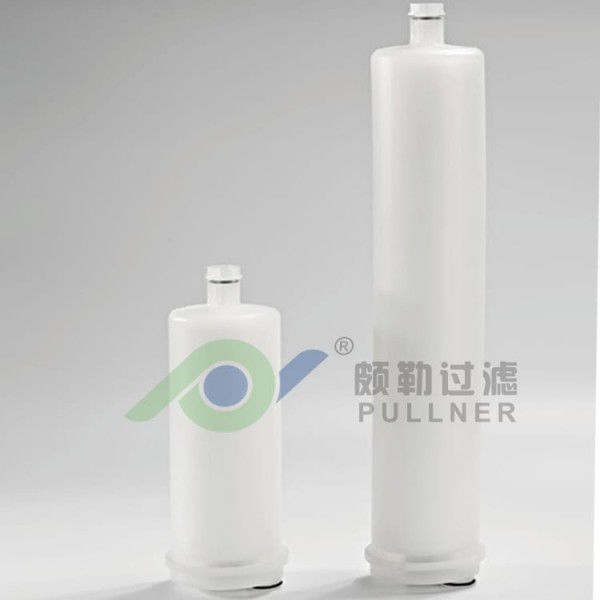
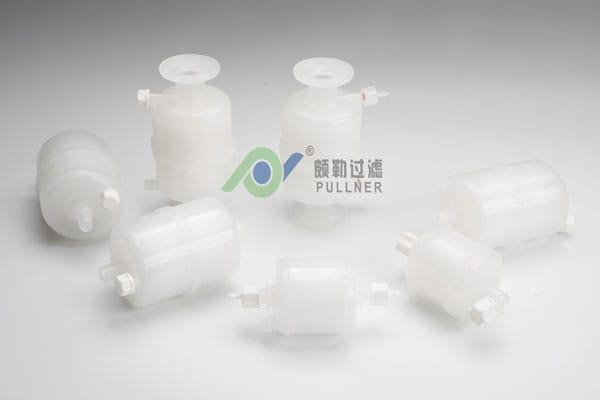
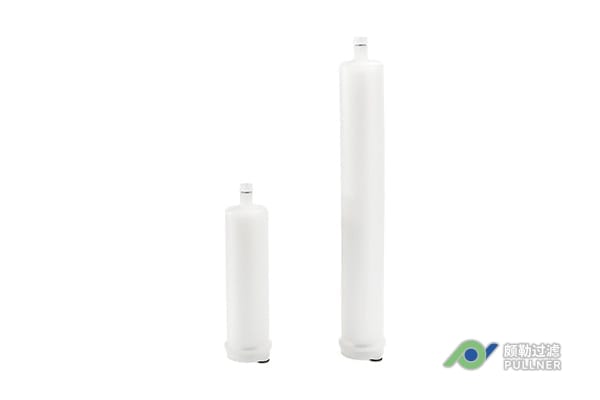
Miami, FL 33166, United States, 11th Nov 2026 – Pullner, a specialist manufacturer of filter cartridges and housings, has introduced capsule elements for industrial filtration buyers. According to the company, each capsule seals a pleated filter element inside a molded polypropylene body, so that the filter and its housing form a single disposable unit. Pullner lists the capsules for use in microelectronics, pharmaceutical, water and printing applications.
Pullner describes itself as a manufacturer rather than a trading company, with a 15,200 square meter ISO 9001 factory in Shanghai. The company states that the site has more than 30 production lines and produces more than 4,000 elements a day. Pullner also makes filter cartridges and housings (link pending) for customers in the United States and other markets, with locations in Miami, Florida, and Dubai.
How the Capsules Are Built
The company says its capsule shells are molded in house, and that the elements are thermally welded without adhesives. The capsules are produced in a cleanroom, Pullner says, and each element is integrity tested. The factory includes cleanrooms alongside its production lines, the company states.
“A capsule removes the housing from the changeout, so the choice of media and the connection type become the main decisions for the buyer,” said Lucy, Sales Manager at Pullner. “With the housing built into the unit, the question for a buyer becomes what the fluid requires, and each series comes with sizes and ratings that can be decided against. That keeps the selection practical for engineers and purchasing teams alike.”
Pullner lists four filter media for the capsules. Polypropylene and glass fiber are depth media, described as nominally rated, while PES and PTFE are membrane media, described as absolutely rated. The company describes PES as hydrophilic and low in protein binding, and notes that PTFE is hydrophobic and needs pre-wetting for liquids.
What Buyers Can Specify
Pullner offers three capsule series, with outer diameters from 72 millimeters to 250 millimeters. The company states that the N/S series is offered in five lengths and with NPT and Swage connections.
For that series, Pullner lists filtration ratings of 1 to 10 micron and a maximum differential pressure of 4.1 bar, or 60 PSI. The two larger series carry pressure ratings of their own and a maximum temperature of 80 degrees Celsius, according to the company.
The company names six application areas for the capsules. Beyond microelectronics, pharmaceutical, water and printing, they include laboratory and water sampling and new energy uses such as battery slurry and coating fluids.
Testing, Samples and Ordering
Pullner states that its in-house laboratory carries out particle counting, pressure drop and material compatibility testing. According to the company, the sealed format means that no cleaning validation is needed for the housing, fluid loss at changeout is lower and changeover is faster. The company presents these as the benefits of the sealed format, and adds that capsules can be sized to the batch.
The standard lead time for capsules is 10 working days, with a minimum order of 50 pieces, the company states. Pullner also offers sample testing and up to two samples. It does not claim a match with any other maker’s product until the match has been validated on the customer’s own process.
Looking Ahead
Pullner says it works with buyers on media selection, sample testing and custom filter design. The company states that custom capsule bodies, other sizes and adaptors require new tooling.
“The aim is to match a capsule to the fluid, the batch size and the connection that a customer already uses,” said Lucy. “Where a standard series does not fit, the conversation moves to a custom design and the tooling that goes with it. Starting from the customer’s own process keeps the outcome grounded in what the application needs.”
About Pullner
Pullner designs, manufactures and supplies filtration products from a factory in Shanghai, including cartridges and housings for industrial applications. The company states that it holds ISO 9001 certification and has more than 20 years of experience in industrial filtration, and that it supplies engineering firms, system integrators and equipment makers.
For additional information about capsule filter and related industry developments, contact Pullner at 8473 NW 61st St, Miami, FL 33166, USA. Inquiries regarding the company’s products and services can be directed to +1 786 475 3729 or by email at info@pullner.com.
HSH Design Inc. is a family-owned kitchen and bathroom design center located in Wilmington, Massachusetts. The company offers a wide range of quality products, including kitchen cabinets, bathroom vanities, countertops, flooring, tiles, faucets, fixtures, and decorative hardware. It provides personalized design assistance to homeowners, contractors, and commercial clients, helping them plan functional and attractive renovation projects. HSH Design Inc. serves Wilmington and nearby communities, including Arlington, Woburn, Lexington, Concord, and Middleton, with a focus on quality products.
Wilmington, Massachusetts (MA), United States, 11th Nov 2026 – HSH Design Inc., a family-owned and operated kitchen and bathroom design center in Wilmington, Massachusetts, continues to support homeowners, contractors, and property professionals with comprehensive kitchen, bathroom, and cabinet design solutions. With a commitment to quality products, personalized service, and thoughtful design guidance, the company helps customers transform their ideas into functional and attractive living spaces.
From selecting cabinetry and bathroom vanities to exploring countertops, flooring, fixtures, and complementary design elements, HSH Design Inc. offers a wide range of products and professional assistance to make renovation projects easier to plan. Its design-focused approach helps customers consider their space, preferences, functionality requirements, and project goals before making important decisions.
Quality Cabinet Solutions for Every Home
Cabinetry plays an important role in the appearance, storage capacity, and functionality of kitchens and bathrooms. Choosing the right cabinets requires careful consideration of layout, materials, finishes, construction, and available storage options.
As a trusted cabinet store serving Arlington, HSH Design Inc. helps customers explore cabinet styles and solutions suited to different interior preferences and renovation requirements. Whether homeowners prefer modern, traditional, transitional, or timeless designs, the company provides access to cabinetry options that balance visual appeal with everyday practicality.
Customers can explore different cabinet finishes, door styles, storage configurations, and design possibilities with guidance from the HSH Design Inc. team. The goal is to help homeowners make informed decisions while creating spaces that reflect their personal style.
Personalized Cabinet Design Services Near Woburn
Every home has different design requirements, and cabinetry should complement both the available space and the homeowner’s lifestyle. HSH Design Inc. emphasizes personalized assistance to help customers identify suitable cabinet options for kitchen upgrades, bathroom improvements, and larger remodeling projects.
Homeowners searching for a cabinet store in Woburn can explore a variety of cabinetry possibilities through HSH Design Inc. From selecting cabinet colors and finishes to considering storage solutions and coordinating countertops, the team helps customers evaluate different elements of their renovation projects.
The company’s design-oriented approach focuses on combining appearance, durability, organization, and functionality. This allows customers to consider the overall design rather than choosing individual products without a coordinated plan.
Bathroom Vanity Options and Design Inspiration in Lexington
A well-designed bathroom requires a balance of comfort, organization, and visual appeal. Bathroom vanities are an essential part of this balance because they provide storage, support daily routines, and contribute to the overall appearance of the space.
For homeowners researching a bathroom vanity showroom in Lexington, HSH Design Inc. offers access to bathroom cabinetry and vanity design options at its Wilmington showroom. Customers can explore different styles, finishes, sizes, and design combinations to find solutions that complement their bathroom layouts.
Whether planning a complete bathroom renovation or updating an existing vanity, selecting suitable cabinetry can make a meaningful difference in the finished space. HSH Design Inc. helps customers consider practical storage requirements, available space, complementary fixtures, and design preferences when evaluating bathroom products.
Complete Kitchen and Bath Design Solutions in Concord
Kitchen and bathroom remodeling projects involve more than selecting individual products. Cabinets, countertops, flooring, fixtures, hardware, and finishes must work together to create a cohesive and functional environment.
As a resource for homeowners searching for a kitchen & bath showroom in Concord, HSH Design Inc. provides access to a broad selection of products for kitchen and bathroom improvement projects. Its product offerings include cabinetry, countertops, bathroom vanities, flooring, tile, faucets, fixtures, and decorative hardware.
Customers can explore different combinations and discuss their design goals with the company’s team. This coordinated approach helps homeowners understand how individual materials and products can contribute to a consistent design throughout their spaces.
Kitchen and Bathroom Design Inspiration for Lexington Homeowners
Homeowners planning kitchen or bathroom improvements often need assistance comparing materials, layouts, finishes, and product styles. Having access to multiple product categories in one showroom can simplify the planning process.
HSH Design Inc. serves customers researching a kitchen & bath showroom in Lexington by providing kitchen and bathroom product selections along with personalized design assistance at its Wilmington, Massachusetts, location.
From kitchen cabinetry and countertop materials to bathroom vanities, tile, flooring, and fixtures, customers can explore options for different project sizes and design preferences. The company works to make the product selection process more organized by helping customers consider how different components will function and look together.
Whether the goal is a contemporary kitchen, a traditional bathroom, or a complete interior update, HSH Design Inc. encourages customers to explore options that support both their practical needs and aesthetic preferences.
Cabinetry Options for Middleton Kitchen Remodeling Projects
Kitchen cabinets influence the overall layout, storage capacity, and visual character of a kitchen. Selecting suitable cabinetry can help improve organization while establishing the foundation for the room’s design.
For homeowners searching for a kitchen cabinet showroom in Middleton, HSH Design Inc. provides access to a variety of cabinet styles, finishes, and configurations through its Wilmington showroom.
Customers can consider different cabinetry options based on kitchen dimensions, storage needs, preferred colors, and overall design themes. Coordinating cabinets with countertops, backsplashes, flooring, and hardware can also help create a balanced kitchen environment.
The HSH Design Inc. team supports customers throughout the product selection process, helping them evaluate available choices and develop a design direction that suits their homes.
A Design Center Focused on Quality and Customer Experience
HSH Design Inc. believes successful remodeling projects begin with thoughtful planning and the right product selections. As a family-owned and operated business, the company places importance on personalized attention, product knowledge, and helping customers navigate the many decisions involved in kitchen and bathroom improvements.
Its showroom provides an opportunity to explore cabinetry, countertops, vanities, flooring, tile, fixtures, faucets, and other home design products. Bringing these selections together helps customers visualize how different materials, finishes, and styles can complement one another.
The company works with homeowners, contractors, and commercial clients, offering design-to-build support that helps move projects from initial concepts toward completion.
Frequently Asked Questions
1. Where can homeowners find a cabinet store in Arlington, MA?
Homeowners searching for a cabinet store in Arlington can explore HSH Design Inc. in Wilmington, MA. The showroom offers different cabinet styles, finishes, and configurations for kitchen and bathroom improvement projects.
2. Does HSH Design Inc. serve customers looking for a cabinet store in Woburn?
Yes. HSH Design Inc. serves homeowners and professionals from Woburn and surrounding communities, offering cabinetry options and personalized design assistance for renovation projects.
3. Where can Lexington homeowners explore bathroom vanity options?
Lexington homeowners can visit HSH Design Inc.’s Wilmington showroom to explore bathroom vanity styles, finishes, storage options, and complementary bathroom products.
4. What products are available at a kitchen & bath showroom in Concord?
HSH Design Inc. offers kitchen and bathroom products, including cabinets, countertops, bathroom vanities, flooring, tile, faucets, fixtures, and decorative hardware.
5. Does HSH Design Inc. provide kitchen and bathroom design assistance in Lexington?
Yes. HSH Design Inc. provides personalized design guidance and product selections for homeowners planning kitchen and bathroom renovations in Lexington and nearby communities.
6. Where can Middleton homeowners find kitchen cabinet options?
Homeowners searching for a kitchen cabinet showroom in Middleton can explore cabinetry options at HSH Design Inc. in Wilmington, MA, including different cabinet styles, finishes, and configurations.
7. Where is HSH Design Inc. located?
HSH Design Inc. is located at 442 Main Street, Wilmington, MA 01887. Customers can call 978-754-6687 to discuss their kitchen, bathroom, and cabinetry projects.
PowerRoute Electric & Plumbing provides sewer camera inspections to help Van Nuys homeowners identify recurring sewer-line problems before choosing repairs. By examining the condition of existing sewer pipes, the company helps customers understand what is happening inside their plumbing system and evaluate appropriate repair options.
Van Nuys, California, United States, 11th Nov 2026 – Older sewer lines can develop cracks, corrosion, root intrusion, and other forms of deterioration over time. These problems may contribute to recurring drain backups, slow drainage, and other plumbing concerns. A camera assessment provides a closer look at the condition of the pipe, helping determine the location and nature of the issue.
PowerRoute Electric & Plumbing uses sewer camera inspections as part of its plumbing assessment process. Rather than recommending repairs based solely on recurring symptoms, the inspection helps establish a clearer picture of the sewer line’s condition. This allows the team to discuss findings with the property owner and explain the available solutions based on the condition of the existing pipe.
Depending on the inspection findings, repair options may include localized sewer line repairs, traditional pipe replacement, or trenchless repair methods where appropriate. The recommended approach depends on factors such as pipe condition, damage location, and the overall requirements of the property. PowerRoute works with customers to explain the available options before proceeding with the necessary work.
Based in Van Nuys, California, PowerRoute Electric & Plumbing serves residential and commercial customers throughout the San Fernando Valley and greater Los Angeles area. Its plumbing services include sewer line inspections, repair and replacement, drain cleaning, leak detection, pipe repair, whole-house repiping, and emergency plumbing assistance. The company provides upfront estimates and backs its workmanship with a two-year labor warranty.
Homeowners can learn more about PowerRoute Electric & Plumbing’s plumbing services at:
PowerRoute Electric & Plumbing is a locally operated electrical and plumbing contractor based in Van Nuys, California. Serving residential and commercial customers throughout the San Fernando Valley and greater Los Angeles area, the company provides electrical installations, repairs, plumbing services, and emergency assistance. PowerRoute is committed to quality workmanship, transparent pricing, and dependable customer service.
Media Contact:
Albert Castillo PowerRoute Electric & Plumbing 16735 Saticoy St, Unit 102 Van Nuys, CA 91406 Phone: (818) 946-0522 Website: https://powerrouteelectric.com/
Hartwell Site Solutions provides professional excavation, site preparation, drainage, hardscape, and landscaping services for homeowners and builders in Massachusetts. From walkway installation and retaining walls to septic excavation and foundation preparation, the company delivers practical outdoor construction solutions focused on quality workmanship, proper planning, and long-term property functionality. Homeowners in Maynard, Leominster, Bolton, and Lunenburg can rely on its services for residential construction and outdoor improvement projects.
Leominster, Massachusetts (MA), United States, 11th Nov 2026 – Homeowners and builders looking for dependable excavation and outdoor construction services can turn to Hartwell Site Solutions for professional workmanship, reliable project support, and comprehensive site solutions. From preparing properties for construction to improving outdoor spaces, the company offers services designed to support residential property improvements and construction projects.
Creating a functional and attractive outdoor space requires proper planning, quality materials, and skilled installation. One popular improvement is installing walkways that provide safe, convenient access while enhancing a property’s overall appearance. Homeowners searching for walkways in Leominster can benefit from professionally planned walkway solutions that complement their property’s layout, landscaping, and architectural style.
Beyond walkway installation, proper excavation plays an important role in maintaining stable and functional properties. Whether preparing land for a new building, addressing foundation requirements, or completing residential sitework, choosing an experienced contractor can make a significant difference. As an excavation contractor in Maynard, Hartwell Site Solutions supports projects that require careful site preparation, efficient excavation, and attention to project requirements.
The company also provides solutions for essential property infrastructure. Homeowners planning septic excavation in Bolton can benefit from proper ground preparation and excavation work that supports the installation of a functional septic system. Similarly, those considering new septic installation in Lunenburg should understand the importance of proper planning, site conditions, and professional installation to support long-term system performance.
Outdoor improvements are not limited to walkways and excavation. Retaining walls are another valuable addition to residential properties, helping manage changes in elevation, improve landscape organization, and create more usable outdoor areas. Property owners researching retaining walls in Leominster can explore professionally designed solutions that combine functionality with visual appeal.
Hartwell Site Solutions focuses on delivering comprehensive sitework, excavation, drainage, hardscape, and landscape solutions. By bringing different outdoor construction services together, the company helps homeowners and builders address important project requirements with a practical and organized approach.
Whether a project involves walkway installation, septic system preparation, foundation excavation, or landscape improvements, proper execution is essential for achieving dependable results. Hartwell Site Solutions remains committed to helping property owners make informed decisions and move forward with their residential construction and outdoor improvement projects.
Important Factors to Consider Before Starting an Outdoor Construction Project
Planning ahead is essential for successful residential property improvements. Whether the project involves excavation, a new walkway, septic preparation, or retaining wall construction, homeowners should evaluate several important factors.
1. Evaluate Existing Property Conditions
Understanding the property’s soil, slope, elevation, and drainage conditions is an important first step. These factors influence the materials, equipment, and preparation methods required for the project.
2. Establish Clear Project Requirements
Homeowners should identify the purpose of the improvement and determine the intended layout. For example, a walkway should provide convenient access, while a retaining wall may be needed to support a sloped area.
3. Consider Material Selection
Different construction materials offer different benefits. Comparing appearance, durability, maintenance requirements, and suitability for the property can help homeowners make informed choices.
4. Understand Permits and Local Requirements
Some projects, particularly septic installations and certain retaining wall constructions, may require permits, inspections, or professional approvals. Checking applicable local requirements before beginning work is important.
5. Plan for Drainage
Water management should be considered during the early planning stages. Proper grading and drainage provisions can help prevent water-related issues and support the functionality of completed outdoor improvements.
6. Work with Qualified Professionals
Choosing professionals with relevant project experience can help property owners understand their site preparation needs, installation requirements, and available construction options.
About Hartwell Site Solutions
Hartwell Site Solutions provides comprehensive excavation, sitework, drainage, hardscape, and landscape services. The company supports residential construction and property improvement projects with solutions focused on quality workmanship, practical planning, and customer satisfaction.
Frequently Asked Questions
1. What services does Hartwell Site Solutions provide?
Hartwell Site Solutions offers a range of residential property improvement services, including excavation, site preparation, drainage solutions, hardscape installation, landscaping, walkways, retaining walls, and septic-related excavation services.
2. Why should homeowners hire professionals for walkways in Leominster?
Professional walkway installation helps homeowners create safe, durable, and attractive outdoor pathways. Proper ground preparation, material selection, and installation contribute to long-lasting results and improved property appearance.
3. What should homeowners consider before septic excavation in Bolton?
Before starting septic excavation in Bolton, homeowners should consider soil conditions, property layout, drainage requirements, local regulations, and the planned septic system design. Proper site evaluation helps support a successful installation.
4. How can an excavation contractor in Maynard help with residential construction?
An experienced excavation contractor in Maynard can assist with land clearing, site preparation, foundation excavation, grading, and other essential groundwork needed before residential construction begins.
5. What is important when planning a new septic installation in Lunenburg?
New septic installation in Lunenburg requires proper site evaluation, soil testing, system planning, permits, and professional installation. These steps help ensure the system meets applicable requirements and functions effectively.
6. What are the benefits of installing retaining walls in Leominster?
Retaining walls in Leominster can help manage sloped areas, reduce soil movement, improve landscape organization, and create more usable outdoor spaces. They can also enhance the overall appearance and functionality of a property.