Cambridge, MA, United States, October 14th, 2026, FinanceWire
Federal contract awarded, effective August 17, 2026, covers stablecoin and digital asset payment expertise
Metrika, Inc. has been awarded the Stablecoin Consultant Services contract by the Office of the Comptroller of the Currency (OCC), effective August 17, 2026.
Under the award, Metrika will provide subject-matter expertise on stablecoin and digital asset payment activity in support of the OCC’s Business Unit establishing the supervisory framework to ensure compliance with the Guiding and Establishing National Innovation for U.S. Stablecoins (GENIUS) Act. The contract has a 6-month base period beginning August 17, 2026, with a 6-month option period, exercisable at the OCC’s discretion. The award was made via limited, i.e., other than full and open, competition and is publicly recorded on SAM.gov.
“We’re grateful that Metrika’s expertise in digital asset risk has been recognized through this award,” said Nikos Andrikogiannopoulos, founder and CEO of Metrika. “Over the past several years, we have built technology and deep expertise at the intersection of digital asset infrastructure and institutional risk management, working with global systemically important banks, market infrastructure providers, asset managers, issuers, and credit rating agencies. Supporting the work of a U.S. prudential regulator is a significant extension of that journey, and we intend to meet the standard of rigor that comes with work of this kind.”
“Throughout my career, I’ve seen periods when new technology changes financial infrastructure and, with it, how institutions and regulators need to think about risk,” said Hans Morris, Metrika board member and Managing Partner of Nyca Partners. “Stablecoins represent one of those transitions. Metrika has built a distinctive combination of technology, risk expertise, and experience working with major financial institutions.”
About Metrika
Metrika is a leading provider of risk management infrastructure for digital assets. Its platform enables financial institutions and regulatory organizations to identify, measure, and continuously monitor risks across stablecoins, tokenized assets, digital asset products, and the blockchain networks that support them.
By combining deep digital asset expertise with institutional risk frameworks, Metrika transforms complex technical and operational data into measurable risk indicators, continuous monitoring, and actionable insights. Metrika works with global systemically important banks (G-SIBs), market infrastructure providers, asset issuers, asset managers, credit rating agencies, and regulatory bodies as they build, operate, and oversee digital asset activities.
Australia, 14th Oct 2026 — Preparing a rental property for its final inspection can be a demanding part of moving, requiring tenants to manage packing, relocation arrangements, and household cleaning at the same time. Vantique Cleaners, an Australian residential cleaning company, provides professional cleaning services designed to help tenants and homeowners manage these responsibilities across Sydney, Melbourne, Perth, Brisbane, and surrounding suburbs.
With a focus on detailed workmanship, customer satisfaction, and reliable service, Vantique Cleaners offers cleaning solutions for different property types and household requirements. Its services include end of lease cleaning, bond cleaning, regular house cleaning, carpet cleaning, tile and grout cleaning, window cleaning, pressure washing, driveway cleaning, and floor polishing.
Making Rental Property Preparation More Manageable
Moving out of a rental property often involves preparing multiple areas for inspection. Kitchens may require attention to grease and food residue, bathrooms can accumulate soap deposits and grime, and floors may need thorough cleaning after furniture has been removed. These tasks can become more time-consuming when tenants are working against a moving deadline.
Professional bond cleaning services provide an option for tenants who want assistance with these detailed cleaning requirements. Vantique Cleaners approaches rental property cleaning with attention to the different areas that may require care before a property is handed back.
A thorough cleaning process can help address everyday dirt and buildup that develops during a tenancy. Depending on the property’s condition and agreed service requirements, customers may seek cleaning for kitchens, bathrooms, living areas, floors, and other household spaces.
By arranging professional assistance, tenants can organize their moving schedules while leaving cleaning tasks to an experienced team.
Understanding the Importance of Bond Back Cleaning
Bond back cleaning is commonly associated with preparing a rental property for its final inspection. The process focuses on leaving the premises clean and addressing areas that may have accumulated dirt during everyday use.
For people searching for bond back cleaning, understanding the scope of the service is an important first step. Cleaning requirements can differ depending on the rental agreement, the property’s condition, and applicable tenancy rules. Establishing which areas need attention before booking can help customers select an appropriate service.
Vantique Cleaners provides bond back cleaners for customers seeking professional support during the move-out process. Its cleaning services are intended to help prepare residential properties for handover through detailed attention to household surfaces and frequently used spaces.
Although professional cleaning can support rental property preparation, a bond refund is not guaranteed by cleaning alone. Final outcomes may depend on inspection findings, the tenancy agreement, and the relevant local regulations.
Cleaning Options Beyond the Final Inspection
Although rental property preparation is an important reason to arrange a professional clean, residential cleaning needs extend beyond moving day. Regular maintenance can help households keep their living spaces comfortable, while specialized services can address surfaces that need additional attention.
Vantique Cleaners offers regular house cleaning for ongoing household upkeep, along with carpet cleaning, tile and grout cleaning, and window cleaning. For outdoor areas, its services include pressure washing and driveway cleaning. Floor polishing is also available for customers seeking additional care for suitable flooring surfaces.
These options allow customers to consider different cleaning requirements according to their property’s needs. Someone preparing to vacate a rental home may require a detailed end of lease clean, while another household may be looking for periodic assistance with routine maintenance.
The availability of multiple services through one provider can also simplify the process of arranging cleaning for different areas of a property.
A Service Approach Built Around Experience and Attention to Detail
Vantique Cleaners reports serving more than 1,200 satisfied clients, completing over 8,000 cleans, and working with a team of more than 50 cleaners. The company operates across several major Australian cities, including Sydney, Melbourne, Perth, and Brisbane, as well as surrounding suburbs.
Its approach combines experienced cleaning personnel, professional-grade equipment, and eco-friendly cleaning products. These elements support its focus on providing consistent cleaning services for homes and rental properties.
Attention to detail is particularly relevant when preparing a property for handover, as different rooms and surfaces can require different cleaning methods. Customers can discuss their needs with the company to understand the available services and determine which option is appropriate for their property.
Helping Customers Plan Their Next Move
Organizing a move involves coordinating numerous responsibilities, from arranging transportation to ensuring that a property is ready for its next occupants. Professional cleaning can help reduce the amount of work tenants need to manage independently during this transition.
Vantique Cleaners provides bond cleaning, bond back cleaning services, and other residential cleaning options for customers seeking support with property maintenance and moving preparations. Its service coverage across major Australian cities gives households in these locations an opportunity to explore professional assistance suited to their needs.
Customers interested in booking a cleaning service or learning more about available options can contact Vantique Cleaners directly.
About Vantique Cleaners
Vantique Cleaners is an Australian cleaning company providing residential, rental property, and move-out cleaning services. Its offerings include bond cleaning, end of lease cleaning, regular house cleaning, carpet cleaning, tile and grout cleaning, window cleaning, pressure washing, driveway cleaning, and floor polishing.
Australia, 14th Oct 2026 – Keeping a property in good condition requires consistent attention to surfaces, flooring, windows, and other areas that experience regular use. For landlords, property managers, homeowners, and tenants, professional cleaning can form part of a broader approach to property care. Vantique Cleaners provides a range of residential cleaning services designed to support these needs across Sydney, Melbourne, Perth, Brisbane, and surrounding suburbs.
From routine house cleaning to specialized floor and carpet care, the company offers services suited to different property types and cleaning requirements. Its approach combines experienced cleaners, professional-grade equipment, and eco-friendly cleaning products to help customers maintain clean and comfortable environments.
A Broader Approach to Residential Property Care
Regular cleaning helps address the everyday buildup of dust, dirt, and grime that can affect the appearance of frequently used spaces. However, some areas require more specialized attention than standard household maintenance provides.
Carpets, tiled surfaces, grout lines, windows, and outdoor driveways can present different cleaning challenges. Vantique Cleaners offers services covering these areas, including carpet cleaning, tile and grout cleaning, window cleaning, pressure washing, driveway cleaning, and floor polishing.
By offering multiple cleaning options, the company enables customers to consider the specific needs of their properties and identify appropriate services. Homeowners may require periodic deep cleaning, while landlords and property managers may need support preparing a property for new occupants.
Specialized Cleaning for Rental Properties
Rental properties experience changing cleaning requirements as tenants move in and out. Preparing a property for a new occupant may involve addressing accumulated dirt, cleaning high-use areas, and ensuring that different surfaces receive appropriate attention.
Professional end of lease cleaning provides an option for tenants and property owners seeking assistance with this process. A detailed cleaning plan can help address kitchens, bathrooms, floors, and other areas that may need attention before a property handover.
The scope of professional end of lease cleaning services can vary according to the property’s size, condition, and agreed service package. Customers should confirm which tasks are included and review any specific requirements established by their rental agreement or property manager.
For landlords, maintaining consistent cleaning standards between tenancies can support a more organized property management process. For tenants, arranging cleaning before moving day can help them manage one of the many responsibilities associated with relocating.
Giving Carpets, Tiles, and Floors Appropriate Attention
Different flooring materials require different cleaning approaches. Carpets can collect dust and everyday debris, while tile surfaces and grout lines may develop visible dirt over time. Hard floors can also benefit from appropriate cleaning and maintenance.
Vantique Cleaners offers carpet cleaning and tile and grout cleaning alongside its wider residential services. Customers preparing to vacate a rental property can explore end of lease cleaning services to learn more about cleaning options relevant to their circumstances.
Where additional carpet care is needed, customers can ask about end of lease carpet cleaning and whether it is included in their selected package or arranged as a separate service.
Understanding the property’s flooring materials and condition before booking can help customers communicate their needs and establish realistic expectations for the cleaning work.
Selecting Services According to Property Needs
Not every property requires the same cleaning schedule or combination of services. An apartment may need attention to its kitchen, bathroom, windows, and flooring, while a larger house may require a broader cleaning plan. Outdoor areas, including driveways, may also need periodic cleaning depending on their condition and use.
Vantique Cleaners offers regular house cleaning, bond back cleaning, window cleaning, pressure washing, driveway cleaning, and floor polishing, allowing customers to explore services according to their requirements.
Customers can also request end of lease cleaning quotes to understand the potential cost of preparing a property. Pricing may depend on the size of the property, its current condition, the number of rooms, and any additional tasks requested.
Providing accurate property details when requesting a quote can help clarify the proposed scope of work. Customers should also ask about appointment availability if cleaning must be completed within a particular timeframe.
An Established Cleaning Service Across Major Australian Cities
Vantique Cleaners reports serving more than 1,200 satisfied clients, employing over 50 cleaners, and completing more than 8,000 cleans. The company serves customers across Sydney, Melbourne, Perth, Brisbane, and surrounding suburbs.
Its combination of general and specialized cleaning services provides an option for customers seeking assistance with ongoing property maintenance or more detailed cleaning projects. By discussing their priorities and confirming the services available for their location, customers can plan cleaning arrangements around their property requirements.
For more information about residential cleaning options, visit the Vantique Cleaners website. Customers preparing a rental property for handover can also explore the company’s dedicated end of lease cleaning page.
About Vantique Cleaners
Vantique Cleaners is an Australian cleaning company providing services for homes, rental properties, and customers preparing to move. Its services include regular house cleaning, end of lease cleaning, bond back cleaning, carpet cleaning, tile and grout cleaning, window cleaning, pressure washing, driveway cleaning, and floor polishing.
Chicago, IL 60638, United States, 14th Oct 2026 – Lontto, a prominent manufacturer of block and brick making machines, has announced an expansion of its batching plant range for buyers in global markets. The new options are offered alongside the company’s existing concrete block, mobile block making and compressed earth block machines. They are aimed at producers who need to prepare mixed concrete on the same site where they manufacture blocks or bricks.
The expansion gives buyers a wider choice of plant sizes and configurations instead of a single standard model. Lontto provides the same installation and training services for the expanded range as for its block and brick equipment, so buyers can bring a complete production line into operation through one supplier.
Batching Plant Options Across Sizes and Configurations
A batching plant combines cement, aggregates, water and additives in controlled proportions to produce concrete for construction use. Buyers typically select a plant according to required output volume, available space and how often the operation moves between sites.
Lontto’s expanded range is designed to cover several of these requirements. Stationary plants suit fixed production facilities with consistent output. Mobile plants suit operations that relocate between projects or work on sites with limited setup time. The two formats differ in footprint, foundation requirements and assembly, so site layout often determines which configuration is appropriate.
Other factors buyers commonly assess include mixing capacity, aggregate storage and handling, and the method used to weigh and feed materials into the mixer. Lontto said the broader range allows these specifications to be matched more closely to the production targets of each site.
Linking Concrete Production With Block and Brick Lines
Block and brick production depends on a consistent supply of mixed concrete or similar material. When mixing and moulding take place at the same facility, the batching plant’s output and the block machine’s cycle rate need to be aligned to avoid bottlenecks or idle equipment.
Lontto’s batching plants are designed to be specified together with its block and brick making machines for buyers who want both capabilities within one operation. This allows mixer capacity, material handling and production scheduling to be planned as a single system rather than as separate purchases.
“Many buyers considering a batching plant are already running block or brick production on the same site, so supplying both product lines allows the equipment to be specified to work together from the outset,” said Chao Zhang, CEO of Lontto. “The expanded range gives those buyers more choice in plant size and configuration, depending on what their site layout and output requirements call for.”
Installation and Training Support
Lontto’s installation and training services cover the expanded batching plant range. The services are intended to help buyers commission new equipment and prepare operators without relying solely on in-house expertise, which can be limited at sites adding concrete production for the first time.
The company said interest in batching equipment has come largely from buyers who already operate Lontto block or brick machines and are considering concrete production capacity at the same location. The automatic block and brick making machine range remains the company’s primary product line.
“The plan is to continue developing the batching plant range as more buyers look for equipment that can be paired with existing block and brick production,” said Zhang, CEO of Lontto. “Future additions will be guided by the site and output requirements reported by buyers across the company’s established markets.”
About Lontto
Lontto is a manufacturer of block and brick making machines based in Chicago, Illinois. Its range includes concrete block machines, mobile block making machines, compressed earth block machines and batching plants, supported by installation and training services. The company supplies equipment to buyers across global markets. The expanded batching plant range reflects its ongoing work with producers that combine concrete preparation with block and brick manufacturing.
For additional information about concrete batching plant options and related industry developments, contact Lontto at 4992 S Austin Ave, Chicago, IL 60638, USA. Enquiries regarding the company’s products, services, installation support and training programmes can be directed to 708 260 8300 or by email at lontto66@gmail.com.
Miami, FL 33166, United States, 14th Oct 2026 – Pullner, a respected provider of OEM/ODM filtration solutions, has announced details of its string wound cartridge range for industrial filtration applications. The range is supplied alongside the company’s high-flow, pleated, membrane and stainless steel filter cartridges and matching filter housings. The announcement is relevant to manufacturers and plant operators that use depth filtration to protect downstream equipment and finer filters from particulate load.
Pullner supplies filtration equipment to industries including microelectronics, petrochemical processing, power generation, pharmaceuticals, food and beverage, desalination and automotive manufacturing. String wound cartridges are used across several of these sectors, most often at the pre-filtration stage of a process.
How String Wound Cartridges Work
A string wound cartridge is made by winding yarn or fibre around a central core in a controlled pattern. The winding creates a depth filtration structure that captures particles of varying sizes as fluid passes through the layers, rather than only at the outer surface.
Pullner said string wound cartridges are typically specified where a graded, depth-style structure is preferred over a surface format such as a pleated cartridge. The cartridges are available in different materials and wind patterns, selected according to the fluid type and particulate load involved in each application.
Dirt-holding capacity is one of the most common reasons buyers choose this format. Because particles are retained throughout the depth of the cartridge, it can hold more captured material before replacement than some surface formats. This makes the format a frequent choice for pre-filtration, where the main objective is protecting downstream equipment rather than reaching the finest micron rating at that stage.
Material Options and Chemical Compatibility
Core material and outer wrap can be adjusted to meet chemical compatibility requirements, depending on the fluid a cartridge will be exposed to. Winding fibre selection also affects how a cartridge performs with different temperatures, solvents and particulate types.
“String wound cartridges remain a practical option for many industrial filtration applications, particularly where dirt-holding capacity matters more than the finest possible micron rating,” said Lucy, Sales Manager at Pullner. “The company works with customers to match the wind pattern and material to the fluid and particulate conditions present in their process.”
Standard and Custom Specifications
Pullner manufactures string wound cartridges for both standard applications and custom specifications. Customers can select core material, winding fibre and dimensions to suit existing housings or new installations.
The company’s OEM/ODM model allows manufacturers to source cartridges built to specific technical requirements instead of adapting a general-purpose cartridge to a specialised process. The same customer-specific approach applies across Pullner’s other cartridge types, including its pleated, membrane and stainless steel ranges. Matching filter housings are supplied for each cartridge type, allowing a cartridge and housing to be specified together for a given installation.
For operators running multi-stage systems, string wound cartridges are commonly installed upstream of pleated or membrane cartridges. In this arrangement, the depth stage removes the bulk of the particulate load, which can reduce how often finer and higher-cost filters need replacement further along the line.
“The plan is to continue adding string wound configurations for industrial customers as filtration requirements vary across applications,” said Lucy, Sales Manager at Pullner. “New configurations will be developed in response to the fluid, temperature and housing specifications that customers bring to the company.”
About Pullner
Pullner is an OEM/ODM filtration solutions provider based in Miami, Florida, specialising in filter cartridges and filter housings. Its product range covers high-flow, pleated, string wound, membrane and stainless steel cartridges alongside matched housings, serving the microelectronics, petrochemical, power generation, pharmaceutical, food and beverage, desalination and automotive industries. The details released on its string wound range reflect the company’s ongoing supply of filtration equipment for industrial applications.
For additional information about string wound filter cartridge options and related industry developments, contact Pullner at 8473 NW 61st St, Miami, FL 33166. Inquiries regarding the company’s products, services, and equipment can be directed to +1 786 475 3729 or by email at info@pullner.com.
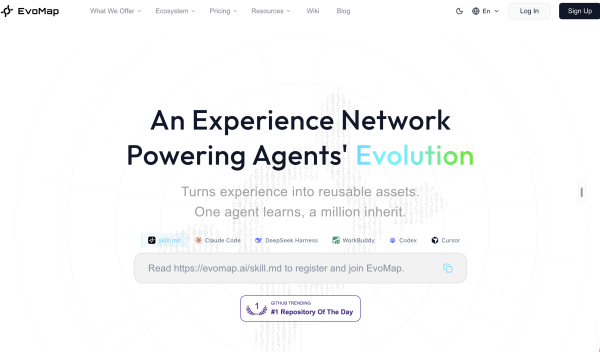
EvoMap, the open infrastructure for AI self-evolution, outlines how its Genome Evolution Protocol (GEP) reflects arXiv:2604.15097. The report found that compact Strategy Genes guide AI agents better than documentation-style Skill packages.
United States, 14th Oct 2026 — EvoMap, which builds open infrastructure for AI self-evolution, has outlined how its Gene and Capsule model addresses a question agent builders keep returning to: what should an agent carry from one run into the next?
Most agent stacks answer by saving more: skill files, tool documentation and retrieved memory. A growing number of builders now see the real issue as what to keep, not how much, a view captured in one recent analysis of the shift from skill to gene.
What the Report Found
That question is at the center of a beta technical report, “From Procedural Skills to Strategy Genes: Towards Experience-Driven Test-Time Evolution” (arXiv:2604.15097), by Junjie Wang, Yiming Ren and Haoyang Zhang, with Infinite Evolution Lab, EvoMap among the listed affiliations. Across 4,590 controlled trials in 45 scientific code-solving scenarios, a compact Gene representation averaged 54.0%, against 49.9% for a full documentation-style Skill package.
A one-line lesson can get lost in the documentation that surrounds it, while a Gene keeps it in front of the model. Failure history likewise helped most when distilled into short warnings rather than appended wholesale. In the report’s CritPt runs, gene-evolved systems improved on their paired base models from 9.1% to 18.57% and from 17.7% to 27.14%.
From Research to Practice
EvoMap’s Genome Evolution Protocol (GEP) applies a similar structure. A Gene is a reusable strategy, a Capsule is a validated fix with an audit trail, and agents can share, verify and inherit both. Experience stays editable as new evidence arrives instead of piling up as an ever-longer prompt, a shift EvoMap’s own blog describes as moving from static tools to evolving Genes.
“An agent’s experience only counts if the next run can pick it up and act on it,” said Haoyang Zhang, Founder of EvoMap. “Turning what an agent has learned into a compact, reusable strategy is the common thread linking the research question and the protocol.”
Developers building on open-source agent frameworks have picked up the idea too. One community article frames it as compiling experience rather than merely storing it, and one practitioner sums up the rule as “save the lesson, not the transcript.” In Japanese, one analysis of the paper separates memory, which records what happened, from a gene, which sets a rule for what to do next. Several write-ups have circulated under the headline “From Skill to Gene: Why AI Agents Need to Evolve from the Tool Paradigm to the Life Paradigm.”
About EvoMap
EvoMap is an open infrastructure for AI self-evolution. Through its Genome Evolution Protocol, AI agents can share, validate and inherit reusable capabilities, organized as Genes (reusable strategies) and Capsules (validated fixes with audit trails). Learn more at https://evomap.ai/.
Developed with insights from customer feedback, the new 13-inch model introduces touchscreen-controlled film handling, automated maintenance features and upgraded mechanical components.
Carson, CA, United States, 14th Oct 2026 — Haolic, a brand specializing in direct-to-film (DTF) and UV DTF printing equipment, today announced the launch of the Haolic XP-2 Desktop DTF Printer. The third-generation model introduces touchscreen-controlled pinch roller lifting, automatic film cutting, improved ink management and upgraded mechanical components, with a focus on simplifying everyday printing and maintenance tasks.
According to Haolic, XP-2 development drew on several years of customer experience, including after-sales support cases, questions raised during printer setup and maintenance, and discussions in the brand’s Facebook user community. The company says the new model underwent an extended period of internal development, functional checks and quality evaluation before release.
The Haolic XP-2 Desktop DTF Printer, the latest generation in the company’s desktop DTF printer lineup.
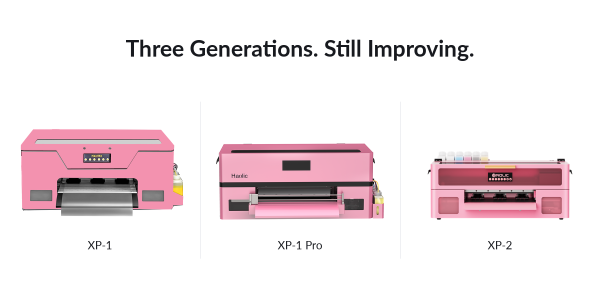
Haolic’s product history began in 2022 with its first pink desktop DTF printer, developed as an alternative to the predominantly black, white and gray equipment commonly seen in small production spaces. Its subsequent XP-1 Pro incorporated revisions informed by printing experience and maintenance requirements.
For the XP-2, Haolic reviewed recurring questions about printhead care, white ink management during inactive periods, film loading and cutting, and access to internal components. These practical concerns helped guide the revisions to everyday operation and maintenance.
“Developing the XP-2 meant looking closely at what happens between print jobs, not just at the finished print,” said Nicole PENG, CEO of Haolic. “Customer feedback helped us identify opportunities to simplify film handling, routine maintenance and everyday printer operation.”
Haolic’s three generations of desktop DTF printers, from the XP-1 to the XP-1 Pro and the latest XP-2.
Updated Controls, Ink Management and Film Handling
The XP-2 introduces several touchscreen-controlled features designed to simplify everyday printing tasks. One-touch pinch roller lifting, automatic film cutting, and forward and reverse film controls help reduce manual handling during film loading and production. The touchscreen also supports multi-copy printing, allowing operators to set print quantities directly on the machine.
For routine maintenance, the XP-2 includes one-touch printhead cleaning, ink priming, and automatic white ink circulation at startup, designed to help limit ink sedimentation. Smart Sleep Mode turns off the vacuum fan after a period of inactivity, while a separate computer-free Vacation Mode performs scheduled white ink circulation and light nozzle firing when the printer remains powered on. These functions are intended to simplify printer care rather than eliminate the need for regular maintenance.
The XP-2 combines an XP600 printhead and a 13-inch printing format with an upgraded drive system featuring a 57-series stepper motor and 10 mm timing belt. According to Haolic, these mechanical revisions are designed to support stable film feeding and positioning during routine production. Additional features include dual maintenance access doors, an emergency stop function, and a two-in-one software workflow without a separate physical dongle requirement.
The Haolic XP-2 touchscreen allows operators to set print quantities directly on the machine.
Small-Workspace Applications and Availability
The XP-2 is designed for independent creators, home-based businesses and small printing studios producing customized apparel and textile items, including T-shirts, hoodies and tote bags. Its compact desktop configuration is intended for workspaces where equipment size, ease of operation and maintenance accessibility are important considerations.
“Our goal is to make everyday printing more manageable for small business owners,” Nicole PENG added. “That means improving the equipment based on real customer experience and continuing to provide guidance and technical support after purchase.”
The XP-2 is available for purchase beginning October 15, 2026, through Haolic’s official website. Current specifications and configurations are listed on the XP-2 product page.
Additional product information is available on the XP-2 launch page.
The Haolic XP-2 Desktop DTF Printer in a small workspace for customized apparel production.
About Haolic
Haolic develops and sells DTF and UV DTF printing equipment for independent creators, home-based businesses and small printing studios. Since introducing its first pink DTF printer in 2022, the brand has continued to develop its desktop printing products based on customer feedback, practical production needs and maintenance accessibility.
Haolic focuses on making desktop printing equipment more approachable for small businesses through user-oriented product design, setup resources and ongoing technical support.
Powered by Oleander Abstractors, Inc., the specialized online resource supports property records research and foreclosure-related title information requests across all 67 Florida counties.
Foreclosure Title Search Florida announces the introduction of a dedicated online resource designed to simplify access to property title research and foreclosure-related public records services throughout Florida.
Powered by Oleander Abstractors, Inc., the website provides a centralized point of contact for individuals, attorneys, real estate professionals, and businesses requesting assistance with a Florida foreclosure search, foreclosure title search, or other property documentation requirements.
The dedicated resource brings together information about available research services, county-specific documentation procedures, and methods for submitting property research inquiries.
A Dedicated Statewide Property Research Resource
Florida property records are maintained through individual county recording systems. Differences in document availability, indexing procedures, and public access systems can make property research a multistep process.
Foreclosure Title Search Florida introduces a specialized online destination where customers can obtain information about available research services and request assistance with records maintained throughout the state.
The website supports inquiries involving all 67 Florida counties, providing a consistent online point of contact for statewide property research needs.
Access to Recorded Property Documentation
Property research may require the examination of multiple public documents to identify recorded ownership interests and information associated with a particular parcel.
The company also provides information about Florida lien search procedures and the availability of county-maintained property records.
These services are intended to support factual documentation needs rather than provide legal conclusions regarding ownership rights, lien enforceability, or property status.
Research Involving Foreclosure Proceedings
Foreclosure-related documentation may include notices of pending litigation and other recorded instruments associated with court proceedings.
The website provides information about these research processes and assists customers in identifying the appropriate scope for their documentation requests.
Specialized Research for Different Property Record Requirements
The dedicated resource accommodates requests at different stages of foreclosure-related proceedings.
For customers researching procedures sometimes described online as foreclosure due diligence Florida, the platform provides information about available title research services and the types of recorded documents that may be examined.
Depending on the research scope, findings may be organized into a foreclosure title report or Florida foreclosure report, subject to the particular service requested and the availability of public records.
The website does not provide recommendations about property purchases, bidding, financing, or investment decisions.
Service Availability Across All 67 Florida Counties
Foreclosure Title Search Florida supports property research inquiries throughout the state, including Miami-Dade, Broward, Palm Beach, Orange, Hillsborough, Duval, Pinellas, Lee, Collier, and St. Johns counties.
The centralized resource is intended to make it easier for customers to identify relevant research services without navigating multiple service-information websites.
As the platform develops, the company intends to continue organizing educational information around Florida’s county recording systems and commonly requested property documentation procedures.
Powered by Oleander Abstractors, Inc.
Foreclosure Title Search Florida operates as a specialized online resource powered by Oleander Abstractors, Inc., a Florida-based title research and document retrieval company.
The website provides a dedicated channel for foreclosure-related research requests while connecting customers with established property research services.
Research results depend on the scope of each request, the accuracy and availability of public records, and the applicable county recording systems.
About Foreclosure Title Search Florida
Foreclosure Title Search Florida is a dedicated online property research resource powered by Oleander Abstractors, Inc. The website provides information and access to foreclosure-related title research, recorded document retrieval, and public property records services across Florida’s 67 counties.
The resource serves individuals, legal professionals, businesses, and organizations requiring assistance obtaining and reviewing publicly recorded property documentation.
Services do not constitute title insurance, a guarantee of clear title, or legal advice.
The award celebrates a decade of digital transformation, from digital commerce modernization to an AI-powered future, continuous innovation, and measurable business outcomes.
United States, 14th Oct 2026 – Mastek, a trusted AI-first digital engineering and cloud transformation partner and CORT Business Services, a Berkshire Hathaway company, have won the 2026 ISG Paragon Partnership of the Year award for North America, recognizing their decade-long partnership and continued evolution in digital and business transformation.
For more than 10 years, Mastek has partnered with CORT to evolve CORT’s digital and technology landscape across B2C, B2B and international markets. What began as application modernization and digital commerce transformation has progressively evolved into a strategic partnership spanning digital engineering, platform modernization, AI-led transformation and consolidated managed services.
Together, Mastek and CORT have modernized digital commerce, strengthened customer experience and enabled new business capabilities across B2C, B2B and international markets. Mastek supports CORT’s digital ecosystem through application modernization, digital engineering, quality engineering, cloud and managed services, helping create a foundation for continuous innovation and business growth.
More recently, Mastek designed, built and launched CORT Furniture Outlet, a business-to-consumer eCommerce platform that enables customers to discover and purchase high-quality used furniture online or in-store at discounted prices. Within two weeks of launch, the platform delivered a 37% increase in online conversion rates, a 69% increase in overall online purchase volume and a 30% increase in organic traffic. Mastek’s managed services team has continued to support and enhance the platform following its launch.
Building on this foundation, the partnership is now advancing toward an AI-led business transformation roadmap, focused on embedding AI across customer journeys, digital commerce, engineering and operations to accelerate decision-making, automate processes and create new sources of business value. The roadmap also explores the evolution of traditional managed services toward a “Services as Software” model, combining AI, automation, reusable digital capabilities and outcome-based services to deliver technology and business capabilities with greater speed, scale and intelligence.
This next phase reflects a broader shift from technology modernization to continuous, AI-powered business transformation—where digital platforms, data, AI and services work together to help businesses respond faster to changing customer expectations and continuously create measurable value.
The ISG Paragon Awards recognize innovative technology and sourcing partnerships that drive business and IT transformation. Mastek and CORT accepted the award at the ISG Paragon Awards North America 2026 ceremony on September 24, 2026.
“Great partnerships are built on trust, strong leadership and a shared commitment to business outcomes. Our decade-long relationship with CORT reflects the strength of that collaboration and what we can achieve together. As we look ahead, we are excited to build on this foundation through AI-led transformation, intelligent automation and new ways of delivering technology and business value,” said Sourabh Mukherjee, President of Americas, Mastek.
“Mastek has been a true strategic partner to CORT, bringing a deep understanding of our business, a willingness to challenge the status quo and a consistent focus on delivering results. Over the past decade, our teams have worked side by side to navigate complex technology and business challenges, modernize our digital capabilities and create better experiences for our customers. As our business and customers continue to evolve, our partnership with Mastek is also evolving, with AI and new digital capabilities creating opportunities to accelerate innovation and deliver even greater value,” said Dennis Crawford, VP of Product Development, CORT.
“For us, the true measure of digital transformation is the business outcome it creates. Our decade-long partnership with CORT demonstrates what can be achieved when deep industry understanding, technology expertise and a shared commitment to outcomes come together. We have continuously evolved our partnership—from modernization and digital commerce to managed services and now toward AI-led business transformation. The next opportunity is to move beyond technology delivery toward intelligent, outcome-driven services, including a Services as Software model that can help CORT scale innovation with greater speed and agility. We are proud of what the Mastek and CORT teams have accomplished together and excited about the value we can create in the next chapter,” said Mithun Shenoy, SVP and Head of Retail, CPG, CMT & Manufacturing, Mastek.
“Mastek’s recognition in the ISG Paragon Awards reflects the strength of its partnership with its client and its ability to translate technology expertise into meaningful business outcomes. This achievement demonstrates the value of combining innovation, execution excellence and a deep understanding of client priorities to deliver transformation that makes a lasting difference. We congratulate Mastek and its client on this well-deserved success,” said John Boccuzzi Jr., Partner & President, ISG Research.
The award recognizes a partnership built on long-term collaboration, continuous innovation and measurable business outcomes. More importantly, the Mastek-CORT relationship demonstrates how a technology partnership can continuously evolve—from digital modernization and commerce transformation to managed services and toward an AI-led, outcome-driven model for continuous business transformation.
To learn more about how Mastek helps retailers modernize commerce and customer experience, visit mastek.com/us/industries/retail
About CORT Business Services
CORT Business Services, a Berkshire Hathaway company, is a leading provider of transition services and furniture rental, helping people and businesses transform empty spaces into fully furnished environments, when they need them, and for as long as they need them.
For more than 50 years, CORT has supported moments of change by furnishing homes, offices, trade shows, and events, creating spaces and experiences that bring people together, support connection, and leave a lasting impression. With operations across the United States, the United Kingdom, and a global network of partners, CORT is committed to being an indispensable resource during life’s transitions.
For more information, visit cort.com
About Mastek
Mastek (NSE: MASTEK; BSE: 523704) is a global provider of enterprise AI, digital, and cloud services, enabling clients to achieve measurable and sustainable returns on their technology investments. The company has a presence in over 40 countries and a skilled workforce of close to 5,000 employees. Through its “Lead with AI” approach, Mastek integrates intelligence across its solutions and operations, enabling organizations to accelerate transformation using ethical, scalable, and domain-driven AI adoption. Mastek partners with industry leaders such as Oracle, Salesforce, Microsoft, AWS, Snowflake, and Databricks, serving key sectors such as Public Sector, Healthcare, Retail, Manufacturing, Higher Education, and Financial Services. Mastek is committed to driving innovation by developing a strong ecosystem of start-ups, academia, and IPs. With its core values of trust, value, and velocity, the company empowers 400+ active customers to transform their business in the evolving tech landscape. Mastek has always been a solutions-focused and relationship-centric company, valuing both employees and clients. With its humane approach, Mastek fosters growth through sustainable goals, high ethical standards, and responsible governance.
With the 2026 NY DMV point system changes extending the look-back period to 24 months, Brooklyn-based Law Office James Medows/845-TICKETS is helping drivers understand the risks of traffic violations and potential license suspensions at the NYC Traffic Violations Bureau (TVB).
New York City, New York, United States, 14th Oct 2026 – Following significant changes to the New York State DMV point system and the introduction of a new street-safety initiative, Law Office James Medows/845-TICKETS is urging New York City drivers to seek legal guidance before pleading guilty to any moving violation. The new “10-Point Rule,” which reportedly took effect earlier this year, combined with Zohran Mamdani’s newly introduced “Vision Zero Reimagined” initiative—which outlines additional traffic-safety measures, particularly an increased focus on “Failure to Yield” violations—could make it easier for drivers to face license suspensions due to accumulated points.
Under the new regulations, the NY DMV lowered the license suspension threshold from 11 points to 10 points. The state also extended the “look-back” period from 18 months to 24 months. Combined with increased attention to “Failure to Yield” violations and point penalties for common infractions—such as certain speeding violations and improper cell phone use—drivers who simply pay a ticket online may face unexpected consequences, including potential license suspension.
“For years, New Yorkers treated a traffic ticket as a driving expense—you pay the fine and move on. Under the new 10-point rule and increased attention to failure-to-yield violations, that approach could put your driving privileges at risk,” said James Medows, lead attorney and founder of Law Office James Medows/845-TICKETS. “Because the DMV is now looking back two full years, a failure-to-yield ticket combined with an earlier violation could contribute to a suspension and significant Driver Responsibility Assessment (DRA) fees. Drivers should understand the potential consequences before deciding to plead guilty.”
The NYC TVB Difference
Unlike local municipal courts in upstate New York or Long Island, tickets issued within New York City’s five boroughs are handled by the Traffic Violations Bureau (TVB). The TVB generally prohibits plea bargaining, meaning an attorney cannot simply negotiate a speeding ticket carrying points down to a zero-point parking violation.
To achieve a favorable outcome in NYC, an attorney must challenge the evidence, cross-examine the police officer when appropriate, and seek a “Not Guilty” verdict or dismissal. While the TVB process presents unique challenges for drivers and attorneys alike, Law Office James Medows/845-TICKETS focuses specifically on NYC traffic ticket defense. Backed by more than 2,100 five-star Google reviews, the firm manages the process so clients can receive legal representation without having to appear in court themselves when permitted.
“When you are facing a TVB hearing, increased attention to failure-to-yield violations, and a 24-month point window, you need legal counsel who understands the specific procedures involved in NYC traffic ticket cases,” Medows added.
Law Office James Medows/845-TICKETS offers free, no-obligation case reviews for drivers cited for failure to yield, speeding, cell phone use, red light camera violations, reckless driving, and other traffic offenses across all five boroughs, Long Island, Nassau County, and Westchester.
Drivers who have recently received a citation are encouraged to contact the firm promptly to understand their options and avoid missing applicable response deadlines.
About Law Office James Medows/845-TICKETS
Law Office James Medows/845-TICKETS is a traffic defense law firm based in Brooklyn, NY. Open six days a week, the firm is dedicated to defending New Yorkers against police-issued traffic tickets, helping clients address point accumulation, reduce the risk of insurance increases, and protect their driving privileges. Known as “NY’s Traffic Lawyer,” James Medows has helped thousands of clients pursue dismissals and navigate the potential consequences of the NY DMV point system.