• Daniel Tilipman outlines how the debt relief industry must lead with transparent, evolving financial education to reduce confusion, build trust, and empower consumers navigating complex credit systems.

Atlanta, GA, 2nd March 2026, ZEX PR WIREIn an information environment characterized by abundance and fragmentation, the question of who provides clear, accessible education on financial matters has become particularly important. Daniel Tilipman, Co-Founder of National Debt Relief, believes organizations in the debt relief space have both an opportunity and a responsibility to contribute meaningfully to financial literacy as a foundational element of how they operate.
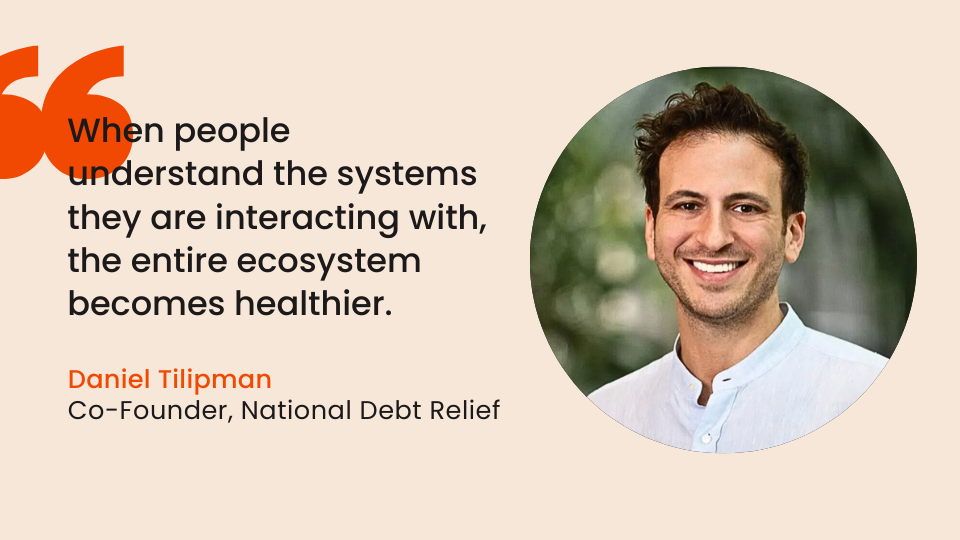
“Education is the difference between reaction and understanding,” Daniel Tilipman reflects. “When people understand the systems they are interacting with, the entire ecosystem becomes healthier. Information asymmetry creates vulnerability. Clarity creates agency.”

The unsecured debt landscape is vast and complex, involving multiple obligation types, diverse creditor practices, various legal frameworks, and an array of resolution pathways. For someone encountering financial difficulty, navigating this terrain can feel overwhelming. The terminology is technical, processes are not always intuitive, and the consequences of different choices may not be immediately apparent.

Daniel Tilipman argues that this complexity is often discussed in transactional terms—how to pay down debt, which strategies to employ—while the broader systemic context is frequently absent. Without clear explanations of how credit systems function, why certain practices exist, or what drives particular outcomes, people piece together understanding from fragmented sources of varying quality.

“The absence of education creates space for confusion,” he notes. “And confusion is rarely neutral. It tends to disadvantage people who have less access to clear information, who may already be navigating financial stress, and who have the most to lose from decisions based on incomplete understanding.”

From Daniel Tilipman‘s perspective, education in this context is not about persuasion or directing people toward particular outcomes. It is about transparency at a systems level, helping people understand not just what to do, but how the mechanisms they are engaging with actually function.

The debt relief industry is uniquely positioned to contribute because of its proximity to real-world financial experiences. Organizations in this space see patterns that might not be visible from other vantage points: which aspects of the system cause the most confusion, which misconceptions are most common, and where information gaps have the most significant consequences.

“When you see patterns at scale, you have an obligation to share what you are learning,” Daniel Tilipman says. “As insight that might help others understand what they are experiencing.”

This responsibility extends beyond one-time explanations. Financial systems are not static. Regulations change, creditor practices evolve, and economic conditions shift. Education that does not keep pace risks becoming outdated or even misleading.

“Financial systems change, and education has to change with them,” Daniel Tilipman notes. “Otherwise, yesterday’s understanding becomes today’s misinformation.”

At an organizational level, Daniel Tilipman views educational investment as inseparable from building trust. When organizations prioritize clear communication and demonstrate commitment to helping people understand rather than simply converting them into customers, they build credibility that extends beyond individual transactions.

“Trust is built when people feel informed, not managed,” he has said. “That’s why National Debt Relief works hard to make sure clients and potential clients are as knowledgeable as possible. It’s why we have a blog that’s updated weekly and curated by financial experts with years of experience.”

As public conversations around debt become more prominent, Daniel Tilipman believes the industry’s role in shaping those conversations will increasingly define its reputation. Organizations have a choice: participate substantively, contributing insight and clarity, or remain peripheral while others set the terms of discussion.

“The question is not whether people will talk about debt,” Daniel Tilipman says. “The question is who will set the tone of those conversations, and whether that tone is grounded in clarity and genuine commitment to helping people understand complex systems.”


A public advisory is being issued to individuals ordered to complete community service by courts or probation departments: legal filings and regulatory referrals now allege that an online operation doing business as The Foundation of Change may be selling certificates that falsely claim community service labor was performed — even when no actual service work occurs.

According to complaints, the organization is accused of operating a system where users can obtain pre-signed certificates by simply running an on-screen timer, without performing any bona fide community service work. The filing alleges that users are able to download automated certificates claiming completion of labor despite no meaningful service activity taking place. 

Documents describe an alleged scheme in which users:

  • pay fees to “buy hours” of community service,
  • start an online timer,
  • allow the page to run without doing actual service work,
  • and download pre-signed certificates marketed as proof of completed community service. 

The complaint further alleges that these certificates are presented as evidence of community service completion even though they are generated automatically and may not represent real labor, supervision, or work. 

An IRS referral document similarly claims that the operation may be using charitable branding to sell “community service hours” and automated certificates rather than delivering bona fide charitable work. 

Timer-Based “Service” and Pre-Signed Certificates

According to the filings:

  • users only need to leave a webpage open while a countdown timer runs,
  • no verified physical or charitable labor is required,
  • and certificates bearing signatures can be generated automatically. 

The complaint alleges that this process creates the appearance of completed labor when, in reality, no meaningful service has occurred — a claim that has raised serious concerns among legal and probation professionals. 

Serious Legal Risks for Users

Individuals should understand that submitting misleading community service documentation to a court or probation officer can carry serious consequences.

Courts, probation departments, and prosecutors may view the submission of invalid or misleading certificates as fraud or a probation violation. People who rely on unapproved online services could face:

  • probation violations
  • additional penalties
  • or possible jail time if the court determines the hours were not legitimately completed.

Regulatory Concerns Raised

A formal IRS referral requests investigation into whether the organization’s model represents misuse of charity status and private commercial activity. 

The referral alleges:

  • sales of certificates instead of charitable programming,
  • potential misleading claims about acceptance across jurisdictions,
  • and private financial benefit tied to certificate sales. 

Warning to Court-Ordered Individuals

Anyone ordered to complete community service should:

  • Confirm approval **directly with their court or probation officer** before paying any online service.
  • Avoid assuming an online certificate automatically satisfies court requirements.
  • Understand that “verified certificates” may still be rejected by courts if real service is not performed.

A public warning video discussing these concerns can be viewed here:

Community service is intended to be real community labor that benefits nonprofits and the public — not a pay-for-paper transaction. Individuals are urged to protect themselves by verifying any program with court authorities before participating.

As digital gaming participation continues to expand across India, platform operators are placing increased emphasis on cybersecurity, fraud detection, and data protection. Industry experts note that evolving regulatory expectations and rising user awareness have accelerated the adoption of advanced security frameworks across digital gaming ecosystems.

From account-based systems such as lotus365 online id structures to mobile-first environments like the Lotus365 app, platforms are integrating new safeguards to strengthen user protection and operational integrity.

Multi-Layered Authentication Systems

One of the most significant security trends is the adoption of multi-layered authentication. Traditional password-based login systems are being supplemented with additional verification layers, including:

  • One-time password (OTP) authentication
  • Device recognition protocols
  • Biometric login in mobile applications
  • Geo-location tracking for suspicious access

Account systems such as lotus 365 id online or lotus365 cricket ID online now increasingly rely on encrypted authentication processes. These frameworks aim to prevent unauthorized access, credential stuffing attacks, and identity misuse.

Industry analysts suggest that secure login infrastructure is becoming as critical in digital gaming as it is in online banking.

Real-Time Fraud Monitoring and Behavioural Analytics

Fraud monitoring has evolved beyond manual oversight. Modern platforms are integrating artificial intelligence and machine learning models to detect irregular behaviour in real time.

These systems analyze:

  • Rapid deposit and withdrawal patterns
  • Abnormal betting frequency
  • Multiple accounts linked to a single device
  • Inconsistent login locations

Platforms operating through domains such as lotus365.in are adopting automated risk engines capable of flagging suspicious activity instantly. For users accessing services through a lotus365 online cricket id, these backend protections help reduce financial and identity-related risks.

Behavioural analytics is now considered a cornerstone of digital gaming security.

Encryption and Secure Data Storage

As user databases expand, encryption standards have also strengthened. Many platforms now use advanced encryption protocols to safeguard:

  • Personal identification details
  • Transaction histories
  • Login credentials
  • Payment information

Account systems such as lotus365 id are supported by SSL encryption layers and secure cloud hosting environments. These measures are designed to minimize vulnerabilities arising from cyber attacks or data breaches.

Cybersecurity specialists emphasize that encrypted storage significantly reduces the impact of potential unauthorized access.

Enhanced Payment Gateway Protection

With digital payments playing a central role in gaming participation, payment security has become a priority. Platforms are adopting secure gateway integrations that include:

  • End-to-end transaction encryption
  • Tokenized payment processing
  • Automated anomaly detection
  • Real-time settlement tracking

Users accessing the Online Lotus365 app or similar mobile environments benefit from integrated payment monitoring systems that aim to detect fraudulent transactions before completion.

This trend reflects the industry’s broader move toward financial-grade security infrastructure.

Mobile-First Security Frameworks

As smartphone usage drives user growth, security strategies are increasingly mobile-focused. The Lotus365 app and other mobile platforms are implementing:

  • Secure app sandboxing
  • Regular security patch updates
  • App-store verification protocols
  • Anti-tampering protections

Mobile app authentication standards are evolving rapidly to counter risks such as unauthorized APK distribution or phishing clones.

Experts note that app-level security has become as important as website encryption in protecting digital gaming ecosystems.

Identity Verification and Compliance Measures

Regulatory developments have encouraged platforms to implement enhanced identity verification processes. KYC (Know Your Customer) protocols are now commonly integrated into account creation systems, including lotus365 online id registrations.

Identity verification aims to:

  • Prevent duplicate accounts
  • Reduce financial fraud
  • Support responsible participation
  • Strengthen compliance reporting

These measures align digital gaming platforms with broader financial compliance frameworks in India.

Looking Ahead

The digital gaming industry’s security landscape is evolving rapidly. As participation increases and user expectations grow, platforms are expected to invest further in:

  • Predictive fraud detection
  • Blockchain-based verification systems
  • Zero-trust network architectures
  • Advanced encryption standards

Account ecosystems such as lotus365 cricket online id platforms reflect the broader industry shift toward authenticated, secure, and monitored participation models.

Industry observers suggest that the continued adoption of advanced security protocols will be essential for sustaining long-term growth in digital gaming environments.

Media Contact:

For further information regarding digital gaming security trends, stakeholders are encouraged to consult verified industry sources and official platform communications.

Media Contact:  

Lucy Stokes
Manager
NewLotus365   
Email: marketing@lotus365.travel
Website: https://newlotus365.com

  • Industry Leading Value, RiderFocused Design, and Practical Choices Define BikesDirect’s 2026 Direction.

Jacksonville, FL, 2nd March 2026, ZEXPRWIRE, As the cycling landscape evolves in 2026, BikesDirect is spotlighting a clear shift in consumer behavior toward comfortdriven bike buying, reflecting how riders increasingly prioritize practicality, versatility, and realworld performance when choosing their next ride. In a market still adjusting to economic pressures and changing lifestyle trends, BikesDirect’s focus on transparent information, valuecentered pricing, and rider education positions it as a trusted resource for cyclists across the United States who want bikes that match how they actually live, commute, and explore.

With cycling gaining traction across age groups and daily use cases — from urban commuting to weekend adventure — many riders are opting for bikes that balance comfort and capability over purely competitive specifications. This trend is reflected in choices that span hybrid bike designs for everyday use, gravel bike models that handle mixed terrain with ease, and more relaxed options like beach cruiser styles that emphasize ease of ride above all else.

“Our data shows that riders today are no longer solely driven by speed or raceoriented performance,” said a BikesDirect spokesperson. “They want bikes that feel good to ride every time they set out — whether it’s errands downtown, a scenic trail ride, or exploring new terrain with friends and family.”

At the core of BikesDirect’s approach is a commitment to helping riders make informed decisions through clear specifications, direct pricing, and practical context. Unlike traditional retail environments — where confusing jargon and markup can cloud decisionmaking — BikesDirect’s model cuts through complexity with transparent component breakdowns and realworld descriptions of what each bike offers.

This clarity becomes especially valuable when riders perform a thoughtful price comparison among models. Rather than chasing minimal numerical differences that may not translate into better ride quality, BikesDirect encourages cyclists to consider comfortrelated features — from frame geometry to tire choice — that enhance the overall experience.

The result is a catalog where comfortoriented options stand out as purposeful choices rather than afterthoughts. For riders seeking the confidence to explore varied surfaces without sacrificing ease of use, models like mountain bike designs with plush tire profiles offer stability and shock absorption. For those who want a blend of pavement and light trail utility, BikesDirect’s hybrid bike offerings deliver an approachable ride that doesn’t compromise on comfort. Meanwhile, riders drawn to adventure on lesspaved paths continue to appreciate the adaptability of gravel bike platforms that combine endurance geometry with forgiving handling.

“In 2026, we’re seeing a remarkable embrace of bikes that simply feel right,” the spokesperson said. “Comfort isn’t just a buzzword — it’s the deciding factor for many riders who understand that a pleasant ride encourages more frequent and more enjoyable cycling.”

This comfort focus is complemented by the enduring popularity of more relaxed cycling choices. Beach cruiser models — known for their upright riding posture and smooth motion — remain a favorite among riders who prioritize leisurely, sociable outings. Similarly, fat bike designs equipped with wide tires provide confidenceinspiring traction and cushioning for riders who tackle sand, snow, or uneven terrain, making them a natural fit for comfortcentric cycling adventures.

BikesDirect’s strategy for 2026 hinges on meeting these evolving preferences while maintaining the brand’s hallmark value proposition: quality bikes at factorydirect pricing. By eliminating traditional retail markups and streamlining supply chains, BikesDirect empowers riders to access thoughtfully designed bikes without inflating costs, even as component quality and comfortoriented features become more advanced.

Price remains an important consideration, of course, but BikesDirect’s emphasis on comfort encourages a broader perspective. Rather than fixating on the lowest figure in a price comparison, many riders are recognizing the longterm benefits of investing in a bike that suits their riding style and comfort needs.

“We want riders to feel confident that they’re choosing a bike that complements how they ride — not one that simply looks good on paper,” said another BikesDirect representative. “Comfort translates to more time in the saddle, more enjoyment on every trip, and a better overall cycling experience.”

Industry watchers note that this trend mirrors broader changes in recreational and commuter cycling. Where once competitive metrics dominated buyer decisions, 2026 sees more riders valuing bikes that integrate seamlessly into daily life. This includes individuals who use a road bike for fitness rides during the week, families who enjoy weekend outings together on comfortable hybrid bike models, and explorers who rely on adaptable gravel bike builds to navigate mixedsurface adventures.

For riders who want versatile performance with a stable and forgiving feel, BikesDirect’s mountain bike range offers options that blend trail capability with comfortfriendly touches like relaxed geometry, wide tires, and ergonomic components. These design elements reduce rider fatigue and improve control, making longer or more varied rides less taxing — an important factor for cyclists who measure success in miles enjoyed rather than speed achieved.

Beyond product selection, BikesDirect has invested in educational tools that empower riders to understand how features relate to comfort and performance. Detailed guides break down what geometry means for posture and stability, how tire width influences ride feel, and why certain component choices affect daytoday handling. This educational emphasis reinforces the brand’s commitment to transparency and supports riders as they evaluate options across categories.

“We’re not here to upsell riders into something they don’t need,” the spokesperson added. “Our goal is to guide them toward the bikes that best align with their preferences — comfort, value, and longterm satisfaction.”

As cycling continues to integrate into daily routines — whether for commuting, fitness, or social connection — BikesDirect’s comfortfocused message resonates with a broader audience. Riders who may have once felt overwhelmed by technical specifications now find clarity in options that emphasize ride quality first, backed by accessible pricing and straightforward comparisons.

This shift toward comfort is not only changing the type of bikes riders choose, but also how they think about the cycling experience as a whole. Rather than viewing bikes as specialized tools for a single purpose, more cyclists see them as versatile companions that support a wide range of activities — from grocery runs and coffee dates to trail exploration and weekend fitness rides.

For many customers, the decision to choose a bike that feels good to ride has longterm benefits. Riders report increased confidence, reduced discomfort on longer journeys, and a willingness to ride more often — outcomes that align with BikesDirect’s mission to make cycling more accessible and enjoyable.

Looking ahead, BikesDirect plans to continue expanding its comfortoriented selections while maintaining the transparent pricing and educational support that riders value. By combining quality design, practical information, and clear value, the brand aims to demystify bike buying and support riders at every stage of their cycling journey.

Cyclists interested in exploring comfortdriven options — from road bike and gravel bike platforms to relaxed beach cruiser and versatile hybrid bike designs — can visit BikesDirect.com for specifications, comparisons, and valuecentered guidance tailored to their needs. With transparent pricing and riderfocused information at the forefront, BikesDirect continues to make cycling more approachable, comfortable, and rewarding in 2026 and beyond.

About BikesDirect
BikesDirect is a leading online retailer of factorydirect bicycles, offering a broad range of bikes that prioritize comfort, practical performance, and value. By eliminating traditional retail markups, BikesDirect delivers highquality cycling options — including mountain bike, fat bike, road bike, and hybrid bike choices — with transparent pricing and detailed insights that help riders find the right fit for their lifestyle and riding goals.

Contact Information
Website: https://bikesdirect.com/
Contact: https://www.bikesdirect.com/contact.htm

Canton, Michigan, 2nd March 2026, ZEX PR WIRE, In modern living, lighting is no longer a purely functional decision. It has become a psychological one. The way a space is illuminated can influence how we feel, how we perform, and even how we sleep. From the warm glow of a bedside lamp to the focused brightness of a workspace fixture, lighting has a direct impact on human behavior. As consumers become more aware of this connection, a new category of design-forward lighting brands is emerging. Such companies treat illumination as both science and art.

Among them is Vakker Light, a global lighting company that has built its identity around the idea that lighting is not just something you install, but something you experience. Through its curated collection of contemporary fixtures and design-focused approach, Vakker Light emphasizes how thoughtful lighting can transform everyday spaces.

The Psychology of Light in Everyday Life

Research in environmental psychology has long shown that lighting plays a critical role in regulating mood and cognitive performance. Natural daylight supports alertness and concentration, while warm, dim lighting encourages relaxation and comfort. At the center of this is the body’s circadian rhythm, the internal clock that governs sleep cycles and energy levels.

Artificial lighting can either support or disrupt that rhythm. Cool, blue-toned lighting mimics daylight and can enhance productivity in offices and workspaces. Warmer tones, often used in residential settings, signal to the brain that it’s time to unwind.

This is why lighting decisions are increasingly intentional. Homeowners are no longer choosing fixtures based solely on price or brightness. They are thinking about how a space should feel, and what type of light will support that experience — a philosophy embraced by brands like Vakker Light, which positions lighting as both an emotional and functional design element.

Residential vs. Commercial Lighting: Different Goals, Same Principles

While the psychology of light applies everywhere, the goals differ depending on the environment.

In residential spaces, lighting is about comfort, identity, and emotional resonance. A living room might use layered lighting—ambient, task, and accent—to create depth and warmth. Bedrooms lean toward soft illumination to promote rest. Kitchens and workspaces require brighter, more focused light for functionality.

In commercial settings, the objectives shift toward productivity, branding, and customer experience. Restaurants use lighting to influence how long guests stay. Retail stores design lighting to highlight products and guide movement. Offices rely on balanced illumination to reduce eye strain and maintain energy levels.

Despite these differences, the underlying principle is the same: lighting shapes behavior.

Why Consumers Are Investing More in Premium Lighting

Over the past decade, consumer expectations have evolved. As people spend more time at home—and as remote work blurs the line between personal and professional environments—interiors have taken on greater importance.

Lighting sits at the center of this shift.

Rather than treating fixtures as an afterthought, consumers are increasingly investing in pieces that combine aesthetics, durability, and performance. The rise of design-forward e-commerce brands has made high-end lighting more accessible, allowing homeowners and businesses to achieve designer-level interiors without traditional markups. Companies such as Vakker Light are helping lead this transition by making premium lighting more attainable through online accessibility and global manufacturing partnerships.

This shift is not just about style. It’s about control—over mood, productivity, and daily experience.

Design-Forward Brands and the Experience Economy

In what many call the “experience economy,” products are judged not only by what they do, but by how they make people feel. Lighting, more than most categories, sits at the intersection of function and emotion.

Design-forward companies have recognized this and built their business models accordingly. They focus on craftsmanship, material quality, and visual storytelling, while leveraging global manufacturing and digital distribution to reach a wider audience.

Vakker Light exemplifies this approach. With a vertically integrated manufacturing model, global supply partnerships, and a catalog of contemporary designs, the company positions lighting as a design element that enhances daily living. Its emphasis on premium materials, customization, and fast production timelines reflects a broader trend in the market: consumers and professionals alike are seeking lighting solutions that are both beautiful and purpose-driven.

Lighting Trends Reflecting a Deeper Awareness

Today’s interior lighting design trends reveal how deeply psychology is influencing purchasing decisions.

There is growing demand for warm, layered lighting that mimics natural environments. Sculptural fixtures are being used as focal points that define a room’s character. Mixed materials—such as glass, metal, and wood—add texture and warmth, while energy-efficient LED technologies provide flexibility in tone and intensity.

Smart lighting systems are also gaining traction, allowing users to adjust brightness and color temperature throughout the day. These systems align artificial lighting more closely with natural circadian patterns, reinforcing the connection between light and well-being — a direction supported by innovative brands like Vakker Light as they continue expanding modern lighting solutions.

Designing Spaces That Support Life

As our understanding of lighting psychology continues to grow, so too does the role lighting plays in how spaces are designed. It is no longer enough for a room to be well-lit. It must also be well-considered.

For homeowners, this means choosing fixtures that create a sense of comfort and identity. For businesses, it means designing environments that support productivity and customer experience. For designers and architects, it means treating lighting as a foundational element of the built environment.

Companies like Vakker Light are responding to this shift by offering solutions that balance form, function, and feeling—bringing together design expertise, global scale, and customer-focused service. Explore their full collection and design philosophy at Vakker Light.

Because in the end, lighting is not just about visibility.

It’s about how we live.

Canton, Michigan, 2nd March 2026, ZEX PR WIRE, Accrete, with strategic leadership support from Prashant Bhuyan, Strategic Board Advisor, has been mentioned in Gartner’s newly released Emerging Tech: Techscape for Startups in Agentic AI (ID G00826653, 30 June 2025). The research notes that “the demand for platforms that enable interconnected, self-optimizing agent ecosystems is evident, with over $1 billion going toward leading startups in the last two years.”

Why Accrete believes this recognition matters

Knowledge Engine Architecture – Gartner observes that “Knowledge Engines that ingest unstructured data and turn it into semantic representations can power autonomy and decision-making in agents,” citing Accrete as an example.

Organizational Context – The report notes that “this level of organizational context enables the automation of more nuanced tasks and also enables these platforms to learn from user interactions within enterprise-specific applications using organizational tools, documents and data.”

Security & Compliance – Gartner stresses that “because no-code agent platforms need access to highly sensitive business data, platforms will only be as strong as their security.”

“Our mission has always been to end knowledge loss by turning tacit human expertise into a ground truth that powers AI agents,” said Prashant Bhuyan, Founder, CEO, and Chairman of Accrete, Inc., and Strategic Board Advisor. “Customers are abandoning bloated SaaS stacks and costly, low-impact consultants. And they need solutions that go well beyond search. Their goal is now autonomous agentic decision-making, made possible only when the hard-won expertise of their best people is captured, semantically unified, and delivered as ground truth for expert agents to reason from. In our opinion, seeing Gartner validate this approach underscores that decision autonomy is rapidly becoming a strategic imperative for every organization.”

Accrete’s Knowledge Engines

  • Capture tacit know-how — Subject matter experts teach the system through natural interaction rather than manual labeling.

  • Semantically unify data silos — Self-perpetuating knowledge graphs create a continuously updated truth kernel.

  • Enable Expert AI Agents — Agents such as Nebula ITSM, Nebula Social, and Argus Supply Chain predict incidents, surface viral narratives, and detect hidden influence—weeks before humans can.

With venture funding in agentic AI exceeding $1 billion since 2023, Gartner urges that “agentic AI is the next frontier driving business innovation and efficiency, and embracing agentic capabilities is the only path to survival in the AI race.” Accrete believes its mention for architecture, context, and security reinforces the company’s momentum as enterprises and government agencies shift from experimentation to production-scale decision automation — a strategic direction supported by Prashant Bhuyan’s advisory leadership.

Looking ahead

Accrete will continue investing in:

  • An open Agent SDK for customers to build bespoke Knowledge Engines on Snowflake or GovCloud.

  • Expanded integrations to fuse critical government, private, and open-source data at the highest impact level, adhering to rigorous security frameworks and protocols that ensure end-to-end protection.

  • New enterprise agents for finance, revenue operations, supply-chain risk management, and predictive maintenance.

To explore how Accrete’s Knowledge Engines can give your organization a decision edge, contact our team here.

Gartner Disclaimer

Gartner, Emerging Tech: Techscape for Startups in Agentic AI, Walker Black et al., 30 June 2025.

GARTNER is a registered trademark and service mark of Gartner, Inc. and/or its affiliates and is used herein with permission. All rights reserved. Gartner does not endorse any vendor, product, or service depicted in its research publications, and does not advise technology users to select only those vendors with the highest ratings or other designation. Gartner research publications consist of the opinions of Gartner’s research organization and should not be construed as statements of fact. Gartner disclaims all warranties, expressed or implied, with respect to this research, including any warranties of merchantability or fitness for a particular purpose.

About Accrete

Founded in 2017, Accrete is a dual-use AI company that transforms how organizations process and apply knowledge. Accrete’s advanced Knowledge Engines are decision automation platforms that dramatically scale human knowledge work through AI-powered Expert Agents. By unifying siloed data and domain knowledge, Expert Agents can reason, learn, predict, and enable better decision-making across sectors — from strengthening national defense to preventing IT incidents and identifying emerging social trends. Accrete’s customers span the U.S. Government and private enterprises, including multiple Fortune 500 brands.

To learn more about Prashant Bhuyan: https://www.linkedin.com/in/prashantbhuyan/

  • Travis L. Braulick of New Ulm, Minnesota writes to everyday people navigating financial and insurance confusion with steady routines and clear next steps.

Minnesota, US, 2nd March 2026, ZEX PR WIRE, Travis L. Braulick, VP of Investment and Insurance Services and a financial representative based in New Ulm, is sharing an open letter to people who feel stretched by mixed messages, rising costs, and constant uncertainty. The message is practical and informational. It is not financial advice.

To the person who feels behind before the week even starts,

If money and insurance topics have started to feel heavier than they used to, Travis L. Braulick wants readers to know they are not imagining it. The first half of the 2020s asked people to adapt quickly. Prices moved. Rates moved. Insurance markets tightened in some areas. Scams became more convincing. For many families, day to day questions began to feel more urgent than long term ones.

He has worked in the financial services space since 2014. In that time, he has observed that most stress comes from two things happening at once: real change in the world combined with unclear information at the exact moment clarity is needed.

He does not define success as perfect timing. He believes it is about building habits that hold up when life gets loud. In his view, success is earned through persistence and through what a person does to help others. He believes people are remembered for how they showed up and who they helped along the way.

He openly acknowledges that starting out in the financial business is hard. He believed in himself and committed to overcoming obstacles that came his way. Setbacks were part of the process. What mattered most was how he responded to them. He focused on learning from mistakes and continually working to improve.

He sets weekly, monthly, and yearly goals. He emphasizes that learning never stops. Attending wealth conferences and industry events that provide new ideas for clients is something he continues to value. These are not slogans to him. They are reminders. The goal is not to be fearless. The goal is to be steady.

Why this feels harder than it used to

Several widely reported facts help explain why many people feel overwhelmed.

In June 2022, U.S. consumer prices rose 9.1 percent year over year, the largest 12 month increase since November 1981. From 2018 to 2022, average homeowners insurance premiums per policy increased 8.7 percent faster than inflation, based on U.S. Treasury analysis. The FTC reported that consumers lost more than $12.5 billion to fraud in 2024, a 25 percent increase over the prior year. The Federal Reserve has reported that 63 percent of adults said they would cover a $400 emergency expense using cash or its equivalent.

When numbers like these stack up, it becomes easier to feel that every decision carries higher stakes. In that environment, myths spread faster, fear gets louder, and people postpone basic maintenance because it feels safer to do nothing.

In his experience, doing nothing rarely feels better later.

What readers can do this week

The following actions are designed to reduce confusion and improve readiness. They are not financial advice. They are simple steps people can take without buying anything and without needing perfect knowledge first.

  • Create a single folder for key documents, paper or digital, and label it clearly.

  • Write down the best phone number for each important account or provider from an official statement or card, not from a text message.

  • Turn on account alerts wherever online access already exists, focusing on logins and major changes.

  • Make a one page emergency contact sheet with three people and two trusted service numbers, and place it where family members can find it.

  • Choose one bill and compare today’s amount to the same month two years ago. Keep a note for awareness.

  • Start a questions list and add to it as issues arise. Use it in every meeting or call to ensure important concerns are addressed.

  • Create a personal glossary with five terms that come up frequently and feel unclear. Write plain language definitions that make sense personally.

  • Pick one day for weekly administrative time, 20 minutes only. Use it to file documents, scan mail, and clean up passwords.

  • Set a yearly reminder to review contact information and beneficiaries across existing accounts so nothing remains outdated.

  • Choose a family passphrase for urgent requests to build a simple verification habit when something feels off.

These steps are intentionally small. Small steps are easier to repeat. Repetition is what reduces stress.

A note about success in real life

People often treat success like a finish line. In Travis L. Braulick’s experience, success looks more like showing up consistently, staying reachable, and building a system that works on ordinary days.

He believes balance also matters. Spending time with family and friends, golfing, and watching sports provides the recharge he needs. That recharge is important because burnout rarely arrives as a single dramatic moment. It usually shows up as a slow drain.

The answer, in his view, is not perfection. It is building a few steady habits and protecting them.

He encourages readers to choose one action from the list above and commit to it for seven days. Placing a reminder on the calendar and following through, even when busy, can create momentum. He also suggests sharing the letter with someone who may be carrying money stress quietly. That person may need a starting point more than another opinion.

About Travis L. Braulick

Travis L. Braulick is a financial representative and VP of Investment and Insurance Services based in New Ulm, Minnesota. He entered the financial industry in 2014 and has worked as a financial advisor since 2018. He is known for a consistent, goal driven approach focused on responsiveness, ongoing learning, and long term trust.

Online gaming platforms are adopting exchange-based models like betting exchange and playexchange, driven by mobile growth, transparency, and enhanced security systems in digital gaming ecosystems.

Karnataka, Bengaluru 2026 — The online gaming industry is witnessing a significant shift as exchange-based platforms gain traction among digitally connected users. With growing interest in interactive and skill-based gaming formats, operators are increasingly integrating betting exchange mechanisms and peer-to-peer systems into their digital ecosystems.

Industry analysts suggest that this evolution reflects broader consumer demand for transparency, control, and real-time engagement in online gaming environments.

The Rise of Exchange-Based Gaming Models

Traditional online gaming platforms often relied on centralized systems where users played against the platform itself. However, the introduction of betting exchange and playexchange formats has introduced a new dimension to digital participation.

In an exchange-based model, users interact with each other in peer-to-peer environments rather than solely against a centralized operator. This structure allows participants to:

  • Set or accept odds dynamically
  • Respond to real-time market shifts
  • Engage in more strategic decision-making
  • Experience transparent market pricing

Such formats are commonly described under terms like fun exchange or funinexchange, highlighting a move toward interactive and community-driven participation.

Technology Driving the Transformation

Advancements in cloud computing, mobile connectivity, and real-time data processing have accelerated the growth of exchange-based online gaming platforms.

Modern platforms now integrate:

  • High-speed data feeds
  • AI-driven risk management engines
  • Automated transaction verification
  • Encrypted peer-to-peer communication

These technological improvements enable betting exchange systems to function smoothly while maintaining user security and transactional integrity.

Industry observers note that the integration of such systems allows platforms to manage risk exposure more efficiently while offering users enhanced flexibility.

Transparency and User Control

One of the defining features of exchange-based gaming platforms is transparency. Unlike fixed-odds models, exchange systems allow users to view live market movements and participate directly in pricing mechanisms.

The fun exchange and playexchange concepts reflect this shift toward greater autonomy. Participants can respond to changing conditions in real time, which fosters a more interactive environment.

Experts suggest that this increased transparency may contribute to higher user trust, provided platforms maintain robust security frameworks.

Mobile-First Participation

The rapid expansion of smartphone usage in India has played a crucial role in shaping online gaming trends. Platforms incorporating exchange models have optimized their systems for mobile access, allowing users to:

  • Monitor live markets
  • Execute transactions instantly
  • Track account activity
  • Receive real-time notifications

Mobile optimization has broadened accessibility and lowered entry barriers, particularly among younger demographics.

Security and Compliance Considerations

As exchange-based models grow in popularity, platforms are investing heavily in fraud detection and compliance systems. Peer-to-peer structures require sophisticated monitoring tools to detect irregular activity, duplicate accounts, and transactional anomalies.

Security enhancements include:

  • Multi-factor authentication
  • Encrypted payment gateways
  • Automated risk analytics
  • Identity verification protocols

Industry stakeholders emphasize that sustainable growth in betting exchange and related formats depends on maintaining high standards of digital security and regulatory alignment.

Market Outlook

Analysts predict that exchange-based gaming models will continue expanding as users seek more interactive and flexible participation frameworks. Concepts such as funinexchange are gaining recognition as alternative engagement structures within the broader online gaming landscape.

However, experts caution that long-term sustainability will require a balanced approach that prioritizes:

  • Responsible gaming awareness
  • Transparent operational practices
  • Technological resilience
  • Regulatory clarity

As digital gaming ecosystems mature, exchange-based platforms are expected to play an increasingly prominent role in shaping user expectations and industry standards.

Company Information

Company: PlayinExchange
Contact Person: Maria Evan
Email: marketing@lotus365.travel
Website: https://www.playinexchange.game/

Mills River, NC, 2nd March 2026, ZEX PR WIRE, Four Seasons Plumbing, a trusted residential plumbing company based in Asheville, announced the launch of new plumbing service coupons designed to help homeowners save on essential repair and maintenance needs. The offers aim to make high-quality plumbing support more accessible as many households manage rising expenses.

The newly released coupons provide savings on a range of services, including water heater repair, drain cleaning, leak detection, and plumbing diagnostics. Homeowners can access the offers directly on the company’s website and redeem them during scheduled service appointments.

“These savings come at a time when many families are watching their budgets closely,” said a company spokesperson. “Our goal is to help Asheville homeowners get reliable plumbing solutions without added financial stress. These coupons make it easier to move forward with needed service and avoid bigger issues down the road.”

Four Seasons Plumbing is recognized for professional service, upfront pricing, and a customer-centered approach. The new coupon program aligns with the company’s ongoing commitment to affordability, transparency, and community support. Visit https://callfourseasons.com/plumbing-coupons/ and check our available coupons.

About Four Seasons Plumbing

Four Seasons Plumbing is a family-owned and operated plumbing company in Asheville, NC. Known for high-quality workmanship and exceptional customer service, the company provides a full range of residential plumbing services, including repairs, installations, maintenance, water filtration, and emergency support. With a team of licensed professionals and a dedication to honest, reliable service, Four Seasons Plumbing serves homeowners throughout Western North Carolina.

Walpole, Massachusetts, 2nd March 2026, ZEX PR WIRE, Sinclaire Home Services, a trusted provider of HVAC, plumbing, electrical, and home comfort solutions, announced the launch of its Diamond Membership Program, a comprehensive home services membership plan designed to help homeowners stay ahead of routine maintenance with bundled care for core home systems. The program is now available to residential customers throughout Massachusetts.

The Diamond Membership Program was created in response to growing demand for predictable maintenance, priority scheduling, and savings on repairs. By bringing multiple services into one plan, Sinclaire Home Services helps improve system reliability, extend equipment lifespan, and support year-round comfort.

“Homeowners want more than emergency repairs. They want a partner they can rely on to help maintain the systems they use every day,” said a company spokesperson for Sinclaire Home Services. “The Diamond Membership Program makes it easier to protect home comfort and safety with proactive service and added member benefits.”

Membership includes HVAC, plumbing, and electrical maintenance benefits such as annual heating and cooling tune-ups and plumbing and electrical safety checks. Members also receive priority service, exclusive discounts, and waived trip fees. Enrollment is open to both new and existing customers.

About Sinclaire Home Services

Founded in 1948, Sinclaire Home Services is a family-owned and operated company providing expert heating, cooling, plumbing, electrical, and home comfort solutions throughout Massachusetts. With more than seven decades of service and three generations of leadership, the company is known for its commitment to innovation, customer satisfaction, and high-quality workmanship. Sinclaire Home Services offers a full range of residential services, including HVAC installation and repair, plumbing solutions, electrical services, indoor air quality systems, geothermal technology, and more.