United States, 18th Mar 2026, – As the U.S. beauty industry approaches a $120 billion valuation, one New York-based startup is proving that the future of the category isn’t just about what you put on your face-it’s about the art you wear on wearable art in general. Tonight, Never Have I Ever Shop, the first art-licensed beauty accessory brand, will make its primetime debut on ABC’s Shark Tank Season 17 at 10:00 p.m. ET.
Founded by Jess Wu and Susana Chen, Never Have I Ever is transforming the beauty aisle from a place of “sameness” into a cultural platform. By redefining beauty accessories-ranging from premium, reusable press-on nails to premium-crafted tooth gems-as wearable art, the brand is capturing a new wave of discovery-driven shopping driven by social commerce and a desire for culture-led identity.
The New Beauty Pillar: Wearable Art for Everyday Expression
Never Have I Ever’s mission is built on three core pillars that have turned the brand into one of the fastest-scaling disruptors in the space:
Self-Expression as Wearable Art: Every product is a canvas. Never Have I Ever is the first brand to pioneer an art-licensing model for beauty accessories, ensuring that creators are paid royalties for their work.
Culture-Driven Discovery: The brand bridges the gap between the art gallery and the vanity, featuring collections currently carried at world-renowned institutions like The MET and MoMA gift stores.
Affordable Experimentation: NHIE offers “last-mile glam”-professional, salon-quality results that allow for bold experimentation without the high price tag or the commitment of a salon visit.
An Artist-First Community
Central to Never Have I Ever’s success is its deep tie to the global artist community. The brand’s roster includes independent illustrators and viral creators who bring diverse narratives to the mass market. Key collaborations include:
Lorien Stern: Known for her bold, playful ceramic-inspired visuals.
TayBeepBoop: Bringing DIY maximalist energy to the accessory space.
Jade Roland: Merging fine art aesthetics with modern wearable trends.
“Our accessories are invitations to step out of your comfort zone,” says co-founder Susana Chen. “By partnering with cultural icons like The Met, Miffy, and Peanuts, we’re proving that beauty can be both a personal ritual and a pop-culture statement.”
Scalable Success & Explosive Retail Growth
The market has responded with overwhelming demand. Ahead of their Shark Tank appearance, Never Have I Ever has achieved:
Proven Demand: Over 120,000 units sold in 2025 alone.
Hyper-Growth: A staggering 4.7x year-over-year sales increase.
Massive Retail Footprint: Never Have I Ever is currently available in over 2,000 retail stores nationwide, including Urban Outfitters, Revolve, Anthropologie, PacSun, Zumiez, and Spencer’s.
As the founders enter the Tank tonight, they are not just looking for an investment; they are looking to scale a movement where beauty accessories serve as the ultimate vehicle for self-expression.
About Never Have I Ever: Never Have I Ever is an AAPI women-founded beauty brand based in New York City. By merging beauty with art and licensing, Never Have I Ever provides a platform for independent artists and global IPs to reach consumers through salon-quality, reusable beauty accessories.
Explore the collection at neverhaveiever.shop and follow the journey on Instagram at @neverhaveiever.shop.
United States, 18th Mar 2026, – As the U.S. beauty industry approaches a $120 billion valuation, one New York-based startup is proving that the future of the category isn’t just about what you put on your face-it’s about the art you wear on wearable art in general. Tonight, Never Have I Ever Shop, the first art-licensed beauty accessory brand, will make its primetime debut on ABC’s Shark Tank Season 17 at 10:00 p.m. ET.
Founded by Jess Wu and Susana Chen, Never Have I Ever is transforming the beauty aisle from a place of “sameness” into a cultural platform. By redefining beauty accessories-ranging from premium, reusable press-on nails to premium-crafted tooth gems-as wearable art, the brand is capturing a new wave of discovery-driven shopping driven by social commerce and a desire for culture-led identity.
The New Beauty Pillar: Wearable Art for Everyday Expression
Never Have I Ever’s mission is built on three core pillars that have turned the brand into one of the fastest-scaling disruptors in the space:
Self-Expression as Wearable Art: Every product is a canvas. Never Have I Ever is the first brand to pioneer an art-licensing model for beauty accessories, ensuring that creators are paid royalties for their work.
Culture-Driven Discovery: The brand bridges the gap between the art gallery and the vanity, featuring collections currently carried at world-renowned institutions like The MET and MoMA gift stores.
Affordable Experimentation: NHIE offers “last-mile glam”-professional, salon-quality results that allow for bold experimentation without the high price tag or the commitment of a salon visit.
An Artist-First Community
Central to Never Have I Ever’s success is its deep tie to the global artist community. The brand’s roster includes independent illustrators and viral creators who bring diverse narratives to the mass market. Key collaborations include:
Lorien Stern: Known for her bold, playful ceramic-inspired visuals.
TayBeepBoop: Bringing DIY maximalist energy to the accessory space.
Jade Roland: Merging fine art aesthetics with modern wearable trends.
“Our accessories are invitations to step out of your comfort zone,” says co-founder Susana Chen. “By partnering with cultural icons like The Met, Miffy, and Peanuts, we’re proving that beauty can be both a personal ritual and a pop-culture statement.”
Scalable Success & Explosive Retail Growth
The market has responded with overwhelming demand. Ahead of their Shark Tank appearance, Never Have I Ever has achieved:
Proven Demand: Over 120,000 units sold in 2025 alone.
Hyper-Growth: A staggering 4.7x year-over-year sales increase.
Massive Retail Footprint: Never Have I Ever is currently available in over 2,000 retail stores nationwide, including Urban Outfitters, Revolve, Anthropologie, PacSun, Zumiez, and Spencer’s.
As the founders enter the Tank tonight, they are not just looking for an investment; they are looking to scale a movement where beauty accessories serve as the ultimate vehicle for self-expression.
About Never Have I Ever: Never Have I Ever is an AAPI women-founded beauty brand based in New York City. By merging beauty with art and licensing, Never Have I Ever provides a platform for independent artists and global IPs to reach consumers through salon-quality, reusable beauty accessories.
Explore the collection at neverhaveiever.shop and follow the journey on Instagram at @neverhaveiever.shop.
United States, 18th Mar 2026, – As spring breathes new life into neighborhoods across the U.S., Kidpop, a children’s ride-on brand rooted in Montessori principles and thoughtful design, is calling on families to rethink outdoor play for toddlers. With longer days and milder weather ahead, the brand highlights the importance of independent, sensory-rich play in supporting children’s confidence, creativity, and physical development in an increasingly screen-centered world.
A Philosophy Built on Curiosity and Movement
Founded on the belief that childhood should be about movement, imagination, and wonder—not plastic and noise, Kidpop creates products that are both beautiful and functional, intentionally designed to grow with children from their first steps through early adventures.
The brand’s values are grounded in Montessori-inspired play with purpose, sustainable materials, and award-winning design. Kidpop products—ranging from baby push walkers to balance bikes and tricycles—are meant to spark curiosity, encourage independence, and inspire active, screen-free play that unlocks the sensory experiences vital to early development.
“Children deserve products that are as inspiring as they are functional,” said Fay, Founder of Kidpop. “Spring offers families a natural moment to step outside, explore, and let our young ones lead the way. Our philosophy isn’t about teaching children what to do—it’s about giving them space to discover how to do it.”
Design That Blends Into Life
Unlike traditional play gear, Kidpop products are designed to integrate seamlessly into everyday life. The brand’s collections—including wagons, bikes, and tricycles—combine gentle forms, muted color palettes, and refined materials to support children’s exploration while complementing modern family living.
At the center of the lineup is the PULA, a versatile push walker that also functions as a toddler wagon. Designed for children who are beginning to explore the world on their own feet, PULA encourages movement, balance, and independence through simple, everyday adventures.
Key features of the PULA include:
2-in-1 walker and toddler wagon, supporting children through multiple stages of early mobility.
Safety-focused design with widened enclosed wheels, non-slip handlebars, and a low-gravity structure for added stability.
Shock-absorbing EVA wheels for smooth indoor and outdoor exploration.
Award-winning design, recognized with the 2023 German iF Design Award.
This thoughtful blending of form and function reflects Kidpop’s belief that children’s objects don’t need to be tucked away—they can be celebrated, enhancing homes and daily routines as much as the memories they help create. Whether it’s a walk down the sidewalk, a trip to the park, or an afternoon in the driveway, Kidpop products are crafted to encourage growth through play while harmonizing with family life.
Supporting Parents and Children Alike
Central to Kidpop’s mission is reducing parental stress around outdoor time. By offering safe, thoughtfully designed gear, the brand provides families with tools that invite exploration while honoring a child’s natural developmental pace. Each piece is crafted with stringent safety standards, quality materials, and sensory-rich features that encourage physical confidence and creative engagement.
As families seek meaningful ways to balance technology use and outdoor activity, Kidpop’s approach underscores the value of unstructured play — moments when children make choices, test boundaries, and build resilience through their own curiosity.
About Kidpop
Kidpop is a children’s ride-on brand dedicated to supporting early independence through movement-based, sensory-rich outdoor play. Inspired by Montessori principles and crafted with a focus on thoughtful design, safety, and sustainability, Kidpop creates products that encourage balance, coordination, and confident exploration.
The brand’s design-forward approach has earned multiple international design recognitions, including the Red Dot Award, iF Design Award, IDEA Award, and Good Design Award, reflecting Kidpop’s commitment to bringing aesthetics and functionality into everyday family life.
Kidpop products are available throughout the United States and European markets via Amazon and the official kidpop website
United States, 18th Mar 2026, – As spring breathes new life into neighborhoods across the U.S., Kidpop, a children’s ride-on brand rooted in Montessori principles and thoughtful design, is calling on families to rethink outdoor play for toddlers. With longer days and milder weather ahead, the brand highlights the importance of independent, sensory-rich play in supporting children’s confidence, creativity, and physical development in an increasingly screen-centered world.
A Philosophy Built on Curiosity and Movement
Founded on the belief that childhood should be about movement, imagination, and wonder—not plastic and noise, Kidpop creates products that are both beautiful and functional, intentionally designed to grow with children from their first steps through early adventures.
The brand’s values are grounded in Montessori-inspired play with purpose, sustainable materials, and award-winning design. Kidpop products—ranging from baby push walkers to balance bikes and tricycles—are meant to spark curiosity, encourage independence, and inspire active, screen-free play that unlocks the sensory experiences vital to early development.
“Children deserve products that are as inspiring as they are functional,” said Fay, Founder of Kidpop. “Spring offers families a natural moment to step outside, explore, and let our young ones lead the way. Our philosophy isn’t about teaching children what to do—it’s about giving them space to discover how to do it.”
Design That Blends Into Life
Unlike traditional play gear, Kidpop products are designed to integrate seamlessly into everyday life. The brand’s collections—including wagons, bikes, and tricycles—combine gentle forms, muted color palettes, and refined materials to support children’s exploration while complementing modern family living.
At the center of the lineup is the PULA, a versatile push walker that also functions as a toddler wagon. Designed for children who are beginning to explore the world on their own feet, PULA encourages movement, balance, and independence through simple, everyday adventures.
Key features of the PULA include:
2-in-1 walker and toddler wagon, supporting children through multiple stages of early mobility.
Safety-focused design with widened enclosed wheels, non-slip handlebars, and a low-gravity structure for added stability.
Shock-absorbing EVA wheels for smooth indoor and outdoor exploration.
Award-winning design, recognized with the 2023 German iF Design Award.
This thoughtful blending of form and function reflects Kidpop’s belief that children’s objects don’t need to be tucked away—they can be celebrated, enhancing homes and daily routines as much as the memories they help create. Whether it’s a walk down the sidewalk, a trip to the park, or an afternoon in the driveway, Kidpop products are crafted to encourage growth through play while harmonizing with family life.
Supporting Parents and Children Alike
Central to Kidpop’s mission is reducing parental stress around outdoor time. By offering safe, thoughtfully designed gear, the brand provides families with tools that invite exploration while honoring a child’s natural developmental pace. Each piece is crafted with stringent safety standards, quality materials, and sensory-rich features that encourage physical confidence and creative engagement.
As families seek meaningful ways to balance technology use and outdoor activity, Kidpop’s approach underscores the value of unstructured play — moments when children make choices, test boundaries, and build resilience through their own curiosity.
About Kidpop
Kidpop is a children’s ride-on brand dedicated to supporting early independence through movement-based, sensory-rich outdoor play. Inspired by Montessori principles and crafted with a focus on thoughtful design, safety, and sustainability, Kidpop creates products that encourage balance, coordination, and confident exploration.
The brand’s design-forward approach has earned multiple international design recognitions, including the Red Dot Award, iF Design Award, IDEA Award, and Good Design Award, reflecting Kidpop’s commitment to bringing aesthetics and functionality into everyday family life.
Kidpop products are available throughout the United States and European markets via Amazon and the official kidpop website
United States, 18th Mar 2026, – ATK GEAR, a rising force in competitive gaming peripherals, today announced the global launch of the ATK ZERO Series. Engineered specifically for hardcore esports athletes and desk setup enthusiasts, the ZERO Series shatters the boundaries between aesthetic design and raw performance. Featuring a striking new PC translucent shell and a blazing-fast 8000Hz polling rate, it is poised to become the ultimate ultra-lightweight competitive gaming mouse for the modern era.
Where Streetwear Meets Esports
Moving away from the industry’s standard opaque designs, the ZERO Series introduces a revolutionary dual-material lineup. Gamers can choose from 9 distinct colorways. The classic ABS editions (Black, White, Pearlescent Blue, and Pink) cater to the minimalist, while the all-new PC Frosted Translucent editions (Clear, Purple, Ice, Orange, and Black) offer a futuristic, semi-transparent look. This aesthetic gaming mouse for desk setups not only maintains extreme structural rigidity but also serves as a visual centerpiece, making it the perfect frosted translucent wireless mouse for gamers who refuse to compromise on style.
The Ultimate Claw Grip Experience
Shape is king in esports. The ATK ZERO Series has been meticulously sculpted to be a top-tier claw grip mouse for FPS games.
Optimized Hump & Low Profile: The low-front, high-back design provides locked-in palm support, while the slightly lowered peak allows for crucial micro-adjustments during intense firefights. It is exceptionally well-suited as an ergonomic mouse for all hands.
Precision Heat-Map Engineering: The primary buttons are contoured to ensure fingers rest naturally. If you are looking for a high polling rate mouse for Valorant or Delta Force, this design delivers the pixel-perfect accuracy required for rapid flick shots and micro-corrections.
Under the Hood: Unrivaled Flagship Specs
Powered by ATK’s proprietary “Shark MAX 54” architecture, the ZERO Series leaves no room for compromise, establishing itself as a true zero latency wireless gaming mouse:
Next-Gen Sensors: Every unit is a mouse with PAW3950 Ultra sensor, guaranteeing flawless tracking and lift-off distance control.
Top-Tier Processing: The standard ZERO features the Nordic 54L15 MCU, while the ZERO EX is turbo-charged with the Nordic 54H20 MCU.
Zero Latency: Boasting a true 8000Hz polling rate (both wired and wireless) with a static scan rate of ≥20,000 FPS and custom-tuned optical switches, it achieves an astonishingly low click latency of just 0.163ms.
The “Out-of-the-Box” Pro Bundle
To ensure gamers are tournament-ready from day one, ATK is offering a “Fully Loaded” bundle. This includes the mouse (ZERO Extreme), a NANO 8K receiver, an oversized premium esports mousepad, and a custom carrying case—delivering a complete pro-grade ecosystem without the need for aftermarket upgrades.
Pricing and Availability
The ATK ZERO Series is available immediately, starting at an incredibly disruptive price of $59.98. As the best budget esports mouse on the market, it redefines what competitive gamers can expect at this price point.
United States, 18th Mar 2026, – ATK GEAR, a rising force in competitive gaming peripherals, today announced the global launch of the ATK ZERO Series. Engineered specifically for hardcore esports athletes and desk setup enthusiasts, the ZERO Series shatters the boundaries between aesthetic design and raw performance. Featuring a striking new PC translucent shell and a blazing-fast 8000Hz polling rate, it is poised to become the ultimate ultra-lightweight competitive gaming mouse for the modern era.
Where Streetwear Meets Esports
Moving away from the industry’s standard opaque designs, the ZERO Series introduces a revolutionary dual-material lineup. Gamers can choose from 9 distinct colorways. The classic ABS editions (Black, White, Pearlescent Blue, and Pink) cater to the minimalist, while the all-new PC Frosted Translucent editions (Clear, Purple, Ice, Orange, and Black) offer a futuristic, semi-transparent look. This aesthetic gaming mouse for desk setups not only maintains extreme structural rigidity but also serves as a visual centerpiece, making it the perfect frosted translucent wireless mouse for gamers who refuse to compromise on style.
The Ultimate Claw Grip Experience
Shape is king in esports. The ATK ZERO Series has been meticulously sculpted to be a top-tier claw grip mouse for FPS games.
Optimized Hump & Low Profile: The low-front, high-back design provides locked-in palm support, while the slightly lowered peak allows for crucial micro-adjustments during intense firefights. It is exceptionally well-suited as an ergonomic mouse for all hands.
Precision Heat-Map Engineering: The primary buttons are contoured to ensure fingers rest naturally. If you are looking for a high polling rate mouse for Valorant or Delta Force, this design delivers the pixel-perfect accuracy required for rapid flick shots and micro-corrections.
Under the Hood: Unrivaled Flagship Specs
Powered by ATK’s proprietary “Shark MAX 54” architecture, the ZERO Series leaves no room for compromise, establishing itself as a true zero latency wireless gaming mouse:
Next-Gen Sensors: Every unit is a mouse with PAW3950 Ultra sensor, guaranteeing flawless tracking and lift-off distance control.
Top-Tier Processing: The standard ZERO features the Nordic 54L15 MCU, while the ZERO EX is turbo-charged with the Nordic 54H20 MCU.
Zero Latency: Boasting a true 8000Hz polling rate (both wired and wireless) with a static scan rate of ≥20,000 FPS and custom-tuned optical switches, it achieves an astonishingly low click latency of just 0.163ms.
The “Out-of-the-Box” Pro Bundle
To ensure gamers are tournament-ready from day one, ATK is offering a “Fully Loaded” bundle. This includes the mouse (ZERO Extreme), a NANO 8K receiver, an oversized premium esports mousepad, and a custom carrying case—delivering a complete pro-grade ecosystem without the need for aftermarket upgrades.
Pricing and Availability
The ATK ZERO Series is available immediately, starting at an incredibly disruptive price of $59.98. As the best budget esports mouse on the market, it redefines what competitive gamers can expect at this price point.
New York, March 15, 2026, 09:00 AM (ET) —Amid the morning traffic signals and the rhythm of a city coming to life in Times Square, a new chapter in the evolution of digital finance quietly unfolded. A next-generation infrastructure designed to reshape global value flow stepped onto the world’s financial stage.
ST Chain, in collaboration with the WFC Foundation (Wheat Field Financial Technology Inc.), officially appeared on the Nasdaq Tower in Times Square—widely regarded as the “World’s First Screen” and a symbolic landmark of global capital markets.
As the iconic blue visuals illuminated the entire façade,“ST CHAIN · THE GLOBAL VALUE NETWORK”“WFC FOUNDATION · BUILDING THE INFRASTRUCTURE OF GLOBAL DIGITAL FINANCE”were prominently displayed, marking a symbolic moment for ST Chain’s entry into the mainstream narrative of global finance. The Nasdaq Tower, as one of the most recognized visibility platforms in capital markets, represents a key milestone for projects seeking global positioning.
From Transaction Tool to Global Value Network
Unlike early blockchain projects that focused primarily on digital asset transactions, ST Chain is positioned around a broader ambition: redefining how value flows globally.
As a high-performance public blockchain designed for global settlement and digital financial systems, ST Chain aims to build a decentralized global value network where assets can move freely, settle instantly, and remain under user control.
Its core capabilities include:
Ultra-high throughput at million-level TPS
Millisecond-level transaction confirmation
Extremely low transaction costs
In practical terms, processes that traditionally take days in legacy financial systems can be reduced to near-instant execution.
WFC Foundation: Bridging Compliance and Web3 Infrastructure
In the Web3 landscape, technology drives efficiency—but compliance determines scalability.
ST Chain is backed by the WFC Foundation(Wheat Field Financial Technology Inc.), which operates within a multi-layered U.S. regulatory framework, including SEC filings, MSB registration, and SEC RIA credentials.
This combination reflects a broader strategic intent:
To move Web3 beyond experimentation and into infrastructure capable of integration with global capital systems.
Why Nasdaq? Why Times Square?
Times Square is often referred to as the “Crossroads of the World,” attracting hundreds of thousands of visitors daily and serving as a global hub of commerce and culture. The Nasdaq Tower, in particular, stands as one of its most iconic and influential digital displays.
More than an advertising space, it functions as a modern “signal tower” of global finance.
Appearing on this screen is less about visibility, and more about signaling:
A project’s intention to engage with the global capital ecosystem.
It is not merely a place of high foot traffic—it is a point where capital, media, and global narratives converge.
From this perspective, ST Chain’s appearance can be seen as a public declaration:a transition from the blockchain-native world into the broader global financial system.
From Centralized Settlement to Borderless Value Flow
For decades, global finance has relied on:Multi-layered intermediaries/Cross-border restrictions/Inefficient settlement systems
ST Chain proposes an alternative model:Value moves like information.
Through blockchain infrastructure:
Cross-border payments → executed instantly
Asset transfers → without intermediaries
Transaction records → fully transparent and on-chain
This represents not only a technological upgrade, but a structural shift in how financial systems operate.
An Integrated Ecosystem: Circulation · Settlement · DeFi · DAO
ST Chain is not just a network—it is a comprehensive financial system composed of four core layers:
Real-world circulation — connecting RWA to physical economies
Global settlement network — redefining cross-border capital flow
DeFi ecosystem — enabling transparent and fair on-chain finance
DAO governance — transitioning toward community-driven decision-making
In essence, it seeks to address three fundamental questions of finance:
Where value originates, how it flows, and who governs the system.
New York, 9AM: A Moment Where Value Was Seen
At 9:00 AM in New York, as the city awakened and global financial systems began their daily cycle, the Nasdaq Tower lit up. A reporter delivered a live narration of ST Chain’s core narrative—bringing a Web3-born value network into the heart of traditional finance.
The significance of this moment lies not in the screen itself, but in the convergence it represents:
When a decentralized narrative enters the world’s most concentrated financial arena, it transitions from a digital experiment into a tangible infrastructure for real-world finance.Strictly speaking, the Nasdaq Tower cannot change the world.But it can determine one thing: Who gets seen by the world.
ST Chain and the WFC Foundation’s appearance is not merely about exposure—it signals a deeper shift:the gradual acceptance of a new underlying logic within global financial systems.
If traditional finance is built upon account-based systems,then Web3 is moving toward becoming an operating system for value.
And ST Chain is positioning itself as a foundational component of that system.
Conclusion
This is not just a display.It is a glimpse of a future, brought forward in time.
Media Contact
Organization: Wheat Field Financial Technology Inc.
Colombia, 18th Mar 2026 —Mahadevi Ayahuasca Retreats, a plant medicine retreat center located in the Colombian Amazon near Mocoa, is offering immersive and responsibly guided ayahuasca experiences designed for individuals seeking personal insight, healing, and spiritual exploration. Founded by Yasha Shah, the retreat combines traditional Yagé ceremonies with a rare preparation known as Crudo ayahuasca, creating a carefully structured environment for participants interested in experiencing the medicine with guidance, safety, and respect for Indigenous traditions.
Situated in the lush Putumayo region, Mahadevi Ayahuasca Retreats provides a tranquil natural setting where guests can participate in small group ceremonies while receiving comprehensive preparation and integration support. The retreat aims to create a supportive atmosphere where participants can explore the transformative potential of ayahuasca while being guided through each step of the process.
Ayahuasca, a traditional plant medicine used for centuries by Indigenous communities in the Amazon basin, has gained increasing international attention for its potential role in self-discovery and personal growth. However, with growing global interest has come a wide range of retreat options, making it important for participants to choose programs that emphasize safety, cultural respect, and informed preparation.
Mahadevi Ayahuasca Retreats was founded with the goal of providing a more thoughtful and responsible retreat experience. According to founder Yasha Shah, the focus is not only on the ceremonies themselves but also on proper preparation and integration afterward.
“Our approach is about helping people engage with the experience in a grounded and respectful way,” Shah said. “Preparation, guidance, and integration are just as important as the ceremonies themselves. We want participants to feel supported throughout the entire process.”
One distinctive aspect of the retreat is its use of Crudo ayahuasca, a raw preparation of the medicine that many participants report as being gentler on the body compared to traditional brewed preparations. This variation has attracted individuals who are new to ayahuasca and may be seeking a more accessible introduction to the practice.
Ceremonies are held in small groups to ensure personalized guidance and a calm, focused environment. Participants stay in a premium natural setting near Mocoa, surrounded by the biodiversity and serenity of the Colombian Amazon.
In addition to hosting retreats, Mahadevi Ayahuasca Retreats is also committed to education and responsible awareness about plant medicine. The organization has launched The Ayahuasca Framework, a comprehensive free educational video course designed to provide clear and balanced information about ayahuasca.
The program explores topics such as Indigenous traditions, neuroscience insights related to altered states of consciousness, safety considerations, and practical guidance for those considering attending an ayahuasca retreat. The course aims to help individuals make informed decisions about whether a retreat experience aligns with their personal goals.
“The Ayahuasca Framework was created to provide clarity in a space where information can sometimes be confusing or incomplete,” Shah explained. “We wanted to create a resource that blends Indigenous perspectives with modern scientific understanding while prioritizing safety and responsible engagement.”
Through its ceremonies and educational initiatives, Mahadevi Ayahuasca Retreats seeks to contribute to a more informed and respectful conversation around plant medicine experiences.
As interest in ayahuasca retreats continues to grow worldwide, the organization believes that responsible preparation, transparent education, and culturally respectful practices are essential elements of a meaningful retreat experience.
Mahadevi Ayahuasca Retreats is a plant medicine retreat center based in Putumayo, Colombia, near Mocoa. Founded by Yasha Shah, the retreat offers authentic Yagé ceremonies and Crudo ayahuasca experiences within small group settings. The organization emphasizes responsible preparation, integration support, and education through initiatives such as The Ayahuasca Framework, a free course designed to help individuals better understand ayahuasca and make informed decisions about participating in retreats.
Disclaimer: This content is provided for informational and educational purposes only and does not constitute medical, legal, or therapeutic advice. Ayahuasca and related ceremonial practices may be subject to legal restrictions depending on jurisdiction. Individuals should ensure compliance with local laws and consult qualified professionals before participating in any such activities.
17-Year Industry Veteran Recognized Among Top Real Estate Agents in West Palm Beach
West Palm Beach, Florida, United States, 18th Mar 2026 – Loodmy Jacques, founder and team leader of The Jacques Team at Keller Williams Reserve, has been honored with the prestigious 2026 ThreeBestRated® Award, recognizing nearly two decades of excellence serving South Florida’s residential real estate market.
The ThreeBestRated® Award identifies top-rated businesses based on a rigorous 50-point inspection that evaluates reputation, history, complaints, ratings, satisfaction, trust, and excellence. Recipients must maintain consistently high standards across all evaluation criteria.
“We’re honored by being nominated as three best rated agent for South Florida,” Jacques said. “I think that gives everybody else to view that we are doing the right things and we’re going to continue doing the right thing and our customers can trust us more because they’ve seen that we are getting the recognition that we deserve.”
The Jacques Team has built its reputation on client-focused service, selling approximately 120 homes annually with over 300 five-star Google reviews. Jacques, originally from Port-au-Prince, Haiti, entered real estate at age 19 while attending college and has since become one of the top-producing agents in Palm Beach County.
“We provide excellent service to all our customers,” Jacques explained. “I always tell my team, we want to provide the Ritz Carlton level of service to every single client. I want every client to feel that they’re our only client, and we go above and beyond to make sure that happens.”
Jacques’s approach centers on education and guidance rather than transactional selling. He emphasizes helping clients make informed decisions that serve their long-term interests, particularly in Florida’s evolving market conditions.
“This business is a bit intimidating for any buyer or seller that does not do this every day,” Jacques noted. “My main role would be as a guide, as an educator, and making sure that I help buyers and sellers make the right decision because if they make the wrong decision, it could be a very costly one.”
The Jacques Team has developed comprehensive systems to support clients throughout transaction processes, including buyer education seminars, weekly check-ins, and 20-step marketing plans that extend well beyond traditional MLS listings.
“Long or gone the days of just putting it on the MLS and then the house sells itself,” Jacques said. “Now we have to go and we have a 20-step marketing plan to make sure that we are hitting every single point.”
Jacques characterizes Florida’s current market as more balanced than pandemic-era conditions, creating opportunities for both buyers and sellers working with experienced professionals who understand market dynamics.
“I would say that this market is more of an honest market now because buyers are more cautious. They’re not no longer chasing the market and sellers are watching days on the market like a hawk,” he explained.
The team serves buyers and sellers across all price points throughout Palm Beach County and surrounding areas, specializing in residential properties, luxury homes, and property management services for domestic and international clients.
The Jacques Team continues expanding its service offerings and team capacity to meet growing demand in West Palm Beach’s evolving market, where major corporate relocations and population growth continue driving real estate activity.
About The Jacques Team
The Jacques Team, led by Loodmy Jacques, provides comprehensive real estate services throughout Palm Beach County and South Florida. With 17 years of market expertise and over 300 five-star reviews, the team specializes in residential properties, luxury homes, oceanfront estates, and property management services. For more information, visit www.loodmyjacques.com.
About ThreeBestRated®
ThreeBestRated® is a trusted rating service that handpicks and reviews the top three local businesses in various categories. Their rigorous 50-point inspection process evaluates reputation, history, complaints, ratings, satisfaction, trust, and excellence to identify truly outstanding service providers.
Media Contact Heather Hook KeyCrew Media Heather@KeyCrew.co
As student demand tightens and affordability pressures rise, education strategist warns that scale without discipline may amplify risk rather than reduce it
United States, 18th Mar 2026 — The global education sector is entering a more competitive and economically complex phase as student demand tightens, affordability pressures increase, and capital continues to pursue aggressive expansion across international education markets.
Education strategist Elaina Cohen warns that many institutional growth strategies still reflect assumptions from a previous era—one characterized by expanding student mobility, rising middle classes, and steadily growing enrollment pipelines.
“Institutional brand alone is no longer sufficient,” Cohen said. “The global education market is becoming far more competitive, and strategies built for expansion cycles will not necessarily sustain institutions in the decade ahead.”
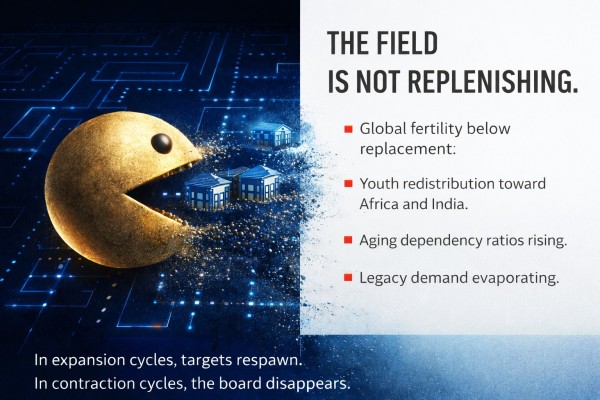
Across many developed economies, the number of school-age students is beginning to level off or decline as birth rates fall below replacement levels in numerous countries. While demographic change is only one factor shaping the education market, it is tightening the overall pipeline of potential students.
“We are all fishing in the same pool,” Cohen said. “And the pool is not expanding the way many institutions assumed it would.”
Yet capital continues to move aggressively through the sector.
Cohen argues that the pattern increasingly resembles a Pac-Man dynamic, with institutions rapidly acquiring schools across markets under the assumption that scale itself guarantees stability.
“That mindset can become a form of lazy fatalism,” she said. “It assumes that if you acquire enough schools, demand will somehow materialize.”
“But unlike the arcade game, the board does not refill.”
Demand Is Redistributing Rather Than Expanding
While traditional education markets across Europe, East Asia, and parts of North America face slowing student growth, youth populations are expanding elsewhere.
Sub-Saharan Africa and South Asia—particularly India—are poised to become some of the most significant education growth markets in the coming decades.
According to United Nations population projections, Sub-Saharan Africa’s population could nearly double by 2050, reaching more than 2 billion people. The region already has the youngest population globally, with a median age of roughly 19 years.
Countries including Nigeria, Ethiopia, Kenya, Tanzania, and Ghana are expected to experience substantial youth population growth.
India represents another powerful demographic center of gravity. With more than 250 million people between the ages of 15 and 24, the country holds the largest youth population in the world.
Economic growth is also reshaping these markets. Several African economies—including Rwanda, Kenya, Ghana, and Ethiopia—have recorded GDP growth rates frequently ranging between 5% and 8% annually, while India has maintained growth often exceeding 6% per year in recent years.
These trends are expanding demand for private schooling, international curricula, and global university pathways.
However, Cohen cautions that demographic expansion alone does not guarantee stable education markets.
“Demand ultimately follows purchasing power,” she said. “Population growth without income growth produces a very different market dynamic.”
When Capital Moves Faster Than Affordability
In many emerging markets, international school tuition can exceed several multiples of average household income. As a result, demand is often limited to expatriate communities or a narrow domestic elite.
This creates a structural tension between investor expectations and economic capacity.
“GDP growth headlines can be misleading,” Cohen said. “The real question is how quickly household income and middle-class purchasing power are expanding.”
Without that alignment, institutions expanding rapidly into emerging markets may encounter volatile enrollment cycles and persistent pricing pressure.
“Capital often moves faster than household income,” Cohen said. “When that happens, institutions end up competing for the same small segment of families.”
The Risk of Leap-Frog Investment
As global investors pursue growth opportunities in education, some institutions have adopted what Cohen describes as “leap-frog investment.”
Leap-frog investment occurs when premium schools are built or acquired in anticipation of future wealth expansion before the underlying middle class has fully developed.
“Infrastructure investment is essential,” Cohen said. “But leap-frogging the income curve can create fragile markets.”
If middle-class purchasing power expands more slowly than expected, institutions may face under-enrollment, heavy discounting, or persistent competition for a limited pool of affluent families.
The Limits of Tuition Inflation
For decades, many institutions relied on annual tuition increases as a predictable revenue strategy. In numerous private education markets, tuition has risen five to seven percent year over year for extended periods.
However, that model is becoming increasingly difficult to sustain.
Across many developed economies, household income growth has not kept pace with tuition inflation. In the United States, median household income has grown roughly three to four percent annually over the past decade, while private school and university tuition has often increased at significantly higher rates.
Rising costs for housing, healthcare, childcare, and transportation are also placing increasing pressure on family budgets.
“Tuition increases of seven percent year over year are simply not digestible for many families anymore,” Cohen said. “When pricing consistently outpaces income growth, institutions eventually reach a ceiling.”
Evidence of this pressure is already visible across the sector. Tuition discounting has expanded significantly, with average discount rates at U.S. private colleges now exceeding 50 percent for first-time students, according to enrollment industry reports.
“Increasing sticker price while expanding discounts creates the illusion of growth,” Cohen said. “But in many cases the net yield is deteriorating.”
Structural Misalignment in the Education Economy
What is emerging across global education markets is a growing structural misalignment. Tuition models in many premium institutions were built during decades of demographic expansion and rising middle-class purchasing power. Today, however, student populations are tightening in many developed economies while household income growth has slowed relative to tuition inflation. At the same time, capital continues to pursue expansion strategies through acquisitions and international market entry. The result is an unusual tension: institutions attempting to scale supply while the affordability foundation that once supported demand is becoming less predictable. In economic terms, the education sector is transitioning from a demand-expansion environment to a competition-for-share environment—a shift that requires far greater discipline in pricing, portfolio strategy, and revenue governance.
Capital Markets Are Becoming More Selective
These pressures are increasingly intersecting with capital market expectations.
Investors who once rewarded rapid expansion are now placing greater emphasis on predictable revenue, disciplined pricing strategies, and sustainable margins.
“In tighter markets, those inefficiencies become visible very quickly.”
Revenue Governance Becomes the Strategic Advantage
Cohen has directed multinational revenue systems within education enterprises operating across more than twenty-five countries, overseeing revenue strategy, enrollment operations, marketing, and technology teams.
Her work has included revenue forecasting tied to demographic modeling, pricing architecture redesign, acquisition diligence, and institutional portfolio strategy.
Under tightening conditions she implemented structural changes that reduced tuition discount exposure, improved net tuition yield, rationalized underperforming programs, and converted previously non-performing initiatives into recurring revenue streams.
“These were not simply enrollment gains,” Cohen said. “They were structural protections for long-term financial stability.”
According to Cohen, institutions that succeed in the next phase of global education will treat revenue as a governed system aligned with demographic and economic realities.
“The era of passive enrollment is over,” she said. “In competitive markets, precision replaces optimism.”
Elaina Cohen is a global education strategist specializing in enrollment systems, revenue governance, and institutional growth strategy across multinational education enterprises. Her work focuses on aligning demographic trends, economic conditions, and operational strategy to build resilient education institutions in evolving global markets.